
WTI Crude Eyes $80 as US Taps Reserves Amid OPEC+ Output Boost


WTI crude oil is trading cautiously, hovering near the $80 per barrel mark, as the market digests news of a significant release from the US Strategic Petroleum Reserve (SPR) coinciding with increased output from OPEC+ nations. The delicate balance between supply and demand continues to dictate price action in a volatile energy market.
Market Context
The US government is set to release 172 million barrels of oil from its emergency reserves, a move designed to alleviate upward pressure on crude and gasoline prices. This action comes as part of a coordinated global effort to stabilize energy markets, particularly in light of ongoing geopolitical tensions and supply concerns. Simultaneously, OPEC+ reported a substantial increase in crude production for February, climbing by 445,000 barrels per day to an average of 42.72 million barrels per day. Saudi Arabia's output reached 10.882 million barrels per day, with supply to the market at 10.111 million barrels per day.
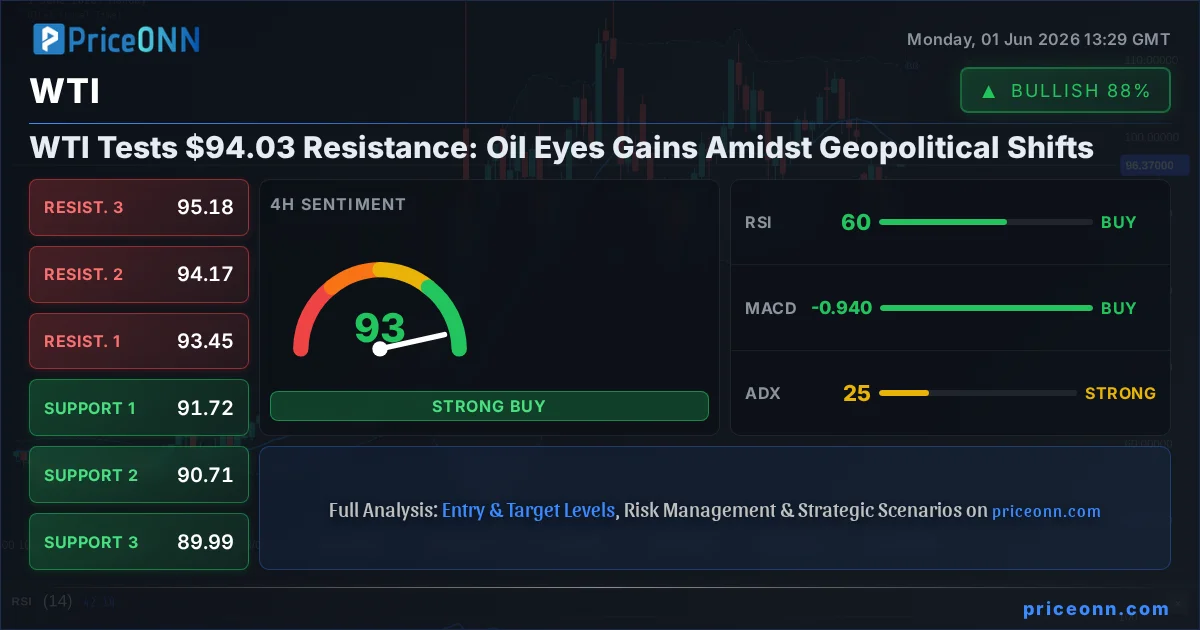
WTI's price action has been choppy, reflecting the push and pull between these competing forces. While the SPR release aims to increase supply and lower prices, the OPEC+ production boost provides additional supply. The market's reaction will depend on how these factors are perceived in relation to global demand, which OPEC continues to forecast with steady growth for 2026 and 2027.
Analysis & Drivers
Several key factors are driving the current dynamics in the oil market:
- Strategic Reserve Releases: The US decision to tap into its SPR is a direct response to concerns about rising energy costs and potential supply disruptions. Other major economies, including Japan and Germany, are also considering similar actions.
- OPEC+ Production: The increase in OPEC+ output, particularly from Saudi Arabia, indicates a willingness to meet global demand and maintain market share. However, the group's future production decisions will be crucial in determining the overall supply balance.
- Global Demand: Despite near-term volatility, OPEC maintains a positive outlook for long-term oil demand growth, driven by economic expansion in developing countries and increasing energy needs.
- Geopolitical Risks: Ongoing geopolitical tensions continue to pose a risk to oil supply, with potential disruptions in key producing regions. These uncertainties can lead to price spikes and increased market volatility.
The interplay of these factors creates a complex environment for oil traders. The market is constantly reassessing the balance between supply and demand, reacting to new information and adjusting price expectations accordingly.
Trader Implications
Traders should closely monitor the following key indicators:
- Weekly Oil Inventory Reports: The American Petroleum Institute (API) and Energy Information Agency (EIA) reports provide valuable insights into supply and demand trends. A drop in inventories can signal increased demand, potentially pushing prices higher, while higher inventories may indicate oversupply and downward pressure on prices.
- OPEC+ Decisions: Future production decisions by OPEC+ will be critical in shaping the supply outlook. Any changes to production quotas or output levels can have a significant impact on oil prices.
- Geopolitical Developments: News and events related to geopolitical risks can trigger sharp price swings. Traders should stay informed about potential disruptions to supply chains and political instability in key oil-producing regions.
- Key Price Levels: Watch for WTI to test resistance around $82-83 per barrel. A break above this level could signal further upside. Support lies in the $77-78 range; a break below could open the door to lower prices.
Traders should also consider using technical analysis tools to identify potential entry and exit points. Moving averages, trendlines, and oscillators can provide valuable insights into price momentum and potential reversals.
Risk management is paramount in the volatile oil market. Traders should use stop-loss orders to limit potential losses and avoid over-leveraging their positions. A diversified trading strategy can also help to mitigate risk.
Outlook
The near-term outlook for WTI crude oil remains uncertain, with prices likely to fluctuate within a defined range. The impact of the SPR release and OPEC+ production boost will continue to be assessed by the market, while geopolitical risks will remain a constant source of volatility. Looking ahead, the key drivers of oil prices will be global economic growth, demand from emerging markets, and the ability of OPEC+ to manage supply effectively. Traders should remain vigilant and adapt their strategies to the evolving market conditions.
Track markets in real-time
Empower your investment decisions with AI-powered analysis, technical indicators and real-time price data.
Join Our Telegram Channel
Get breaking market news, AI analysis and trading signals delivered instantly to your Telegram.
Join Channel PriceONN News
(RTTNews) - Oil prices were little changed on Thursday, after having fallen over 5 percent in the previous session amid optimism over a possible easing of Middle East tensions. Brent crude futures for July delivery were down 0.3 percent at $104.72 a barrel while WTI crude futures
PriceONN News
Crude oil prices experienced a significant drop, with WTI futures falling over 1.8% to $87.25, as optimism grew for a U.S.-Iran deal potentially reopening the Strait of Hormuz.
PriceONN News
(RTTNews) - Crude oil prices have tumbled on Friday as expectations of the U.S. and Iran signing a Memorandum of Understanding run high. The MoU would allow for immediate reopening of the Strait of Hormuz and pave the way for the resumption of oil and energy trade.
PriceONN News
Crude oil futures experienced a dramatic intraday reversal on Thursday, soaring overnight on geopolitical fears only to pull back significantly as reports of a potential diplomatic understanding between the U.S. and Iran emerged.
PriceONN News
Crude oil futures experienced a dramatic intraday reversal, soaring to $92.52 before pulling back significantly on Thursday. The volatile session was driven by shifting geopolitical narratives and U.S. inventory data.
PriceONN News
Brent crude prices surged towards the mid-$90s amid fears of supply disruptions from Middle East tensions, only to pare gains later as whispers of a potential US-Iran diplomatic understanding emerged.
PriceONN News
(RTTNews) - Crude oil futures skyrocketed overnight but have shown a significant pullback over the course of the trading day on Thursday.
PriceONN News
Crude oil benchmarks experienced a sharp decline of over 5% this week, driven by renewed optimism surrounding U.S.-Iran peace talks and a potential easing of Middle East tensions. Both Brent and WTI futures saw significant drops as market sentiment shifted towards de-escalation.
PriceONN News
Global oil prices are treading water after a significant 5% slump, as market sentiment grapples with cautious optimism over Middle East de-escalation efforts versus lingering geopolitical uncertainties. Brent crude hovers near $104.72 and WTI near $98.07.
PriceONN News
WTI Crude Oil futures experienced a sharp decline of over 5.6%, falling to $98.26 per barrel as diplomatic efforts between the U.S. and Iran gained significant momentum, easing supply disruption fears.
PriceONN News
Crude oil prices experienced a sharp decline, with WTI futures for July delivery falling 5.66% to $98.26. This drop is largely attributed to renewed diplomatic efforts aimed at de-escalating the U.S.-Iran conflict and easing tensions around the Strait of Hormuz.
PriceONN News
The Iran war suddenly turned what had started as a year of oversupply in global oil and LNG markets into the worst oil and gas supply disruption in history. Three months after the U.S.-Israeli strikes on Iran began on February 28, the world has already lost 1 billion barrels of crude oil supply, oil and gas prices have found a new, much higher floor, and whipsaw with violent volatility nearly every day, trade routes have shifted, and tanker rates have spiked. Actual supply shortages are...