
Yemen’s Houthis threaten Bab el-Mandeb closure, putting another trade chokepoint at risk
 PriceONN Editorial Desk
Multi-source verification
PriceONN Editorial Desk
Multi-source verification

Global Oil Benchmark Under Geopolitical Pressure
The Bab el-Mandeb Strait, a crucial maritime chokepoint connecting the Red Sea to the Gulf of Aden, faces renewed disruption threats. Houthi rebels in Yemen have announced a blockade targeting vessels associated with Saudi Arabia. This move is presented as retaliation for the kingdom's ongoing blockade of Yemen and a recent airstrike on the international airport in the rebel-held capital, Sanaa.
This development casts a shadow over global energy markets, particularly impacting the price of West Texas Intermediate (WTI) crude oil. WTI, often referred to as "light" and "sweet" due to its low specific gravity and minimal sulfur content, is a premium grade of crude that simplifies the refining process. It is exclusively sourced within the United States and its price is benchmarked through the Cushing hub in Oklahoma, famously dubbed "The Pipeline Crossroads of the World." The media frequently cites WTI pricing as a key indicator for the broader oil market.
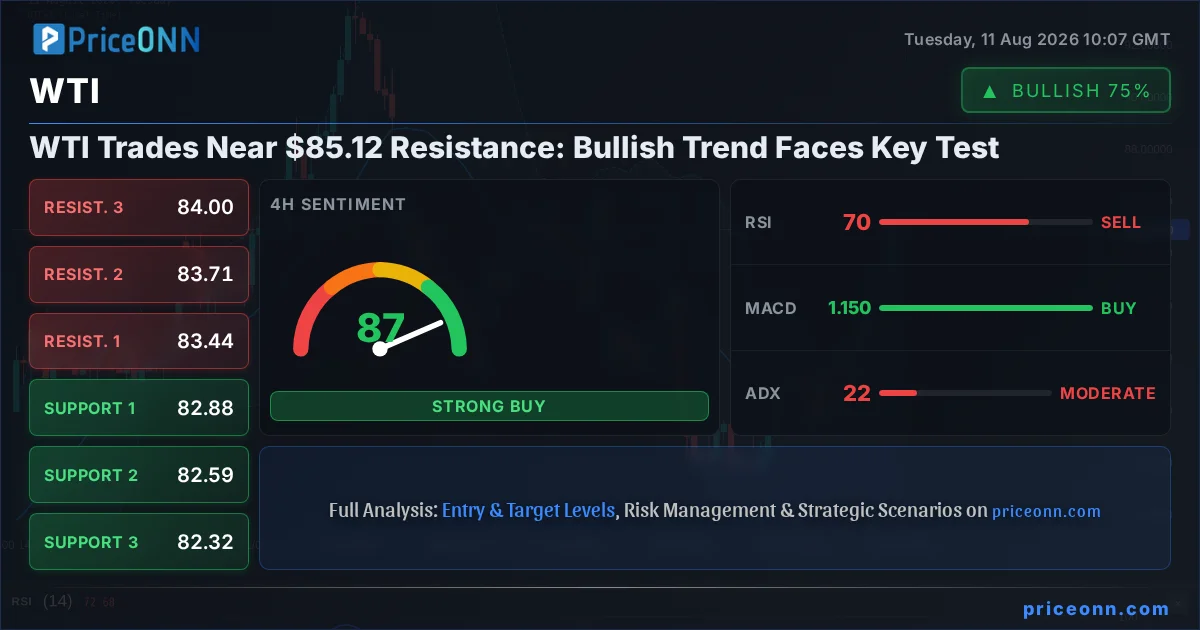
Understanding WTI's Price Dynamics
Like all commodities, the value of WTI oil is fundamentally dictated by the interplay of supply and demand. Global economic growth plays a significant role; robust expansion typically fuels increased demand, driving prices upward, while economic downturns can suppress demand and lead to price declines. Geopolitical events, including regional conflicts, political instability, and international sanctions, possess the power to severely disrupt supply chains, consequently impacting oil prices.
The strategic decisions made by the Organization of the Petroleum Exporting Countries (OPEC), a powerful cartel of major oil-producing nations, represent another significant factor influencing WTI prices. Furthermore, the strength of the US Dollar exerts considerable influence. Given that crude oil transactions are predominantly denominated in US dollars, a weakening dollar can render oil more affordable for purchasers using other currencies, potentially boosting demand and prices. Conversely, a stronger dollar can have the opposite effect.
Inventory Data and OPEC's Shifting Role
Market participants closely monitor weekly oil inventory reports released by the American Petroleum Institute (API) and the Energy Information Agency (EIA). These reports provide critical insights into the balance between supply and demand. A reduction in reported inventories often signals heightened demand, which can exert upward pressure on WTI prices. Conversely, an increase in stockpiles may indicate greater supply, potentially leading to price decreases.
The API typically releases its findings every Tuesday, with the EIA following the subsequent day. While their reports generally show close correlation, with results aligning within 1% approximately 75% of the time, the EIA's data is often considered more authoritative due to its status as a government agency. OPEC, comprising 12 oil-producing member states, convenes biannually to set production quotas for its members. These decisions can significantly sway WTI oil prices. Reductions in agreed production levels can tighten global supply, driving prices higher, whereas increased output typically has a moderating effect.
The scope of influence has expanded with the formation of OPEC+, which incorporates ten additional non-OPEC countries, most notably Russia. This expanded group's coordinated actions carry even greater weight in shaping global oil supply and, by extension, WTI pricing.
Market Ripple Effects
The Houthi threat to close the Bab el-Mandeb Strait is more than just a regional spat; it poses a significant risk to global maritime trade, through which a substantial portion of the world's oil and liquefied natural gas (LNG) transits. This escalation injects a fresh layer of geopolitical risk premium into oil prices, which had recently been retreating from earlier highs. Traders will be closely watching the response from Saudi Arabia and its allies, as well as the effectiveness of any Houthi blockade.
The immediate implication is a potential spike in Brent crude oil futures, which are more directly influenced by Middle Eastern supply disruptions. The US Dollar Index (DXY) could also see volatility; a surge in oil prices often correlates with higher inflation expectations, potentially leading the Federal Reserve to maintain a tighter monetary policy, which could strengthen the dollar. Additionally, energy stocks, particularly those with significant exposure to global oil prices, may experience increased trading activity. Investors will be weighing the duration and severity of any potential disruption against the backdrop of existing global supply-demand balances.
Track markets in real-time
Empower your investment decisions with AI-powered analysis, technical indicators and real-time price data.
Join Our Telegram Channel
Get breaking market news, AI analysis and trading signals delivered instantly to your Telegram.
Join Channel PriceONN News
(RTTNews) - Gold was subdued on Tuesday after two consecutive sessions of gains on receding Fed hike bets and reports suggesting that China's central bank stepped up gold purchases in July.
PriceONN News
(RTTNews) - Gold prices held steady on Monday after U.S. employers unexpectedly cut jobs in July and hiring figures for the prior two months were also revised downward, helping ease the risk of an immediate U.S. interest-rate hike.
PriceONN News
The logistics behind critical minerals is the determining factor on who gets to win in this market.
PriceONN News
(RTTNews) - Gold climbed above $4,300 an ounce on Friday and was set for its biggest weekly gain since January on hopes of peace in the Middle East, eased inflation concerns and reduced expectations for a Federal Reserve rate hike in September.
PriceONN News
(RTTNews) - Gold prices traded higher for a fourth straight session to hit a seven-week high on Thursday, driven by softer U.S. labor market data released overnight, a weaker dollar and lower Treasury yields.
PriceONN News
(RTTNews) - Gold prices were largely unchanged on Tuesday as the U.S.-Iran conflict remained at a stalemate and investors looked forward to the release of a series of U.S. labor market reports this week that might provide fresh insights into the economic and rate outlook.
PriceONN News
(RTTNews) - Extending the losses from Friday's session, gold prices have edged lower on Monday as traders assess the plunge in crude oil prices due to the cancellation of planned U.S. strikes on Iran against Iran's refusal to acknowledge any ongoing peace talks with the U.S. and
PriceONN News
(RTTNews) - Gold ticked higher on Monday as the dollar dipped on Iran peace deal hopes and after joint intervention by the United States and Japan to prop up the Japanese yen.
PriceONN News
(RTTNews) - After two consecutive days of gains, gold prices have tumbled on Friday as crude oil prices soared with no end in sight to the U.S.-Iran conflict, leading to expectations of a high interest rate regime in the U.S. in the upcoming months. In addition, traders opted to
PriceONN News
(RTTNews) - Gold prices were up more than 1 percent on Wednesday amid rising bets that the U.S. Federal Reserve will not hike interest rates anytime soon.
PriceONN News
The whole Comex curve is at record levels, with 2027 contracts above $7 a pound, yet copper mining stocks had one of their worst sessions of the summer.
PriceONN News
Saxo Bank says bullion has to hold $4,360 to keep the rally alive, with headwinds building from oil, yields and the dollar into Wednesday’s inflation print.