Africa Could Emerge As The Biggest Winner In Iran War
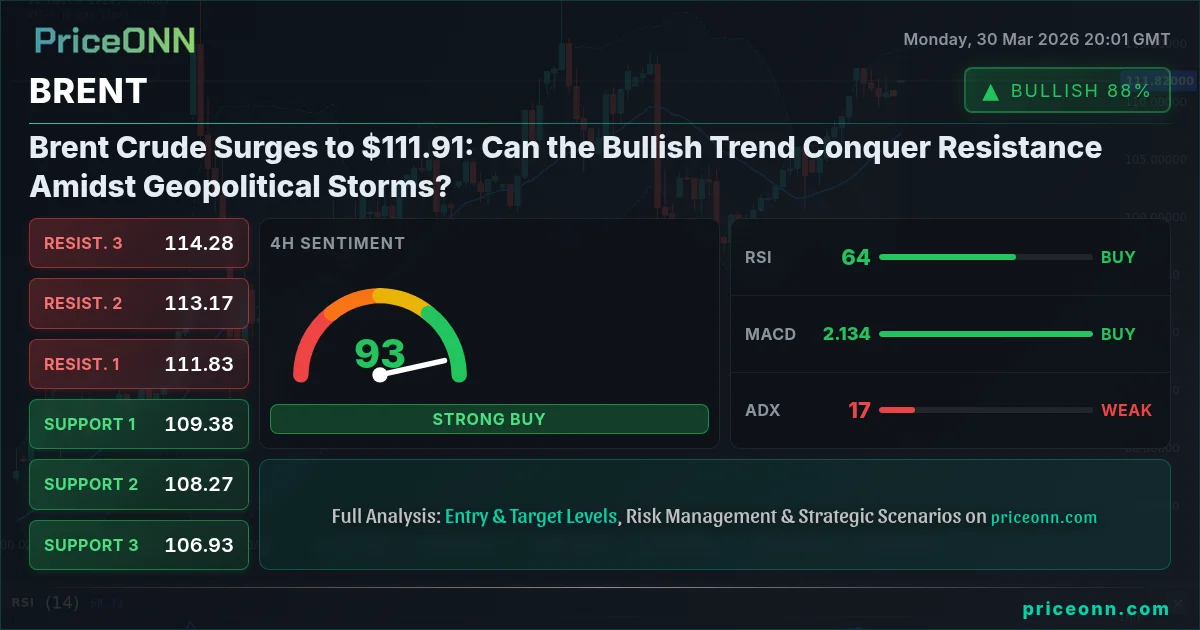
The ongoing Middle East conflict has upended global energy markets, cutting off supplies of approximately 8 million barrels of crude per day and 20% of liquefied natural gas (LNG). Brent crude has surged more than 50% to around $110/bbl since the conflict erupted in late February, while the U.S. stock market has lost nearly $4 trillion. Previously, we reported that Russia has emerged as the biggest winner of the war, with the conflict providing a strategic "economic lifeline" to Moscow by elevating oil prices, distracting Western allies from the war in Ukraine and strengthening its diplomatic standing among nations in the Global South. The Trump administration has even eased sanctions on Russian and Iranian oil, albeit temporarily, drawing bipartisan backlash.
However, Africa’s energy giants could ultimately emerge as the long-term winners of this conflict. The ongoing disruption has handed African energy producers a distinctive structural advantage, thanks to being largely insulated from the conflict's geography. Leading energy giants in Africa, including Nigeria, Libya, Angola, Gabon, Mozambique, Namibia, and Tanzania, are increasingly viewed as lower-risk alternatives to Middle Eastern suppliers. European and Asian buyers now favor African volumes due to lower insurance premiums and more predictable delivery times compared to volumes passing through high-risk routes such as the Strait of Hormuz and the Red Sea.
Africa’s burgeoning LNG sector has, by far, the most bullish outlook. The continent’s total LNG export capacity is projected to rise from approximately 80 million tons per year (mtpa) in 2025 to over 175 mtpa by 2040, positioning Africa as a critical global LNG supplier. Sub-Saharan African LNG exports are projected to increase by 175% by 2034, rising from 30.9 billion cubic meters (bcm) in 2024 to 44.5 bcm. This surge will be driven by major project developments, including Mozambique, Angola, Equatorial Guinea, Nigeria and Cameroon.
Related: Chinese Publication Claims U.S. Has Two Months of Rare Earths Left
Last year, French multinational energy giant, TotalEnergies (NYSE:TTE), officially restarted its $20 billion Mozambique LNG project in Afungi, Cabo Delgado, following a 5-year suspension due to security issues. The facility has a capacity of over 13 mtpa, with first production scheduled for 2029. Italy’s Eni S.p.A. (NYSE:E) is advancing multi-stage development of the "supergiant" Coral natural gas field in the Rovuma Basin, offshore Mozambique, where it’s deploying Floating Liquefied Natural Gas (FLNG) technology to process LNG for export. With a capacity of 3.4 mtpa, Coral South FLNG began production in 2022, while Final Investment Decision (FID) for the 3.5 mtpa Coral North project was reached in 2025, with production expected to commence in 2028.
Meanwhile, America’s largest energy company, ExxonMobil (NYSE:XOM), is leading the onshore development of the $30 billion Rovuma LNG project in northern Mozambique’s Area 4 block with a 25% stake, alongside partners Eni (25%), China National Petroleum Corporation (CNPC) (20%), Korea Gas Corp (10%), and Abu Dhabi National Oil Co (ADNOC) (20%). Rovuma LNG consists of onshore liquefaction trains fed by offshore gas fields with a total capacity of 18 mtpa. The project recently lifted force majeure following security improvements, with FID expected in the current year and production anticipated around 2030–2031.
The ongoing global energy crisis is also helping to fast-track some of Africa’s long-delayed energy projects, including the $20 billion Trans-Saharan gas pipeline designed to carry Nigerian gas through Niger and Algeria to Europe. Last month, Algeria and Niger announced that they would resume construction of the TSGP in March after a nearly one-year diplomatic standoff. The project has transitioned from a decades-long concept to an active construction phase largely driven by Europe's urgent need to diversify away from Russian energy following the invasion of Ukraine. Algeria’s state energy giant, Sonatrach, is leading the construction and technical oversight, with approximately 60% (2,400 km) of the total 4,128 km pipeline complete or advanced, primarily within Nigeria and Algeria. The pipeline aims to deliver 30 billion cubic meters (bcm) of natural gas annually from Nigeria to Europe by 2027, providing a critical alternative to Russian supplies. Beyond energy, the TSGP is part of a broader "West-to-North Africa" corridor aimed at integrating regional economies and monetizing Nigeria's 200+ trillion cubic feet of gas reserves.
The European Union (EU) has drastically reduced its reliance on Russian natural gas, with imports falling from roughly 155 bcm in 2021 to an estimated 30 bcm per year in 2025. Russian gas now accounts for ~13% of EU imports, consisting of a mix of pipeline gas to countries like Hungary and Slovakia, alongside LNG delivered to Belgium, France and other European countries.
By Alex Kimani for .com
Track markets in real-time
Empower your investment decisions with AI-powered analysis, technical indicators and real-time price data.
Join Our Telegram Channel
Get breaking market news, AI analysis and trading signals delivered instantly to your Telegram.
Join Channel