
Is the AUD Set for More Pain as RBA Signals Higher Neutral Rates Amidst Energy Shocks?

The Australian dollar (AUD) is under scrutiny as indications from the Reserve Bank of Australia (RBA) suggest a shift towards a more restrictive monetary policy stance. Assistant Governor Christopher Kent has articulated concerns that the prolonged conflict in the Middle East is not only a geopolitical event but is actively influencing the economy's underlying neutral interest rate, potentially pushing it higher. This recalibration implies that current policy settings might not be sufficiently restrictive to curb inflation, opening the door for additional cash rate increases.
Market Context: Energy Shocks and Inflationary Pressures
Recent global events, particularly the escalation of tensions in the Middle East, have introduced significant supply-side disruptions to the energy markets. This situation is creating a dual challenge for policymakers: the immediate inflationary impact of higher oil and gas prices, and the risk of these price increases becoming embedded in long-term inflation expectations. Analysts note that unlike typical global uncertainties that might cool economic activity and dampen market sentiment, the current energy shocks are acting as a persistent drag on purchasing power and economic output, akin to a broad-based tax on the economy.
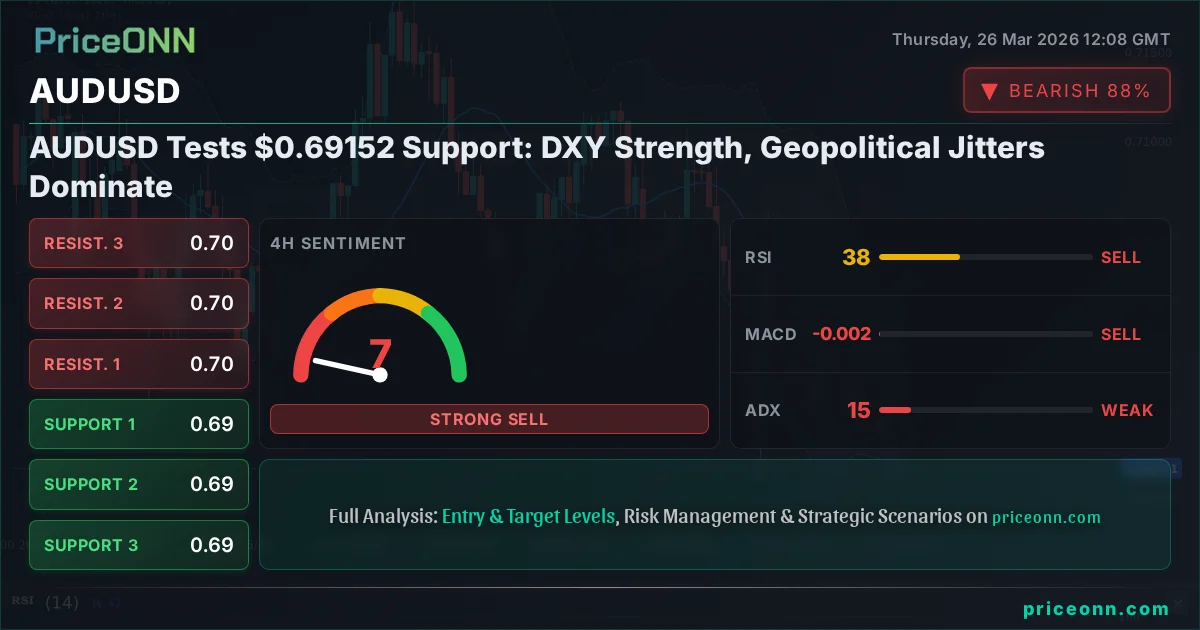
Assistant Governor Kent characterized the surge in energy costs as a form of "wealth tax," diminishing the real value of incomes and savings for the nation. While central banks cannot directly control global oil supply, they must respond to the resulting asset repricing and inflationary pressures. The RBA's dilemma lies in managing the unavoidable economic slowdown caused by these supply constraints while simultaneously preventing a de-anchoring of inflation expectations. Market data shows that the AUD has experienced volatility in recent weeks, reacting to shifts in global risk sentiment and commodity prices, with the currency currently trading around 0.6550 against the US dollar.
Analysis & Drivers: The Shifting Neutral Rate
The concept of a 'neutral' interest rate is critical here. It represents the theoretical interest rate that neither stimulates nor restrains the economy. If this neutral rate is rising, it means that a higher level of interest rates is now required to achieve the same level of monetary restriction. The RBA's assessment that external factors like energy supply shocks are pushing this neutral rate higher suggests that the current cash rate, which has been held steady at 4.35% since November 2023, may no longer be sufficient to achieve the RBA's inflation target of 2-3% over the medium term.
This perspective challenges the traditional view that geopolitical instability inherently leads to lower interest rates due to reduced demand. Instead, the current environment highlights how supply-side constraints can create inflationary pressures that necessitate a tighter monetary response, even in the face of potential global economic slowdown. Industry reports indicate that oil prices have seen a sustained increase, with Brent crude futures trading near $85 per barrel, a key factor contributing to these inflationary concerns.
Trader Implications: Watching the AUD and RBA Signals
For traders and investors focused on the Australian dollar, these developments signal a period of heightened uncertainty and potential for further downside. Key levels to watch for AUD/USD include the support at 0.6500 and resistance around 0.6620. A sustained break below 0.6500 could trigger further sell-offs, especially if RBA rhetoric becomes more overtly hawkish.
Traders should closely monitor upcoming RBA communications for any explicit commentary on the neutral rate and their inflation outlook. The market is currently pricing in a low probability of a rate hike at the next RBA meeting, but a shift in tone could rapidly alter these expectations. Furthermore, the trajectory of energy prices will remain a crucial external driver. Any further escalation in the Middle East conflict that impacts oil supply could exacerbate inflationary pressures and strengthen the case for the RBA to adopt a more restrictive policy stance, thereby pressuring the AUD.
Outlook
The outlook for the Australian dollar remains cautious, contingent on the RBA's response to persistent energy-driven inflation and the evolving geopolitical landscape. While the central bank has signaled a willingness to consider further rate hikes if inflation proves stubborn, the immediate economic impact of higher energy prices could temper the pace of any tightening. Traders will be looking for clear signals on whether the RBA views these energy shocks as temporary or as a structural shift demanding a more aggressive policy response. The interplay between global energy markets and domestic inflation will be paramount in shaping the AUD's direction in the coming months.
Frequently Asked Questions
What is the current RBA cash rate and what is the implication of a rising neutral rate?
The current RBA cash rate is 4.35%. A rising neutral interest rate implies that a higher policy rate is now needed to achieve the same level of monetary restriction, potentially signaling that the current 4.35% might not be restrictive enough to meet inflation targets, thus opening the door for more hikes.
How are Middle East conflicts affecting the Australian dollar?
Middle East conflicts are driving up global energy prices, creating inflationary pressures. This could lead the RBA to consider higher interest rates to combat inflation, which typically weakens the Australian dollar (AUD) as it makes the currency less attractive for carry trades and signals economic headwinds.
What are the key price levels to watch for AUD/USD?
Traders should monitor the support level at 0.6500 and the resistance level at 0.6620 for AUD/USD. A breach of the 0.6500 support could indicate further downward momentum, while holding above it might suggest some stabilization.
Track markets in real-time
Empower your investment decisions with AI-powered analysis, technical indicators and real-time price data.
Join Our Telegram Channel
Get breaking market news, AI analysis and trading signals delivered instantly to your Telegram.
Join Channel
PriceONN