
Is the Australian Dollar Trapped by Fertilizer Prices and Fed Rate Hike Odds?

The Australian Dollar is navigating a complex landscape, caught between a dramatic surge in global urea prices and a rising probability of further US Federal Reserve interest rate hikes. This confluence of factors is creating a significant headwind for AUD/USD, which is currently trading around the 0.6950 mark amidst cautious sentiment in Asian trading. The currency's traditional strength derived from high commodity prices is being undermined, while the US Dollar finds renewed safe-haven appeal.
Market Context: The Fertilizer Bottleneck and AUD Weakness
A critical bottleneck in global fertilizer supply, specifically urea, is sending shockwaves through agricultural markets and impacting currencies sensitive to commodity flows. Stalled negotiations between the US and Iran have amplified concerns over the Strait of Hormuz, a vital chokepoint for approximately 35% of global urea exports. This geopolitical tension has propelled benchmark urea prices, such as NOLA, up by an estimated 25-30% since late February. While oil prices remain in consolidation, this agricultural commodity's price surge is a significant development. The situation is compounded by the rising cost of natural gas, the primary feedstock for nitrogen fertilizers, further escalating input costs for global food production. This surge in fertilizer costs, coupled with natural gas price volatility, is creating a difficult environment for farmers preparing for the 2026 winter crop. For Australia, a major commodity exporter, this presents a "double whammy": higher commodity prices are usually a boon, but escalating input costs for farmers are eroding profit margins. Analysts note that the prohibitive cost of seeding could lead to reduced export volumes later in the year, a critical concern as the "make or break" window for the winter crop closes in late May. This has led to the Australian Dollar being the week's worst performer among commodity-linked currencies.
Analysis & Drivers: Fed Hawkishness and Agricultural Input Costs
The narrative surrounding the US Federal Reserve is shifting decisively away from easing. Market data indicates that futures markets have largely priced out any possibility of a Fed rate cut in 2026. Instead, the odds of at least one additional rate hike by the end of the year have climbed to nearly 30%. This hawkish pivot by the Fed strengthens the US Dollar, creating a direct headwind for AUD/USD. Simultaneously, the agricultural sector faces immense pressure. The surge in urea prices, driven by geopolitical concerns and supply chain vulnerabilities, represents a significant increase in operational costs for farmers globally. For Australia, this means that even if global demand for its agricultural exports remains strong, the profitability of producing those exports is under threat. The RBA has also signaled a cautious approach. Recent remarks from an RBA official suggest a measured outlook on the domestic economy, which, when combined with global inflationary pressures and rising input costs, contributes to a less optimistic view for the Australian Dollar. The interplay between a tightening US monetary policy and rising agricultural input costs creates a challenging environment for the AUD, distinct from typical commodity-driven rallies.
Trader Implications: Key Levels and Risk Factors
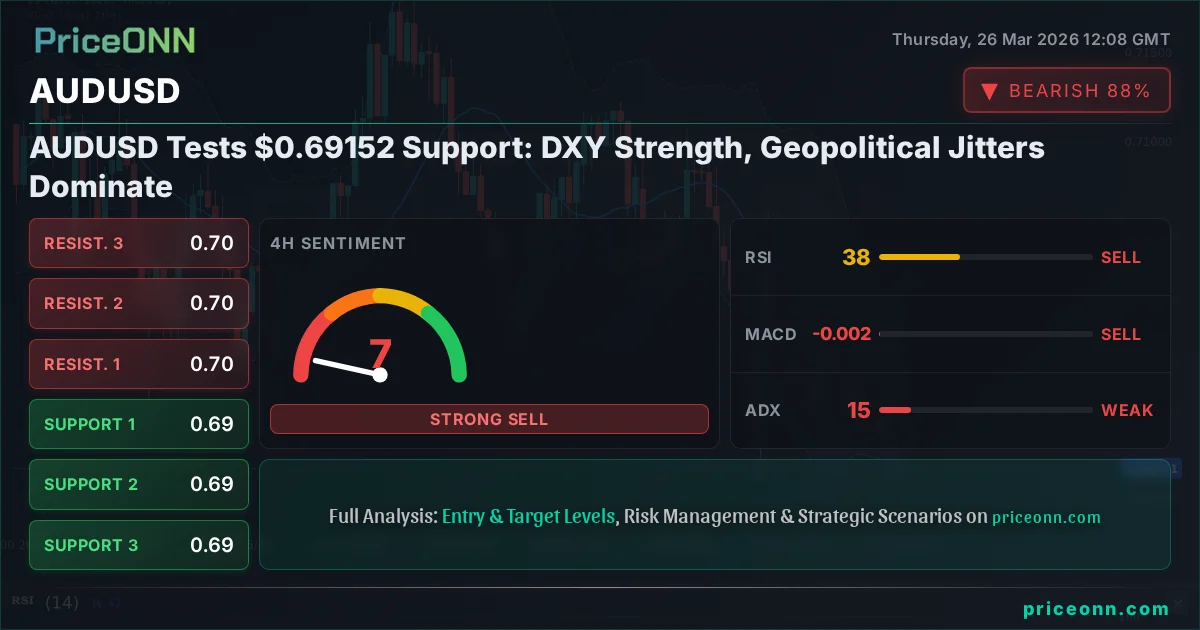
Traders are closely watching the 0.6950 level as a key pivot for AUD/USD. A sustained break below this support could signal further downside, potentially targeting levels seen earlier in the year. Key factors to monitor include:
- Further escalation of tensions surrounding the Strait of Hormuz and its impact on urea prices.
- Any additional hawkish commentary or data releases that increase US interest rate hike probabilities beyond the current 30% estimate.
- Updates on Chinese economic activity, which remains a critical driver for Australian export demand, particularly iron ore.
- Statements from the RBA regarding inflation and monetary policy outlook.
The risk of lower Australian winter crop yields due to high input costs could weigh on the AUD in the medium term. Conversely, any de-escalation in geopolitical tensions or a shift in Fed sentiment could offer a reprieve. For now, the "pincer effect" suggests caution for AUD bulls.
Outlook
The path forward for the Australian Dollar appears constrained by the dual pressures of geopolitical-driven commodity inflation and a less accommodative global monetary policy stance from the US Federal Reserve. While Australia's commodity exports remain a fundamental support, the rising cost of essential agricultural inputs is a significant counter-narrative. Traders should brace for continued volatility as these complex factors play out. Upcoming economic data from both the US and Australia, alongside any developments in the Middle East, will be crucial in determining the next directional move for AUD/USD.
Frequently Asked Questions
What is the current price range for AUD/USD?
AUD/USD is currently trading around the 0.6950 level, showing little movement in recent Asian trading sessions as the market digests conflicting economic signals.
How are urea prices affecting the Australian Dollar?
Surging urea prices, up 25-30% recently due to geopolitical risks in the Strait of Hormuz, are increasing agricultural input costs. This is squeezing farmer margins in Australia and potentially reducing future export volumes, neutralizing the typical positive impact of high commodity prices on the AUD.
What is the outlook for the US Federal Reserve's interest rate policy?
Market expectations have shifted, with odds for a US Federal Reserve rate hike by year-end climbing to nearly 30%. This hawkish outlook strengthens the US Dollar and weighs on currencies like the Australian Dollar.
Track markets in real-time
Empower your investment decisions with AI-powered analysis, technical indicators and real-time price data.
Join Our Telegram Channel
Get breaking market news, AI analysis and trading signals delivered instantly to your Telegram.
Join Channel
PriceONN