
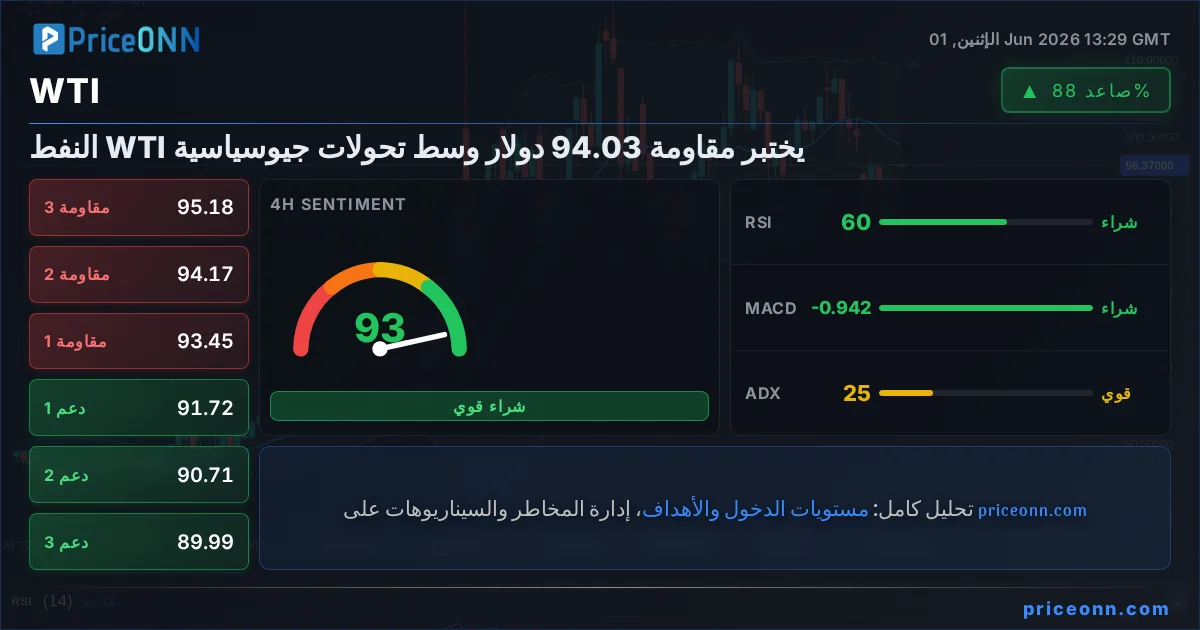
قفزة أسعار النفط الخام WTI مع اضطرابات الإمداد
 PriceONN Editorial Desk
Multi-source verification
PriceONN Editorial Desk
Multi-source verification

فهم نفط خام غرب تكساس الوسيط (WTI)
يُعد خام غرب تكساس الوسيط (WTI) معيارًا حاسمًا في سوق الطاقة العالمي. وإلى جانب خام برنت وخام دبي، يُعتبر WTI درجة رئيسية من النفط الخام المتداول دوليًا. يتميز WTI بأنه "خفيف" و"حلو" نظرًا لانخفاض كثافته ومحتواه من الكبريت على التوالي، وهو ذو قيمة عالية لسهولة تكريره إلى بنزين ومنتجات أخرى عالية القيمة. يأتي WTI بشكل أساسي من الولايات المتحدة، ويعتمد توزيعه على مركز كوشينغ في أوكلاهوما، وهو مركز محوري في شبكة خطوط الأنابيب في أمريكا الشمالية.
يُعد سعر WTI مؤشرًا اقتصاديًا يتم مراقبته عن كثب، مما يعكس التفاعل بين ديناميكيات العرض والطلب. وباعتباره خامًا عالي الجودة وسهل التكرير، يستجيب WTI بشكل حساس لظروف الاقتصاد الكلي والأحداث الجيوسياسية. توفر مراقبة أسعار WTI رؤى قيمة حول سوق الطاقة الأوسع والاتجاهات الاقتصادية العالمية.
العوامل الرئيسية المؤثرة في أسعار WTI
مثل أي سلعة، يخضع سعر خام WTI للعرض والطلب. عادةً ما يؤدي التوسع الاقتصادي العالمي القوي إلى زيادة الطلب على النفط، مما يدفع الأسعار إلى الارتفاع، في حين أن التباطؤ الاقتصادي يمكن أن يضعف الطلب ويمارس ضغوطًا هبوطية. يمكن أن يؤدي عدم الاستقرار الجيوسياسي، بما في ذلك الحروب والعقوبات، إلى تعطيل سلاسل التوريد، مما يؤدي إلى تقلب الأسعار. تلعب قوة الدولار الأمريكي أيضًا دورًا مهمًا، حيث يتم تداول النفط الخام في المقام الأول بالدولار الأمريكي؛ يمكن للدولار الأضعف أن يجعل النفط في متناول المشترين الدوليين بشكل أكبر، والعكس صحيح.
تُعد قرارات منظمة OPEC بشأن حصص الإنتاج عاملاً حاسمًا آخر. عندما تقلل OPEC الإنتاج، فإنها تحد من العرض، مما قد يؤدي إلى ارتفاع الأسعار. وعلى العكس من ذلك، يمكن أن تؤدي زيادة الإنتاج إلى انخفاض الأسعار. إن تأثير OPEC+، التي تضم روسيا ودول أخرى غير أعضاء في OPEC، يزيد من هذا التأثير.
تقارير المخزونات وتأثيرها على السوق
ينشر معهد البترول الأمريكي (API) وإدارة معلومات الطاقة (EIA) تقارير مخزونات أسبوعية تؤثر بشكل كبير على أسعار WTI. تقدم هذه التقارير نظرة ثاقبة حول مستويات النفط الخام المحتفظ به في المخازن، مما يعكس التوازن بين العرض والطلب. يشير الانخفاض في المخزونات عادةً إلى زيادة الطلب، مما قد يدفع الأسعار إلى الارتفاع. وعلى العكس من ذلك، قد تشير الزيادة في المخزونات إلى زيادة العرض، مما يؤدي إلى انخفاض الأسعار.
في حين أن تقارير API وEIA تقدم معلومات قيمة، إلا أن بيانات EIA تعتبر عمومًا أكثر موثوقية نظرًا لوضعها كوكالة حكومية. عادة ما تكون التناقضات بين التقريرين ضئيلة، حيث تتوافق النتائج عادةً ضمن هامش 1% في حوالي 75% من الحالات.
تتبع الأسواق في الوقت الفعلي
عزز قراراتك الاستثمارية بتحليلات الذكاء الاصطناعي والبيانات الفورية.
انضم إلى قناتنا على تيليجرام
احصل على أخبار السوق العاجلة وتحليلات الذكاء الاصطناعي وإشارات التداول فوراً عبر تيليجرام.
انضم للقناة PriceONN أخبار
شهدت أسعار النفط تراجعاً حاداً، حيث انخفضت العقود الآجلة لخام WTI بأكثر من 1.8% لتصل إلى 87.25 دولار، وسط تزايد التفاؤل بشأن صفقة أمريكية إيرانية قد تؤدي لإعادة فتح مضيق هرمز.
PriceONN أخبار
شهدت أسعار النفط انخفاضًا حادًا يوم الجمعة مع تصاعد التوقعات بتوقيع مذكرة تفاهم بين الولايات المتحدة وإيران، مما يمهد الطريق لإعادة فتح مضيق هرمز واستئناف تجارة الطاقة.
PriceONN أخبار
شهدت العقود الآجلة للنفط الخام تقلبات حادة يوم الخميس، حيث ارتفعت بشكل كبير خلال الليل بفعل المخاوف الجيوسياسية قبل أن تتراجع بفعل أنباء عن تقدم دبلوماسي محتمل بين الولايات المتحدة وإيران.
PriceONN أخبار
شهدت العقود الآجلة للنفط الخام انعكاسًا حادًا في جلسة الخميس، بعد أن ارتفعت إلى 92.52 دولار للبرميل ثم تراجعت بشكل كبير، متأثرة بتطورات جيوسياسية وبيانات المخزون الأمريكي.
PriceONN أخبار
ارتفعت أسعار خام برنت لتلامس منتصف التسعينات وسط مخاوف من اضطرابات الإمدادات من توترات الشرق الأوسط، قبل أن تتلاشى المكاسب مع ظهور همسات عن تفاهم دبلوماسي محتمل بين الولايات المتحدة وإيران.
PriceONN أخبار
شهدت أسعار النفط تقلبات حادة، حيث ارتفعت بقوة في البداية قبل أن تتراجع بشكل كبير خلال تعاملات الخميس، متأثرة بتقارير عن تقدم دبلوماسي محتمل.
PriceONN أخبار
تسببت الضربات الأمريكية الإسرائيلية على إيران في أسوأ اضطراب لسوق النفط والغاز على الإطلاق، مما أدى إلى خسارة مليار برميل من المعروض النفطي وفقدان الأسعار لقاعها المرتفع وزيادة التقلبات اليومية.
PriceONN أخبار
اضطرابات مضيق هرمز تدفع صادرات الغاز الطبيعي المسال الأمريكي للارتفاع، بينما تستثمر الصين في استقرار الطاقة بعيدًا عن نقاط الاختناق.
PriceONN أخبار
تراجعت أسعار النفط الخام بشكل ملحوظ مع تزايد التفاؤل بشأن توقيع مذكرة تفاهم أمريكية إيرانية قد تعيد فتح مضيق هرمز، مما دفع عقود WTI الآجلة للانخفاض بنسبة تقارب 2%.
PriceONN أخبار
شهدت أسعار النفط الخام تراجعاً حاداً بنسبة 6% بعد صعودها لليوم، متأثرة بتطورات جيوسياسية متضاربة بين تصاعد التوترات الأمريكية الإيرانية وإمكانية التوصل لاتفاق مبدئي.
PriceONN أخبار
تراجعت ثقة الأسواق بتقدم دبلوماسي وشيك بين الولايات المتحدة وإيران، لكنها لم تختفِ تمامًا. ارتفعت أسعار النفط مجددًا وسط تصعيد عسكري جديد حول مضيق هرمز، مما أشعل المخاوف من اضطرابات طويلة الأمد في الإمدادات الخليجية.
PriceONN أخبار
هوت أسعار النفط الخام بشكل حاد يوم الأربعاء، موسعة خسائرها للجلسة الثانية، مدفوعة بتزايد آمال المستثمرين في اتفاق أمريكي إيراني، على الرغم من رفض الولايات المتحدة تخفيف مطالبها.