
Brent – Bears Hold Grip Despite Fresh Escalation in the Middle East
 PriceONN Editorial Desk
Multi-source verification
PriceONN Editorial Desk
Multi-source verification
Geopolitical Crosscurrents Fail to Dislodge Brent
For five straight trading sessions, Brent crude oil has been confined to a narrow band, oscillating between $90.00 and $95.00 per barrel. This prolonged stalemate persists even as the Middle East simmers with renewed tensions and a surprisingly robust draw in U.S. crude stockpiles. Market participants, it appears, are not yet convinced that the current geopolitical climate poses a significant, sustained threat to global oil supply.
Brief surges were observed mid-week, specifically on Wednesday and Thursday, following reports of an exchange of fire involving the United States and Iran. However, these upward price movements proved ephemeral. Today's sharp reversal, which saw prices plunge nearly $4.00, signals a market seeking more compelling evidence from the geopolitical chessboard before committing to a new directional trend. The underlying sentiment seems to be one of caution, waiting for a more definitive catalyst.
Inventory Data Paints a Mixed Picture
Adding to the complex market narrative, U.S. crude oil inventories experienced a substantial decline last week, shrinking by 7.2 million barrels. This figure significantly outpaced the anticipated 3 million barrel reduction and closely mirrored the prior week's drawdown of 7.9 million barrels. This persistent use of reserves, including strategic petroleum reserves, is an attempt to mitigate supply shortages. These shortages stem, in part, from disruptions impacting the Strait of Hormuz, a critical artery for oil transport from several Gulf nations. The ongoing challenges have contributed to OPEC members reporting their lowest oil output in over two decades.
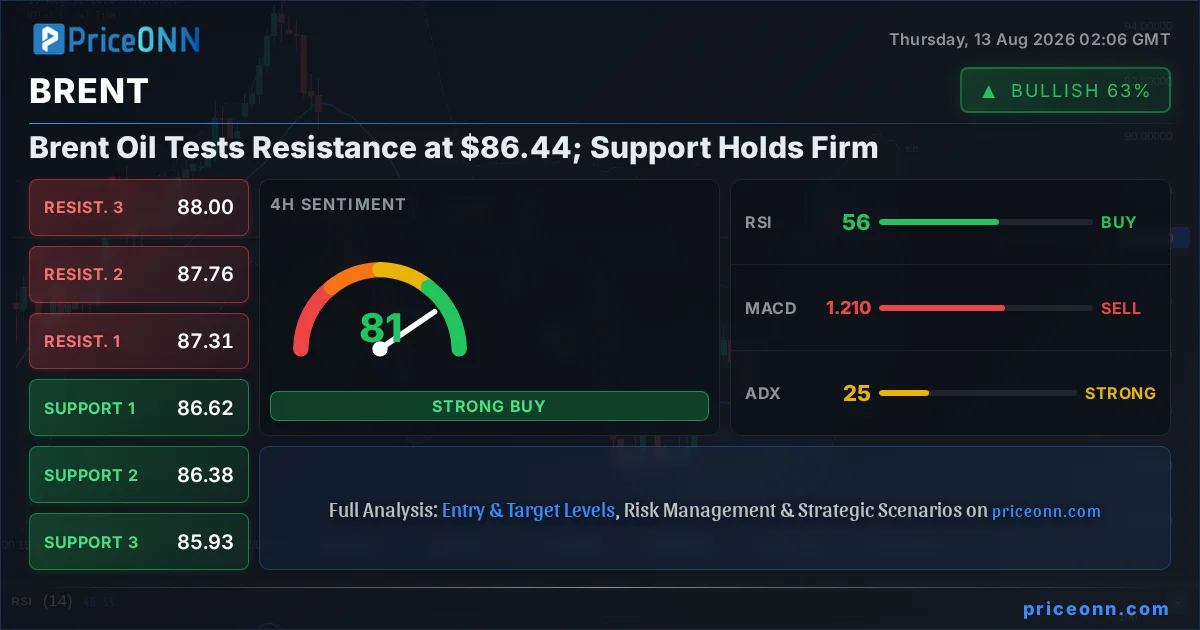
From a technical standpoint, the daily chart analysis leans towards a bearish outlook. Momentum indicators are showing negative divergence, and the moving averages present a mixed setup. Price action has largely remained beneath the lower boundary of the Ichimoku cloud, a level that has repeatedly acted as formidable resistance. While the cloud's base has been tested multiple times, sustained breaks above it have been elusive, keeping key upside targets around $99.00 and $100.00 out of reach for now. The prevailing near-term bias favors sellers as long as this cloud resistance holds firm.
Conversely, the $90.00 region has established itself as a solid support floor, demonstrated by repeated strong rejections of downward price probes. Any renewed assault on this level is likely to encounter significant buying interest. Nevertheless, a decisive breach below $90.00 would serve as a potent signal, potentially unleashing the next phase of the larger downtrend that originated from the $120.00 area.
Reading Between the Lines
The current price action in Brent crude highlights a fascinating market dichotomy. Despite escalating geopolitical rhetoric in the Middle East and a stark inventory deficit in the United States, the price remains stubbornly range-bound. This suggests that either the market is pricing in a relatively contained conflict, or that the underlying demand picture is not robust enough to absorb existing supply without significant price incentives.
The substantial drawdowns in U.S. inventories, while seemingly bullish, are partly a function of strategic reserve releases rather than pure market demand dynamics. This distinction is critical for traders. Furthermore, the lowest OPEC output in over twenty years, exacerbated by potential Strait of Hormuz disruptions, theoretically points to tighter physical supply. Yet, the failure of Brent to break decisively higher indicates that market sentiment is currently dominated by risk aversion towards further upside, or perhaps anticipation of future supply easing from non-OPEC sources or a de-escalation.
Traders are closely watching the interplay between the $90.00 support and the Ichimoku cloud resistance. A sustained break above the cloud base at approximately $94.32 could signal a shift, potentially targeting the $95.50 and $97.41 levels. However, a breakdown below $90.00 would confirm the bearish technical picture and could accelerate declines towards $89.58 and below. The market's reaction to the next significant geopolitical development or inventory report will be crucial in determining the next directional move.
The resilience of the $90.00 support level, coupled with the repeated rejections above the cloud, creates a critical decision point. While bears currently hold sway, the potential for a sharp upward move if geopolitical fears intensify cannot be discounted. Conversely, a break lower would validate the bearish technical setup and could lead to significant downside, especially if demand fears begin to surface more prominently.
Track markets in real-time
Empower your investment decisions with AI-powered analysis, technical indicators and real-time price data.
Join Our Telegram Channel
Get breaking market news, AI analysis and trading signals delivered instantly to your Telegram.
Join Channel PriceONN News
The IEA has slashed its 2026 global oil supply forecast, with output now expected to plunge 4.3 million barrels per day this year as the failure to reopen the Strait of Hormuz pushes the market deeper into deficit. The latest forecast is considerably worse than the 3.7-million-bpd decline the agency projected just last month and would leave global supply at 102.02 million bpd, its lowest forecast for 2026 yet. Supply is now expected to fall 1.27 million bpd short of demand for the year,...
PriceONN News
Indian state-controlled oil refiners continue to search the market for spot crude supply as term deliveries are constrained by the ongoing crisis in the Middle East and its key oil chokepoint, the Strait of Hormuz. Mangalore Refinery and Petrochemicals Limited (MRPL) and Hindustan Petroleum Corporation Limited (HPCL) are looking to buy a combined 6 million barrels of crude oil via spot tenders, Reuters reported on Wednesday, citing tender documents it has seen. HPCL is seeking up to 4 million...
PriceONN News
Brent Crude oil prices rose above $89 per barrel in early trade in Europe on Wednesday as Iran and the United States offered contrasting claims about who controls the Strait of Hormuz. Brent Crude prices were up by 0.64% at $89.60 in the morning in Europe, and WTI Crude was rising by 0.94% at $83.90, amid persistent supply concerns and risks despite claims from the U.S. that traffic at Hormuz had normalized. Iran, for its part, said on Tuesday that the Strait of Hormuz will remain closed unless...
PriceONN News
Oil flows from the Middle East have normalized, with Sunday traffic alone above pre-conflict averages, U.S. Secretary of Energy Chris Wright said on Tuesday in a claim that appears not to be backed by ship-tracking data. On Tuesday, Secretary Wright posted on X that “Thanks to the coordinated efforts of the U.S. military and our gulf allies, the seven-day average for oil leaving the Strait of Hormuz is currently up to almost 9 million barrels per day.” He went on to add that “When combined with...
PriceONN News
(RTTNews) - Crude oil prices have surged on Tuesday, extending the gains from the two previous sessions as the U.S.-Iran stalemate over new demands for compensation for war-related damages continued, diminishing the expectations of an early reopening of the Strait of Hormuz.
PriceONN News
The American Petroleum Institute (API) estimated that crude oil inventories in the United States rose by 9.072 million barrels in the week ending August 7, compared to analyst expectations for a 500,000-barrel draw. In the week prior, U.S. crude oil inventories rose by 2.69 million barrels. The larger-than-expected build was driven in part by higher crude imports relative to exports during the week. Commercial crude oil inventories excluding the SPR have lost just over 49 million barrels over...
PriceONN News
Five months after the U.S. and Israel opened a war with Iran, global fuel markets still haven't settled down, and the latest IEA data prove it. The IEA's monthly end-use price tracker, updated Aug. 7 and covering prices through July, shows the average per-liter cost of automotive diesel across the countries it tracks sitting near $1.94 in U.S. dollar terms. That's roughly 14% above where it stood in February, before the war started, and it's actually higher than June, even as crude oil kept...
PriceONN News
The national oil company of the United Arab Emirates has issued its eighth spot tender since June, trade sources told Reuters on Tuesday, as the Gulf producer that has just left OPEC pushes to sell increased crude volumes to international markets. Abu Dhabi National Oil Company (ADNOC) is offering in the latest spot tender cargoes of the Upper Zakum, Umm Lulu, and Das crude grades for loading in October and November’ sources. These crudes are produced within the Persian...
PriceONN News
OPEC’s total oil production jumped by 1.17 million barrels per day in July from June as many Gulf producers restored some output that was shut in for three months due to the closed Strait of Hormuz. Output at the 11-member OPEC rose to 19.85 million bpd in July, extending the monthly increases for the second consecutive month, according to a based on ship-tracking data and information provided by sources at OPEC, oil companies, and consultants. In May, when major Gulf producers...
PriceONN News
Libya’s National Oil Corporation may declare force majeure on exports from the Zawya oil terminal as a result of drone attacks on the facility. The Zawya terminal has a daily capacity of 120,000 barrels, sourced from the country’s largest oil field, Sharara, which can produce up to 300,000 barrels daily, Reuters noted in a report on the possibility of a force majeure declaration. According to reports, a drone strike had destroyed a storage tank and another drone had targeted an oil blending...
PriceONN News
The latest Bloomberg data show that shipping transits through the Strait of Hormuz remained largely disrupted Monday morning, even as Iran and Oman reportedly moved closer to a deal. Brent crude futures traded near $85 a barrel as markets priced in the possibility that a deal to reopen the maritime chokepoint could be imminent. Yet global supply-chain stress remains near its highest level since the pandemic, and any normalization could take months, even if shipping traffic resumes. UBS senior...
PriceONN News
Crude oil inventories in the United States saw a massive increase of 17.4 million barrels during the week ending August 7, according to new data from the U.S. Energy Information Administration (EIA) released on Wednesday. The increase brings commercial stockpiles to 424.4 million barrels, according to government data, which are now just 2% below the five-year average for this time of year. The EIA’s data release follows API’s figures that were released a day earlier, which reported that crude...