
Brent Oil Above $90: Is $100 Next if Hormuz Blockade Persists?
 PriceONN Editorial Desk
Multi-source verification
PriceONN Editorial Desk
Multi-source verification
Geopolitical Storm Pushes Oil Prices Higher
The week's opening trading session saw a significant upward gap for Brent crude, propelling it decisively above the psychologically critical $90 per barrel threshold. This surge was directly fueled by a fresh wave of escalating tensions between the United States and Iran. Reports detailing US casualties, an attack on a Kuwaiti energy infrastructure, Iran's revocation of a ceasefire agreement, and persistent claims of a blockade in the vital Strait of Hormuz all coalesced to solidify expectations that this geopolitical standoff is far from over.
Despite the potent combination of a major geopolitical flare-up and a technically significant price breakout, the buying enthusiasm in Asian markets displayed a surprising degree of restraint. This muted reaction begs the question: why hasn't Brent rallied with greater ferocity following such dramatic weekend developments?
The subdued follow-through suggests that much of the anticipated impact from the weekend's events was already factored into market pricing. Indeed, Brent experienced a substantial rally of over 17% in the preceding week, marking its most robust weekly gain since April. This climb reflected a growing market consensus on the increasing probability of renewed disruptions to oil supply. The most recent news largely served to validate these existing concerns rather than introducing an entirely novel shock to the system.
For the present moment, investors seem to be operating under the assumption that the eventual reopening of the Strait of Hormuz remains the most probable outcome. This outlook tempers the immediate urgency to aggressively chase prices higher in the wake of the weekend's price gap. The real catalyst for a sustained push towards $100 may hinge less on daily headlines and more on the duration of the disruption.
The Price of Prolonged Disruption
During a brief interlude following an interim agreement in June, when sanctions were temporarily eased and the Strait's passage was clear, Iran was reportedly exporting approximately 2.2 million barrels per day. This volume is now being systematically withdrawn as the blockade tightens its grip.
Each successive day that maritime traffic remains hindered amplifies the probability that global markets will transition their perception of the crisis. What is currently viewed as a high-stakes negotiating tactic could morph into a genuine, physical supply constraint. Should this shift occur, Brent crude prices could accelerate dramatically towards the $100 mark. This would happen as traders begin to price in tighter global supply-demand balances, moving beyond a mere geopolitical risk premium to one dictated by actual scarcity.
This current crisis carries a potentially graver implication than the escalation seen in March and April. Back then, releases from strategic petroleum reserves provided a critical buffer, mitigating the impact of supply-related anxieties. Today's market, however, possesses a significantly smaller safety net. Some analyses indicate that if the current disruptions persist, tangible physical shortages could materialize within approximately ten weeks. Such a scenario would compel consuming nations, particularly those in Asia, to engage in heightened competition for increasingly scarce oil barrels. This would fundamentally alter the pricing dynamic, shifting it from a geopolitical risk premium to a price structure driven by concrete supply deficits.
In such an environment, a retest of this year's peak prices would no longer be considered an extreme or improbable event.
Technical Signals Point to Further Upside
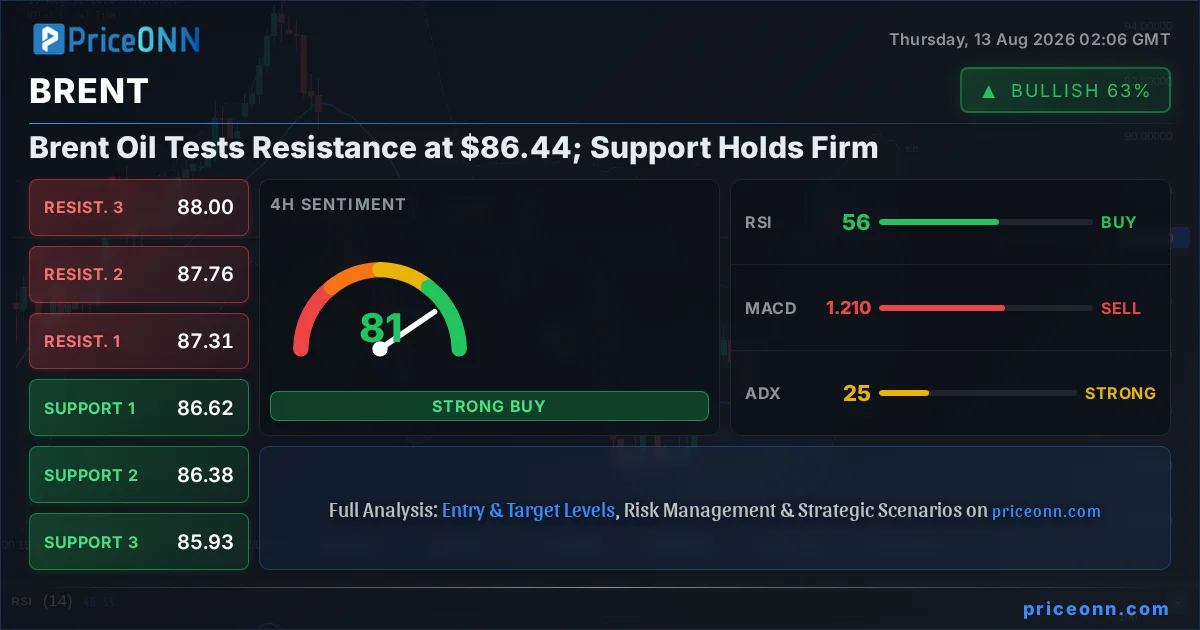
From a technical standpoint, Brent's decisive move above the 38.2% Fibonacci retracement level of the $119.50 to $70.14 range, situated at approximately $89.00, bolsters the argument that the current advance from $70.14 is developing into a genuine bullish trend reversal, rather than a mere corrective bounce.
More significantly, the price decline from $119.50 down to $70.14 itself unfolded as a clearly defined three-wave corrective pattern. This structure suggests that the broader, long-term uptrend may not have concluded. As long as the support level at $83.71 remains intact, the outlook favors continued price appreciation.
The next substantial hurdle is anticipated around the $95 level. Here, the 50% Fibonacci retracement, calculated at $94.82, converges with the upper boundary of the current short-term rising channel. A firm and decisive breach of this resistance zone would likely signal a significant shift in market sentiment. It would indicate that traders are beginning to discount the base case of near-term normalization and are instead pricing in a prolonged disruption to vital Gulf energy supplies. Such a breakout would pave the way through the 61.8% retracement level at $100.64 and open the door for a retest of the March high at $119.50.
Market Ripple Effects
The escalating tensions in the Strait of Hormuz and their impact on Brent crude prices have significant ramifications across multiple financial markets. Traders and investors should closely monitor the following interconnected assets and indicators:
- USD/CAD: The Canadian dollar, often sensitive to oil price movements due to Canada's status as a major oil producer, may see increased volatility. A sustained rally in crude prices could provide support for the Loonie, while any hint of de-escalation might pressure it.
- US Treasury Yields: Heightened geopolitical risk and potential inflationary pressures stemming from higher energy costs could influence US Treasury yields. If markets anticipate a more aggressive inflation outlook, longer-term yields might tick higher, reflecting increased risk premiums.
- Equity Markets (Energy Sector): Major oil producers and energy service companies, particularly those with significant operations in the Middle East or those benefiting from higher global oil prices, could experience a boost. Conversely, energy-intensive industries might face headwinds from rising input costs.
- Gold (XAU/USD): As a traditional safe-haven asset, gold often benefits from increased geopolitical uncertainty and market volatility. A persistent escalation of the US-Iran conflict could drive demand for gold higher, potentially pushing prices towards recent highs.
Track markets in real-time
Empower your investment decisions with AI-powered analysis, technical indicators and real-time price data.
Join Our Telegram Channel
Get breaking market news, AI analysis and trading signals delivered instantly to your Telegram.
Join Channel PriceONN News
Brent Crude oil prices rose above $89 per barrel in early trade in Europe on Wednesday as Iran and the United States offered contrasting claims about who controls the Strait of Hormuz. Brent Crude prices were up by 0.64% at $89.60 in the morning in Europe, and WTI Crude was rising by 0.94% at $83.90, amid persistent supply concerns and risks despite claims from the U.S. that traffic at Hormuz had normalized. Iran, for its part, said on Tuesday that the Strait of Hormuz will remain closed unless...
PriceONN News
The IEA has slashed its 2026 global oil supply forecast, with output now expected to plunge 4.3 million barrels per day this year as the failure to reopen the Strait of Hormuz pushes the market deeper into deficit. The latest forecast is considerably worse than the 3.7-million-bpd decline the agency projected just last month and would leave global supply at 102.02 million bpd, its lowest forecast for 2026 yet. Supply is now expected to fall 1.27 million bpd short of demand for the year,...
PriceONN News
Oil flows from the Middle East have normalized, with Sunday traffic alone above pre-conflict averages, U.S. Secretary of Energy Chris Wright said on Tuesday in a claim that appears not to be backed by ship-tracking data. On Tuesday, Secretary Wright posted on X that “Thanks to the coordinated efforts of the U.S. military and our gulf allies, the seven-day average for oil leaving the Strait of Hormuz is currently up to almost 9 million barrels per day.” He went on to add that “When combined with...
PriceONN News
The latest Bloomberg data show that shipping transits through the Strait of Hormuz remained largely disrupted Monday morning, even as Iran and Oman reportedly moved closer to a deal. Brent crude futures traded near $85 a barrel as markets priced in the possibility that a deal to reopen the maritime chokepoint could be imminent. Yet global supply-chain stress remains near its highest level since the pandemic, and any normalization could take months, even if shipping traffic resumes. UBS senior...
PriceONN News
Indian state-controlled oil refiners continue to search the market for spot crude supply as term deliveries are constrained by the ongoing crisis in the Middle East and its key oil chokepoint, the Strait of Hormuz. Mangalore Refinery and Petrochemicals Limited (MRPL) and Hindustan Petroleum Corporation Limited (HPCL) are looking to buy a combined 6 million barrels of crude oil via spot tenders, Reuters reported on Wednesday, citing tender documents it has seen. HPCL is seeking up to 4 million...
PriceONN News
(RTTNews) - Crude oil prices have surged on Tuesday, extending the gains from the two previous sessions as the U.S.-Iran stalemate over new demands for compensation for war-related damages continued, diminishing the expectations of an early reopening of the Strait of Hormuz.
PriceONN News
Hormuz tensions are flaring again as Iranian exports collapse, pushing Brent toward $87 and raising the risk of another run toward $100. China’s Crude Drawdown Puts Iranian Barrels Back in Demand - Shrinking crude inventories in China might spur a buying spree over the upcoming weeks, particularly for Russian and Iranian crude, buoyed by a record-high July stock draw in Shandong. - Chinese teapots are expected to boost their purchases of Iranian oil in the upcoming days as stockpiles in the...
PriceONN News
Libya’s National Oil Corporation may declare force majeure on exports from the Zawya oil terminal as a result of drone attacks on the facility. The Zawya terminal has a daily capacity of 120,000 barrels, sourced from the country’s largest oil field, Sharara, which can produce up to 300,000 barrels daily, Reuters noted in a report on the possibility of a force majeure declaration. According to reports, a drone strike had destroyed a storage tank and another drone had targeted an oil blending...
PriceONN News
A drone has struck a power station at the Zawiya oil export terminal in Libya, suggesting continued attacks on one of the country’s main oil hubs. The power plant is in close proximity to the largest oil refinery in Libya, the AP noted in a report on the news. The attack follows earlier ones that caused an explosion at an oil storage tank. No one has claimed responsibility for the drone attacks, the AP also reported. The tank, according to the company operating the facility, had 4.5 million...
PriceONN News
Whatever officially occurs next in the on-again/off-again negotiations towards a peace deal between the U.S. and Iran, unofficially Tehran knows that it has established de facto control over both the world’s two key maritime energy transit routes -- the Strait of Hormuz and the Bab el-Mandeb Strait -- for at least as long as the Islamic regime remains in place in Iran. Washington, London, Brussels, Beijing, and Moscow know it too. The Strait of Hormuz remains effectively controlled by vast...
PriceONN News
The Middle East conflict and the heightened threats to shipping in the Red Sea have prompted China to boost the use of the Arctic to move containers from the Chinese east coast to Europe. The fast-melting Arctic ice offers an alternative shipping route in the summer as the Houthi threats to shipping in the Red Sea and the Bab el-Mandeb Strait make cargo operators more cautious in transiting the key chokepoints in the Middle East. Shipping through the Arctic is not something new, but this time...
PriceONN News
The American Petroleum Institute (API) estimated that crude oil inventories in the United States rose by 9.072 million barrels in the week ending August 7, compared to analyst expectations for a 500,000-barrel draw. In the week prior, U.S. crude oil inventories rose by 2.69 million barrels. The larger-than-expected build was driven in part by higher crude imports relative to exports during the week. Commercial crude oil inventories excluding the SPR have lost just over 49 million barrels over...