
Is CAD Weakening as Energy Shocks and Geopolitics Cloud Inflation Outlook?

The Canadian Dollar is navigating a complex landscape, with geopolitical tensions in the Middle East now casting a significant shadow over domestic economic prospects. An escalating conflict has sent crude oil prices soaring, raising concerns about a renewed inflationary push and its potential to erode consumer spending power, even as some domestic inflation indicators had begun to show signs of cooling.
Market Context
Recent weeks have seen a divergence in market narratives. While underlying inflation measures in Canada had hinted at a more stable path, the resurgence of geopolitical instability, particularly the conflict in Iran, has drastically altered the outlook. Physical damage and a lack of clear data from the region have amplified uncertainty in energy markets, pushing West Texas Intermediate (WTI) crude oil prices to approximately $94 per barrel. This sharp increase in energy costs poses a direct threat to Canadian households and businesses, potentially reversing positive momentum seen in early economic data.
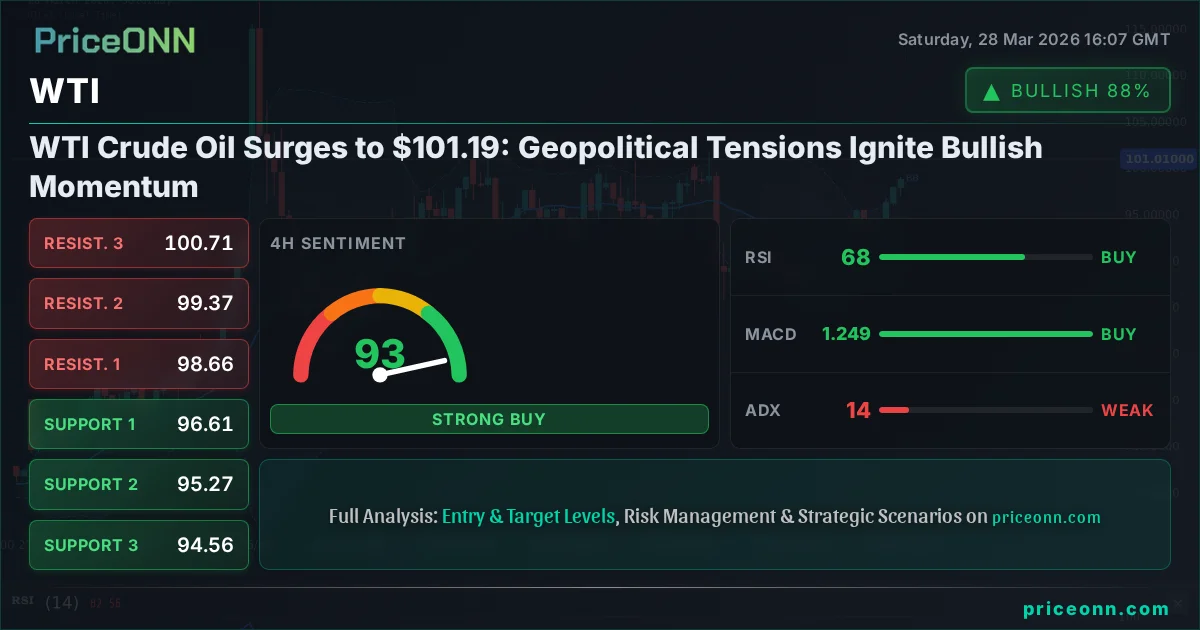
Canadian retail sales figures for January indicated a robust recovery, with real volumes posting a solid gain and a strong three-month annualized increase of 7.7%. Preliminary estimates for February also suggested continued nominal strength. This suggested that the economy might have been turning a corner after a period of volatility. However, the anticipated surge in gasoline and energy prices throughout March is expected to dampen real spending in the coming months, complicating the inflation picture for the Bank of Canada (BoC).
Analysis & Drivers
The primary driver currently impacting the Canadian Dollar (CAD) is the volatile energy market, intrinsically linked to geopolitical developments. The conflict in the Middle East has created a supply-side shock, pushing oil prices higher. This is a double-edged sword for Canada, a major energy producer. While higher prices can boost export revenues, the broader economic impact of stagflation-a combination of rising inflation and stagnant economic growth-is a growing concern.
On the inflation front, market data indicates that core inflation measures had been showing signs of moderating, suggesting some excess capacity within the Canadian economy. This had provided the BoC with a degree of flexibility. However, the energy shock threatens to reignite price pressures. Analysts note that the persistence of this energy shock will be crucial in determining its long-term impact on inflation and the central bank's policy path. The U.S. Federal Reserve has also acknowledged similar challenges, holding interest rates steady and expressing caution as higher oil prices complicate their own inflation outlook. Recent U.S. housing data further underscores a growing sensitivity to elevated yields and tighter financial conditions, a trend that could also affect Canadian markets.
Trader Implications
For forex traders, the escalating geopolitical risks and their impact on energy prices are paramount. The Canadian Dollar remains vulnerable to further downside if energy price volatility persists or if the conflict widens. Key levels to watch for USDCAD include potential resistance around 1.3700 and support at 1.3500. Traders should monitor oil price movements closely, as well as upcoming Canadian inflation and retail sales data, which will now be viewed through the lens of the energy shock.
The divergence between easing domestic inflation signals and the new external inflationary pressures creates uncertainty for the BoC. While the central bank may have had room to maneuver, the current environment demands vigilance. The risk of stagflation increases the complexity of monetary policy decisions. Traders should consider the potential for increased volatility in CAD pairs and look for opportunities around key technical levels, while remaining aware of the overarching geopolitical risks.
Outlook
The immediate outlook for the Canadian Dollar is clouded by uncertainty stemming from the Middle East conflict and its impact on global energy markets. While underlying economic data had shown some promising signs of recovery, the renewed inflationary pressures from higher oil prices could temper growth prospects and complicate the central bank's efforts to manage inflation. The coming weeks will be critical in assessing the duration and severity of the energy shock, and its subsequent influence on Canadian economic policy and currency markets.
Frequently Asked Questions
How is the conflict in the Middle East affecting the Canadian Dollar?
The conflict is driving up crude oil prices, a key commodity for Canada. Higher oil prices can support the CAD through export revenues, but the broader risk of stagflation and reduced consumer spending due to energy costs can weigh on the currency, creating volatility. Market data shows WTI crude trading near $94.
What are the latest inflation trends in Canada?
Prior to the recent energy shock, core inflation measures in Canada had shown signs of easing, indicating some economic slack. However, the anticipated rise in energy prices throughout March is expected to push headline inflation higher, potentially complicating the Bank of Canada's inflation targets.
What key economic data should traders watch for CAD?
Traders should closely monitor upcoming Canadian inflation reports (CPI), retail sales figures, and employment data. Additionally, movements in crude oil prices and any statements from the Bank of Canada regarding the energy shock and its inflation implications will be crucial indicators for the CAD's direction.
Track markets in real-time
Empower your investment decisions with AI-powered analysis, technical indicators and real-time price data.
Join Our Telegram Channel
Get breaking market news, AI analysis and trading signals delivered instantly to your Telegram.
Join Channel
PriceONN