
Can the Canadian Dollar Find Strength Amidst Global Uncertainty and Sticky Inflation?

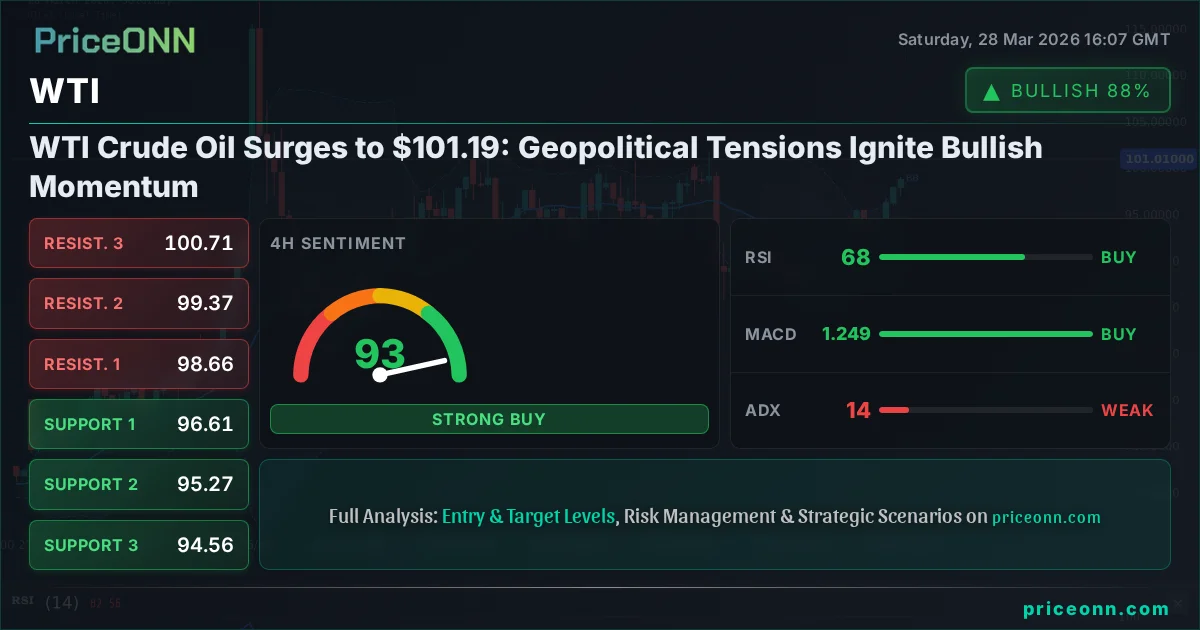
The Canadian Dollar (CAD) is navigating a complex global landscape, facing renewed pressure from volatile energy markets and persistent inflation concerns. Escalating geopolitical tensions, particularly the conflict in Iran, have sent West Texas Intermediate (WTI) crude oil prices soaring to approximately $94 per barrel, a development that directly impacts the commodity-linked Loonie.
Market Context
This surge in oil prices casts a shadow over recent positive economic signals from Canada. While retail sales data for January showed robust real volume growth, with a three-month annualized gain of 7.7%, and preliminary February figures suggesting continued nominal strength, the anticipated rise in gasoline and energy costs for March threatens to undermine this momentum. Analysts note that higher energy prices are likely to erode real spending power in the coming months, potentially leading to a stagflationary environment.
Analysis & Drivers
The primary driver of current market sentiment is the escalating conflict in the Middle East. Physical damage and a lack of clear data transparency surrounding the Iran situation are deepening uncertainty in energy markets. This global shock comes at an unfortunate time for Canada, as domestic inflation indicators had begun to show signs of easing. Core inflation measures were reportedly near target, and the economy exhibited excess capacity, which had provided the Bank of Canada (BoC) with some buffer. However, the energy shock is expected to test this resilience. In the United States, the Federal Reserve held its benchmark interest rate steady, signaling a cautious approach. Officials highlighted that rising oil prices complicate the inflation outlook, a sentiment echoed by analysts observing the Canadian economic landscape. Furthermore, softer U.S. housing data underscore a growing sensitivity to higher yields and tighter financial conditions, which could spill over into global markets.
Trader Implications
For traders, the key focus remains on the trajectory of oil prices and their impact on Canadian inflation and consumer spending. Key levels to watch for CAD pairs will be influenced by shifts in crude oil benchmarks and any further statements from the Bank of Canada regarding their inflation outlook and policy stance. The potential for stagflation presents a significant risk factor. Traders should monitor upcoming inflation reports closely, particularly the March figures, to gauge the full impact of the energy shock. Support for USD/CAD may be found if the oil price rally falters or if Canadian economic data continues to show underlying strength, while resistance could emerge if global risk aversion intensifies and oil prices climb further. The 1.3700 level in USD/CAD remains a critical area of observation.
Outlook
The outlook for the Canadian Dollar is currently clouded by geopolitical events and their impact on commodity prices and inflation. While domestic data had suggested a potential turning point for the better, the energy shock poses a significant threat. Traders and investors will be closely watching developments in the Middle East and their repercussions on global energy supply and demand. The Bank of Canada's communication will be crucial in navigating market expectations, particularly concerning its ability to manage inflation without stifling economic growth. The coming weeks will be pivotal in determining whether the CAD can regain its footing or succumb to the prevailing global uncertainties.
Frequently Asked Questions
What is the current price of WTI crude oil?
As of the reporting period, West Texas Intermediate (WTI) crude oil prices are holding at approximately $94 per barrel due to escalating geopolitical tensions.
How will higher energy prices affect the Canadian economy?
Higher energy prices are expected to erode real consumer spending in Canada, potentially leading to a stagflationary environment despite recent positive retail sales figures. This poses a challenge for the Bank of Canada's inflation targets.
What is a key trading level to watch for USD/CAD?
Traders should monitor the 1.3700 level in USD/CAD. A sustained move above this could indicate further weakness in the Canadian Dollar, while a break below might signal a potential recovery driven by stabilizing oil prices or positive domestic news.
Track markets in real-time
Empower your investment decisions with AI-powered analysis, technical indicators and real-time price data.
Join Our Telegram Channel
Get breaking market news, AI analysis and trading signals delivered instantly to your Telegram.
Join Channel
PriceONN