
Cliff Notes: Policy Matters
 PriceONN Editorial Desk
Multi-source verification
PriceONN Editorial Desk
Multi-source verification
Global Central Banks Hold Steady But Signal Vigilance
The Reserve Bank of Australia's Monetary Policy Board made a unanimous decision to maintain the benchmark cash rate at 4.35% this week, a move largely anticipated by market observers. However, the accompanying statements delivered a clear message: the period of rate hikes might not be entirely concluded. Officials underscored that both headline and underlying inflation figures remain elevated, citing evidence that businesses are beginning to pass on cost pressures to consumers. This stance explicitly left the door open for additional increases if necessary to meet the RBA's inflation objectives.
Chief Economist Luci Ellis elaborated mid-week, noting that recent economic data, including softer consumer spending, housing market trends, and labor market figures, have recently influenced market sentiment more significantly. While acknowledging some of the labor market weakness might be attributed to unusual seasonal factors expected to normalize, Governor Bullock framed a cooling economy as a deliberate outcome of restrictive monetary policy. The aim is to curb demand sufficiently to dislodge inflation and prevent it from becoming entrenched in future price expectations.
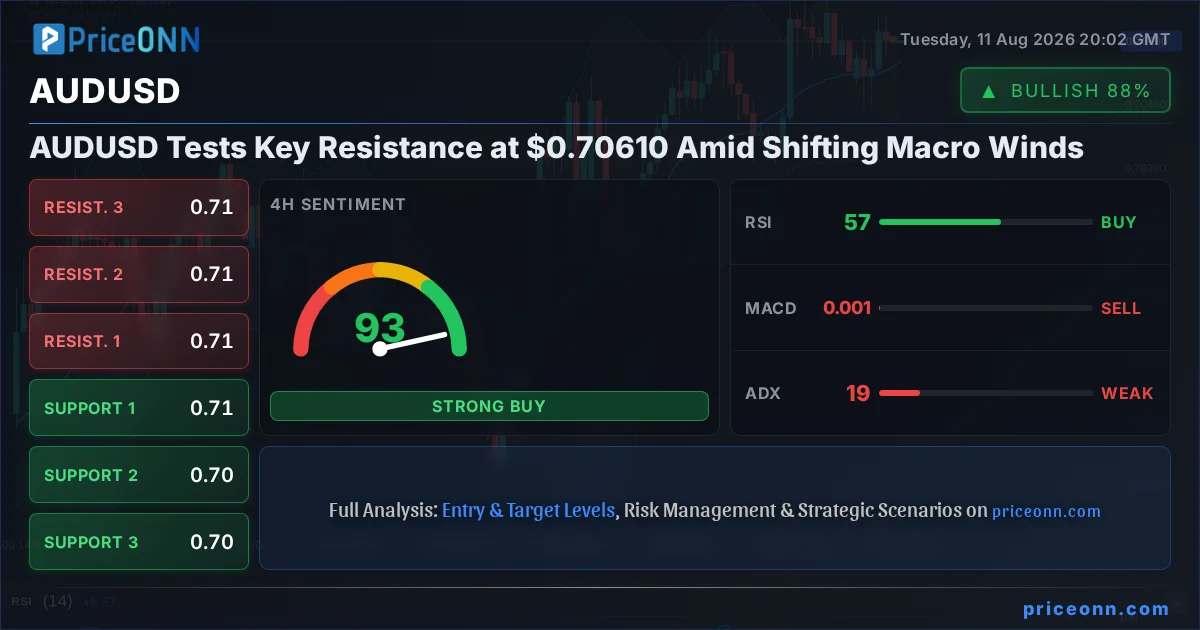
Considering the forthcoming inflation data is likely to reveal continued stickiness, our outlook suggests the RBA may feel compelled to implement further rate adjustments in both August and September.
Manufacturing Sector Faces Headwinds
Shifting focus domestically, the latest Westpac-ACCI Survey of Industrial Trends paints a picture of stalled momentum in Australia's manufacturing sector as the second quarter progressed. The Actual Composite index saw a significant drop from a strong 57.6 in the first quarter to a neutral 50.5 by mid-year. This slowdown was driven by a plateau in new orders, a reduced pace of output expansion, and a contraction in employment figures.
The global geopolitical climate, specifically the conflict in the Middle East, is exacerbating existing cost-of-living pressures for households, thereby dampening consumer demand. Concurrently, these global tensions are reigniting cost pressures within the manufacturing industry itself. A substantial 51% of surveyed firms reported an increase in their average unit costs. Consequently, businesses anticipate further material adjustments to their selling prices in the latter half of the year, indicating a persistent pass-through of higher expenses.
The initial optimism regarding the general business outlook has evaporated, replaced by deep pessimism. This sentiment shift is prompting many companies to postpone or cancel planned investments and hiring initiatives for the upcoming year.
International Policy Watch
Across the Pacific, New Zealand's economy expanded by 0.8% in the first quarter, a figure slightly below initial expectations, though revised annual growth rates surpassed forecasts. The economic momentum observed in prior quarters likely stalled in Q2 due to Middle East tensions. However, recent developments suggesting a de-escalation of the conflict could lead to a quicker economic rebound than previously projected.
In the United States, the Federal Open Market Committee's (FOMC) initial meeting under new Chair Kevin Warsh proceeded as anticipated. Chair Warsh dedicated significant attention to the operational practices of the Committee and the Federal Reserve, establishing five distinct task forces. The labor market was characterized as broadly balanced, while the message on inflation was unequivocal: the Committee is committed to achieving price stability. Market participants expressed concern, with 9 out of 18 respondents anticipating at least one rate hike by year's end. Nevertheless, Chair Warsh emphasized the considerable uncertainty influencing these projections. Recent declines in energy prices have also begun to mitigate some risks. Should the US-Iran accord hold in the coming months, the FOMC is expected to maintain its current policy stance.
The Bank of England also maintained its current policy in June, with seven of the nine Monetary Policy Committee members voting to keep the Bank Rate steady at 3.75%. Minutes revealed that Chief Economist Huw Pill and external member Megan Greene advocated for a 25 basis point increase as a precautionary measure against potential second-round effects from energy inflation. Other members found reassurance in the recent decrease in energy prices. Data on the labor market and inflation were interpreted as evidence that disinflationary trends were already in motion prior to the Middle East conflict. Despite this, the statement retained a hawkish tone, indicating the Committee views price risks as the primary concern.
In Asia, the Bank of Japan implemented a 25 basis point increase to its policy rate, bringing it to 1.0%. This action follows robust wage growth earlier in the year and increasing signs of this translating into domestic inflation, particularly in the services sector. Deputy Governor Uchida, in Governor Ueda's absence, indicated that further rate hikes are probable. Projections suggest that productivity advancements and sustained domestic inflationary pressures could lead the BoJ to reach a terminal rate of approximately 1.5% by mid-2027. The Policy Board also confirmed its intention to continue tapering Japanese Government Bond (JGB) purchases, albeit at a moderated pace. Crucially, the Bank will retain the capacity to increase purchase volumes should yields experience disorderly movements, and will continue its quarterly pre-commitments for purchase amounts.
China's Economic Struggles and Middle East De-escalation
Economic activity in China continued to disappoint in May. Retail sales contracted by -0.6% year-on-year, influenced by sluggish income growth, declining household wealth, and a general lack of consumer confidence. Fixed asset investment saw a year-to-date decline of 4.1%, with notable drops in property, health, and education sectors, as well as a slowdown in previously robust areas like manufacturing and utilities. Industrial production, however, grew by 5.4% year-on-year, reflecting efficient utilization of existing capacity to meet strong foreign demand. The overall economic expansion is currently heavily reliant on net exports, a situation deemed unsustainable given the record trade surplus. This underscores the urgent need for substantial stimulus measures aimed at bolstering the domestic economy.
Regarding the Middle East conflict, a resolution appears to be in place for at least the next 60 days, following the signing of a 14-point Memorandum of Understanding between the US and Iran. Early reports indicate that several Very Large Crude Carriers (VLCCs), each capable of holding 2 million barrels of oil, transited the Strait of Hormuz on the first day of its re-opening, with others preparing at port. This development is expected to not only facilitate shipments from other Middle Eastern nations but also from Iran, with waivers permitting unrestricted global sales and potential sanctions relief to confirm long-term market access. While negotiations over Iran's nuclear program remain critical and carry inherent risks of renewed conflict, the rebuilding of damaged infrastructure and global inventories will take time. Nevertheless, the initial market reaction has been positive, with Brent crude oil prices retreating from a recent high near USD110 per barrel to USD79, a significant drop from the average of USD63 seen in Q4 2025.
Market Ripple Effects
The RBA's cautious yet hawkish stance, coupled with global inflation persistence, signals a complex environment for investors. While the cash rate remains at 4.35%, the explicit mention of potential further hikes suggests that borrowing costs could continue to climb, impacting sectors sensitive to interest rates like real estate and consumer discretionary. The decline in oil prices following the Middle East de-escalation provides some relief, potentially easing inflationary pressures globally. However, the underlying domestic economic challenges in countries like China and Australia, as evidenced by manufacturing and retail sales data, introduce significant downside risks.
Traders should closely monitor upcoming inflation prints from Australia and the US for confirmation of the RBA's and FOMC's next moves. For those looking at currency markets, the Australian Dollar (AUD) may face headwinds if domestic data continues to weaken, despite the hawkish central bank rhetoric. Conversely, a sustained resolution in the Middle East could bolster global risk appetite, potentially benefiting equities and riskier currencies, while also putting downward pressure on safe-haven assets like the US Dollar Index (DXY).
The resilience of manufacturing sectors globally, particularly in Australia and China, warrants attention. A continued slowdown here could have cascading effects on industrial commodities and global supply chains. The divergence in policy paths, with Japan hiking rates while others hold but signal caution, adds another layer of complexity for global portfolio allocation. The potential for further tightening in major economies means that bond yields could remain elevated or even trend higher, impacting fixed income strategies and the attractiveness of dividend-paying stocks.
Track markets in real-time
Empower your investment decisions with AI-powered analysis, technical indicators and real-time price data.
Join Our Telegram Channel
Get breaking market news, AI analysis and trading signals delivered instantly to your Telegram.
Join Channel PriceONN News
RBA on hold as expected, recognising the data has broken against its hawkish narrative. Base case clearly an extended period on hold, but RBA will hike if upside risks to inflation materialise. As widely expected, the RBA Monetary Policy Board (MPB) kept the cash rate on hold at 4.35% at its August meeting. The accompanying […] The post RBA Holds at 4.35%, Narrows Risk of Hikes appeared first on ActionForex.
PriceONN News
RBA accepted that inflation has improved, but refused to turn that improvement into a declaration that rate hikes are finished. Cash rate was left unchanged at 4.35% unanimously, yet Board described policy as only “somewhat restrictive” and explicitly kept another increase on table, saying it could still raise rates “if upside risks materialise.” That is […] The post RBA Accepts Softer Inflation but Still Leaves Scope for One More Hike appeared first on ActionForex.
PriceONN News
The Consumer Price Index (CPI) rose by 0.1% month-on-month (m/m) in July – in line with expectations. On a twelve-month basis, CPI edged down to 3.4% (from 3.5% in June). Energy costs fell by 1.5% m/m, led by a 2.9% m/m decline in prices at the pump. Food prices rose 0.1% m/m – its softest […] The post US: Inflationary Pressures Remain Subdued in July appeared first on ActionForex.
PriceONN News
Markets Core bonds sold off yesterday with the belly of the curve slightly underperforming in the US while European curves showed more of a bear flattening. Daily changes on the US curve varied between +4.7 bps (2-yr) and +6.4 bps (7-yr). The US 30-yr yield is again within reach of the multi-annual high reached end […] The post Sunrise Market Commentary appeared first on ActionForex.
PriceONN News
US inflation eased as expected in July, reinforcing case for Fed to stay on hold while it waits for clearer evidence on both prices and labor market. Headline CPI rose from -0.4% to 0.1% m/m, while annual rate slowed from 3.5% y/y to 3.4%. Core CPI increased from 0.0% to 0.2% m/m, with annual core […] The post US CPI Slows to 3.4% as Core Inflation Eases to 2.5% appeared first on ActionForex.
PriceONN News
Whatever the inflation figures may be, the precious metal will come out on top. Japan and the US don’t want to give the yen’s fate to speculators. The US dollar continues to recover from the blow dealt by the labour market statistics. A rally in Treasury bond yields is driving the rise in the USD […] The post Gold as a Sure-Fire Bet appeared first on ActionForex.
PriceONN News
Germany’s benchmark index just made history, breaking above 26,500 for the first time ever, extending a rally that has already delivered close to 10% over the past twelve months. The move came on fresh optimism around a potential resolution to the Iran conflict, though that optimism proved short-lived: President Trump’s latest demands, that Tehran compensate […] The post DAX 40: Record Highs, Real Fundamentals, One Channel Left to Test appeared first on ActionForex.
PriceONN News
The NFIB’s Small Business Optimism Index rose 2.4 points to 99.8 in July, soundly beating expectations for a roughly flat reading of 97.5. Eight out of the ten index subcomponents improved during the month and two deteriorated. The largest improvement came from the net share of firms planning to increase employment (up 9 points to […] The post US: Small Business Optimism Spiked in July appeared first on ActionForex.
PriceONN News
A deal to reopen the Strait of Hormuz is not inevitable. Oil prices are rising amid growing risks of an escalation of the conflict in the Middle East. The US dollar continued to recover from losses caused by the jobs report, against a backdrop of rising geopolitical tensions in the Middle East with traders squaring […] The post Brent Is Following a Path of Demands Rather Than Commitments appeared first on ActionForex.
PriceONN News
Gold rose to 4,400 USD per ounce on Tuesday, reaching a two-month high. Demand for the precious metal is growing rapidly, even amid heightened inflation risks and expectations of higher interest rates driven by elevated oil prices. Chinese institutional investors continue to build positions in gold as a defensive asset amid heightened volatility in other […] The post Gold Rallies: Long-Awaited Rise and Growing Safe-Haven Demand appeared first on ActionForex.
PriceONN News
Brent oil price rose to the highest in over one week on Tuesday, in extension of Monday’s nearly 5% advance, following the latest verbal escalation by President Trump that quickly changed the sentiment and countered efforts of Iran and Oman to find solution for reopening of strategic Hormuz strait. The latest demands from President Trump […] The post Brent Oil Price Falls After Recovery Failed to Clear Important $90 Barrier appeared first on ActionForex.
PriceONN News
Hello fellow traders. In this technical article we’re going to take a look at the Elliott Wave charts charts of Copper (HG_F) commodity published in members’ area of the website. As our members know, Copper Futures recently completed a pullback that provided a high-probability trading setup. The decline unfolded as a clear Elliott Wave Zig […] The post Copper (Hg_F) Elliott Wave: Targeting a Buy at the Blue Box appeared first on ActionForex.