
Could Crude Oil Prices Surge to $200 Amid Escalating Geopolitical Tensions?
Crude oil prices are navigating a complex landscape, caught between hopeful diplomatic overtures and the stark reality of escalating geopolitical risks. While recent pronouncements have suggested a potential de-escalation in the Middle East, the underlying market dynamics point to persistent upside potential, with some U.S. government agencies even modeling a scenario where prices could skyrocket to $200 per barrel.
Market Context: A Precarious Balance
This past week saw crude oil benchmarks experience a notable pullback from earlier highs. Brent crude, which had traded above $111 on Monday, was seen around $107.98 at the time of this report. Similarly, West Texas Intermediate (WTI) retreated from over $98 to approximately $94.12 per barrel. This downward price action was largely driven by market participants pricing in the possibility of a swift resolution to ongoing hostilities in the Middle East, fueled by optimistic statements regarding an imminent end to the conflict. However, despite this recent dip, both benchmarks remain significantly elevated compared to the beginning of the year, underscoring the fragility of the current market equilibrium. The physical supply situation paints a more concerning picture, with critical chokepoints like the Strait of Hormuz facing prolonged disruptions. Millions of barrels of crude are effectively landlocked, forcing producers to curtail output and sending shockwaves through energy-dependent economies, particularly in Asia.
Analysis & Drivers: War Risk and Supply Squeeze
The primary driver of current oil market volatility is the escalating geopolitical tension in the Middle East. The U.S. federal government is reportedly modeling the economic impact of a potential surge to $200 per barrel, highlighting the severity of the risks involved. This worst-case scenario analysis underscores the potential for a devastating blow to the global economy, with developing nations bearing the brunt of the impact. Even at current price levels, the ripple effects are palpable. In the United States, average gasoline prices have climbed approximately 30% since the onset of heightened instability, reaching an average of $3.982 per gallon according to AAA data on March 25th. This rise in fuel costs contributes directly to broader inflation across goods and services. Europe, still recovering from its previous energy crisis, faces significant strain, with energy import expenditures climbing substantially since 2022, limiting its financial flexibility. The market's reaction has been erratic, oscillating between optimism spurred by diplomatic overtures and the harsh reality of physical supply constraints. The closure of the Strait of Hormuz is a critical factor, trapping essential sour crude grades and forcing rationing and export bans in affected regions. This physical supply crunch, already impacting Asia, is poised to spread to European markets.
Trader Implications: Watching Key Levels and Geopolitics
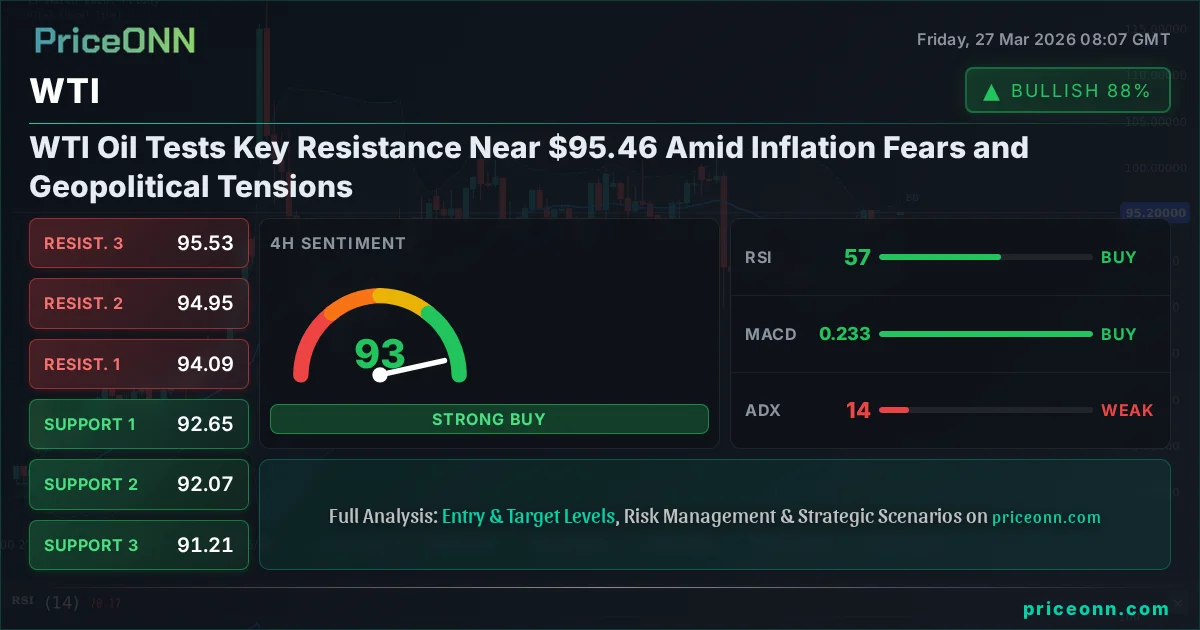
Traders should remain highly attuned to geopolitical developments, as they are currently overshadowing fundamental supply and demand data. The erratic communication from key international players injects significant choppiness into oil prices, leading to sharp but often temporary market reversals. The recent 10% price slide experienced between Monday and Wednesday serves as a prime example of this volatility. Key levels to watch for WTI crude include the recent lows around $93.50 as immediate support, with significant psychological resistance forming near the $100 mark. For Brent crude, the $105 level could act as a short-term support, while a sustained push above $110 would signal a potential return to higher price discovery. The divergence between the paper market's optimism and the physical supply realities is a critical indicator. Traders looking to position themselves should consider the potential for a rapid price escalation if diplomatic efforts fail and the Strait of Hormuz remains blocked, effectively cutting off millions of barrels of daily supply. Conversely, a genuine de-escalation would likely trigger a sharp sell-off, but the underlying supply tightness suggests any such decline might be temporary unless global demand falters significantly.
Outlook
The immediate future for oil prices remains highly uncertain, contingent on the delicate balance between diplomatic progress and the persistent threat of supply disruptions. While market sentiment has been swayed by hopes of peace, the underlying structural issues, particularly concerning the Strait of Hormuz and the broader geopolitical instability in the Middle East, present a significant upside risk. Traders should prepare for continued volatility, with geopolitical pronouncements dictating short-term price action. However, the potential for a severe supply shock remains a potent factor that could drive prices significantly higher in the medium term, especially if conflict intensifies or supply routes remain compromised.
Frequently Asked Questions
What is the current price of WTI crude oil?
As of Friday's European session opening, West Texas Intermediate (WTI) crude oil was trading around $94.12 per barrel, having pared previous losses and returned to levels above $93.50.
What is the U.S. government's worst-case oil price scenario?
The U.S. federal government is actively modeling a scenario where crude oil prices could reach an unprecedented $200 per barrel to assess the potential economic fallout.
What are the key factors influencing current oil prices?
Current oil prices are primarily driven by escalating geopolitical tensions in the Middle East and potential disruptions to supply through critical chokepoints like the Strait of Hormuz. Diplomatic developments are also playing a significant role in market sentiment.
Track markets in real-time
Empower your investment decisions with AI-powered analysis, technical indicators and real-time price data.
Join Our Telegram Channel
Get breaking market news, AI analysis and trading signals delivered instantly to your Telegram.
Join Channel
PriceONN