Crude Oil Price Forecast: Analyzing the Bullish $150 case and Bearish $95 Threat
Geopolitical Storm Sends Oil Prices Skyward
Global oil benchmarks experienced a sharp ascent in early trading as escalating tensions in the Middle East cast a long shadow over critical energy supply routes. Brent crude climbed precariously close to the $114 per barrel mark, while its US counterpart, West Texas Intermediate (WTI), pushed past $105. This dramatic price action was ignited by a dangerous escalation of regional conflict that now directly imperils some of the planet's most vital energy assets.
The immediate catalyst for this market jolt was a series of aggressive actions targeting Iranian energy infrastructure, followed by Iran's retaliatory threats. Reports indicated Israeli airstrikes impacting Iran's South Pars gas field. In a move that sent immediate shockwaves through financial markets, Iran's Islamic Revolutionary Guard Corps (IRGC) issued a stark warning: they would target oil facilities in Saudi Arabia, the United Arab Emirates (UAE), and Qatar. Given that these three nations collectively account for an estimated 20–25% of global crude exports, this threat transformed a localized dispute into a systemic risk for the worldwide economy.
Recent weeks have seen a disturbing pattern of missile and drone assaults causing significant damage to energy installations across multiple nations. In Qatar, strikes impacted the world's largest LNG plants and a major facility operated by Shell, leading to production halts and a notable spike in European natural gas prices. Saudi Arabia's defenses intercepted several projectiles, but an aerial assault on a refinery in Yanbu caused a temporary disruption to oil shipments. Kuwait also experienced a drone strike that ignited a fire at a refinery, though it was quickly brought under control. QatarEnergy has since declared force majeure on its entire LNG output following earlier attacks on its Ras Laffan production hub.
In response to the heightened geopolitical climate, the Trump administration is reportedly evaluating the deployment of thousands of additional US troops to the region to bolster ongoing operational security.
The Hormuz Chokepoint and Asian Market Vulnerability
At the heart of the market's current anxiety lies the Strait of Hormuz, a narrow maritime passage through which approximately 21 million barrels of oil and refined products transit daily. Iran's explicit threat to enforce a full blockade, coupled with the increasing peril faced by shipping lanes, has injected a substantial "risk premium" into every barrel traded. This situation is creating a significant "regional divergence" in market impact.
Asian economies, including China, India, and Japan, find themselves at the epicenter of this unfolding crisis due to their profound reliance on crude oil sourced from the Persian Gulf. While Western benchmarks like Brent and WTI have reacted sharply, the most acute physical shortage is currently felt in Asia. The logistical reality is that it takes roughly 10–15 days for Gulf oil to reach Asian destinations. Conversely, alternative routes around the Cape of Good Hope, which would be necessary for cargoes rerouted to Europe or the US, can extend transit times to as long as 45 days. This "lagged transmission" effect suggests that the full implications of the supply disruption on prices may not yet be fully realized in the Atlantic basin, potentially leading to further price surges if the conflict persists.
Economic Repercussions and Future Price Scenarios
The current price surge, with Brent nearing $114, is already translating into noticeable "creeping price increases" for everyday consumer goods. Transportation providers and airlines have signaled upcoming fare hikes, while manufacturers are bracing for reduced profit margins. Sustained high oil prices risk reigniting inflationary pressures globally, potentially compelling central banks to maintain elevated interest rates for an extended period. Such a scenario could dampen economic recovery efforts in regions just beginning to show signs of life.
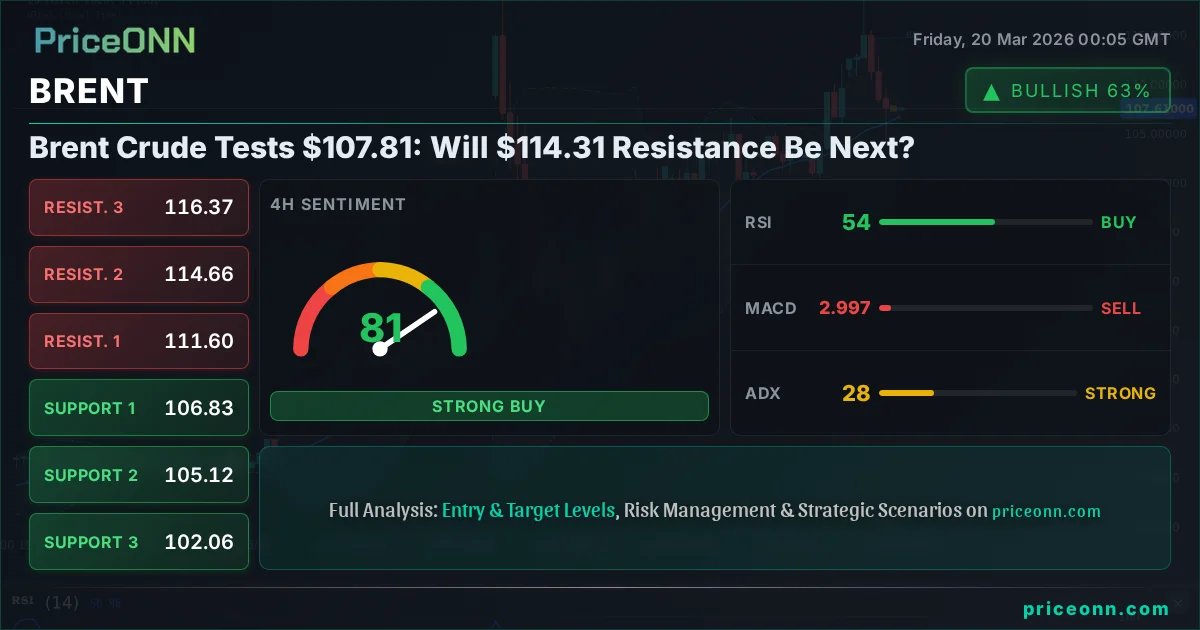
The future direction of oil prices now hinges on two critical elements: the longevity of the current supply disruptions and the potential for further geopolitical escalation. The bullish outlook paints a picture where a decisive close for Brent above the $113.75 resistance level could trigger a rapid retest of 2022 peaks near $130, with a potential move towards $150 if the Strait of Hormuz is fully immobilized or if Saudi oil facilities suffer catastrophic damage.
Conversely, a bearish scenario could unfold if diplomatic channels, which have thus far proven fruitless, suddenly yield positive results. Alternatively, a coordinated, massive release of crude from Strategic Petroleum Reserves (SPR) by the US and its allies could trigger a price retreat. A break below the $97.65 support level would be a key indicator that the current "geopolitical fever" is subsiding. Additionally, the US Treasury is reportedly considering lifting sanctions on Iranian oil currently held on tankers to alleviate global energy costs and boost supply.
For the present moment, the market remains characterized by significant "physical tightness." With Western inventories diminishing and no clear end to the regional conflict in sight, the path of least resistance for oil prices appears to be upward. Market participants and consumers should brace for a highly volatile second quarter as the global economy grapples with one of the most significant energy supply disruptions in recent memory.
Market Ripple Effects
The current geopolitical flare-up in the Middle East presents a complex risk landscape for global markets. The immediate impact on Crude Oil benchmarks like Brent and WTI is clear, with prices driven higher by supply concerns and the threat of further disruption. This surge directly impacts inflation expectations and could force central banks to adopt a more hawkish stance than previously anticipated, affecting global bond yields and potentially pressuring equity markets, particularly those sensitive to interest rate hikes.
The heightened tensions also introduce significant volatility into the US Dollar Index (DXY). As a safe-haven asset, the dollar may see some strength if risk aversion intensifies globally. However, a sustained energy crisis could also negatively impact the US economy, creating conflicting pressures on the currency. Furthermore, the situation puts pressure on currencies of nations heavily reliant on oil imports, such as the Japanese Yen (JPY) and potentially the Euro (EUR), should energy costs significantly drag down economic activity in those regions.
Investors should closely monitor energy sector equities, which may offer upside potential but also face risks from broader economic slowdowns. The strategic importance of energy security means that geopolitical developments will likely remain a dominant theme for commodity traders and portfolio managers in the near to medium term.
Track markets in real-time
Empower your investment decisions with AI-powered analysis, technical indicators and real-time price data.
Join Our Telegram Channel
Get breaking market news, AI analysis and trading signals delivered instantly to your Telegram.
Join Channel