
Did Middle East De-escalation Spark a Dollar Plunge and Gold Rally?

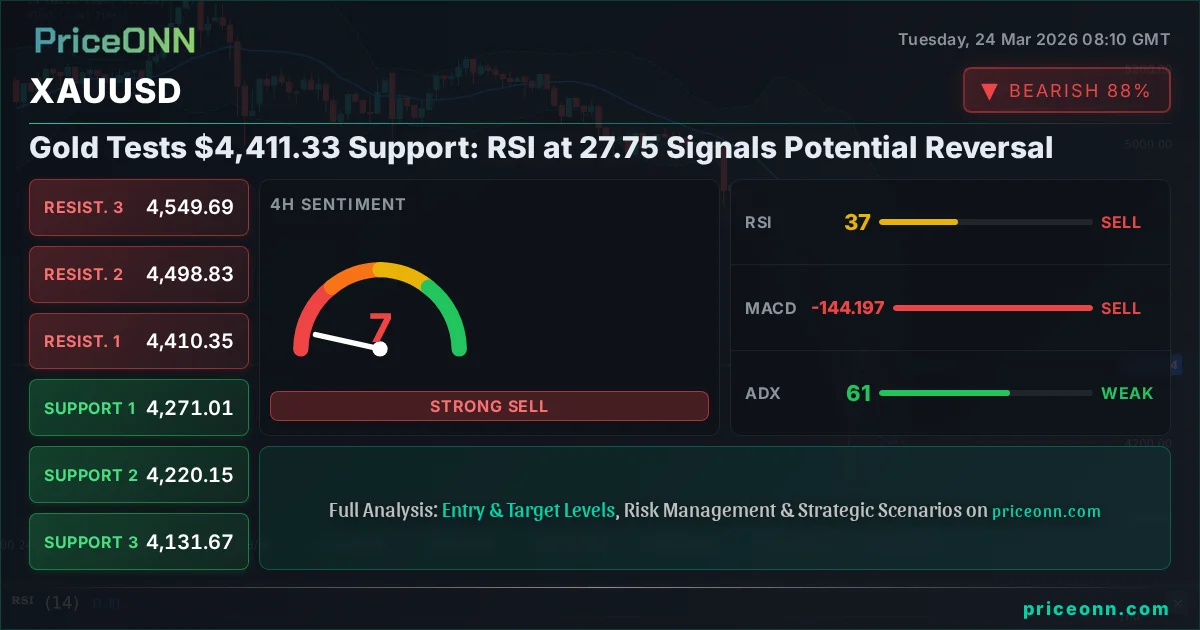
The US Dollar Index (DXY) underwent a dramatic intraday reversal on Monday, shedding its safe-haven gains to settle near 99.12, a decline of roughly 0.5%. This pivot was triggered by shifting geopolitical sentiment, with hopes of de-escalation in the Middle East prompting investors to abandon dollar positions. Concurrently, gold prices (XAU/USD) showed resilience, rebounding to trade near $4,440 during early Asian trading on Tuesday, reflecting the market's recalibration away from risk aversion.
Market Context
Early Monday, the DXY briefly traded above the 100.00 mark, reaching an intraday high of approximately 100.15. This initial move was driven by traditional safe-haven demand, a typical response to heightened geopolitical uncertainty. However, as news emerged suggesting a potential cooling of Middle Eastern tensions, the market rapidly repriced risk. Investors unwound dollar-long positions, leading to a significant sell-off that erased earlier gains and pushed the index lower. This volatility underscores the market's acute sensitivity to geopolitical headlines and its swift reaction to perceived changes in global risk.
Analysis and Drivers
The US Dollar's value is intrinsically linked to Federal Reserve monetary policy, which aims for price stability and maximum employment. However, its global standing as the primary reserve currency, involved in over 88% of foreign exchange transactions, makes it highly susceptible to geopolitical events and shifts in global risk appetite. The dollar's role as a safe-haven asset means it often strengthens during times of global instability, as seen in the early part of Monday's trading session. Conversely, as fears subside and risk sentiment improves, the dollar tends to weaken. This inverse relationship was clearly demonstrated as de-escalation hopes reduced the demand for dollar-denominated safe assets.
Gold, on the other hand, benefited from this shift. Historically a store of value and a hedge against inflation and currency depreciation, gold's appeal as a safe-haven asset intensified as geopolitical risks initially rose. Central banks, significant gold holders, have notably increased their reserves, with purchases reaching record levels in recent years, particularly from emerging economies. Gold's inverse correlation with the US Dollar played a crucial role; as the dollar weakened, gold prices found upward momentum. Furthermore, gold, being a non-yielding asset, tends to perform better in an environment of lower interest rates, although its price is predominantly influenced by the US Dollar's movement. The recent surge in central bank gold accumulation, totaling 1,136 tonnes in 2022, highlights its strategic importance in diversifying reserves and bolstering perceived economic strength.
Trader Implications
Traders should closely monitor the evolving geopolitical landscape in the Middle East, as any resurgence in tensions could quickly reignite safe-haven demand for the US Dollar and potentially pressure gold prices lower. Key levels to watch for the DXY include the recent high of 100.15 as resistance and the session low around 99.12 as an initial support. For gold (XAU/USD), the recent rebound to near $4,440 suggests a potential test of higher resistance levels. Traders should be aware of the inverse correlation between the dollar and gold; a sustained dollar weakness could propel gold towards the $4,500 mark, while a dollar recovery might cap gold's upside. Upcoming economic data releases from the US, particularly inflation and employment figures, will also be critical in shaping the Federal Reserve's policy outlook, thereby influencing both dollar and gold prices.
Outlook
The market's rapid pivot from risk aversion to risk-on sentiment suggests that the de-escalation narrative in the Middle East is currently the dominant theme. This could lead to further weakness in the US Dollar and continued support for commodities like gold, provided no new geopolitical flares ignite. Traders will be looking for confirmation of this trend, with a sustained break below the DXY's 99.00 level potentially opening the door for further declines. Conversely, any escalation in the Middle East would likely see a swift return to safe-haven flows, reversing the recent price action.
Frequently Asked Questions
What caused the US Dollar Index to fall sharply on Monday?
The US Dollar Index (DXY) reversed sharply from an intraday high of 100.15 to settle near 99.12 due to fading geopolitical tensions in the Middle East. Hopes of de-escalation prompted investors to sell dollar-denominated safe-haven assets.
How did the easing of Middle East tensions impact gold prices?
Gold prices (XAU/USD) rebounded to trade near $4,440 as geopolitical concerns diminished. The inverse relationship between the dollar and gold meant that a weaker dollar, driven by reduced safe-haven demand, supported gold's upward movement.
What should traders watch for in the coming days regarding gold and the dollar?
Traders should monitor geopolitical developments for renewed tension or confirmation of de-escalation. Key levels for the DXY are 100.15 (resistance) and 99.00 (support), while gold may target $4,500 if dollar weakness persists, or face headwinds if the dollar recovers.
Track markets in real-time
Empower your investment decisions with AI-powered analysis, technical indicators and real-time price data.
Join Our Telegram Channel
Get breaking market news, AI analysis and trading signals delivered instantly to your Telegram.
Join Channel


PriceONN