
Is the Dollar Becoming a 'Wrecking Ball' as Stagflation Fears Resurface?


The global financial landscape is increasingly shaped by the specter of "1970s-style stagflation," a scenario marked by persistently high inflation and sluggish economic growth. This complex environment is signaled by a dual shock: a rise in oil prices coinciding with an ascent in Treasury yields. Unlike previous crises where safe-haven assets like bonds saw yields fall, current market dynamics show yields climbing alongside energy costs, indicating that inflation concerns are eclipsing traditional risk aversion.
Market Context
The emergence of this "dual shock" is primarily fueled by ongoing geopolitical tensions, particularly a "war of attrition" in the Middle East. This conflict is not leading to a sudden price spike but rather a "slow-boil" inflation dynamic as elevated energy costs gradually permeate global supply chains. This impacts everything from transportation costs to food production, creating a challenging policy paradox for central banks worldwide. They face the dilemma of tightening monetary policy to curb inflation, which risks deepening an economic slowdown, or tolerating rising prices, which could lead to entrenched inflation. However, unlike in the 1970s, today's central bankers are acutely aware of past policy missteps, making them less likely to permit prolonged inflation drift.
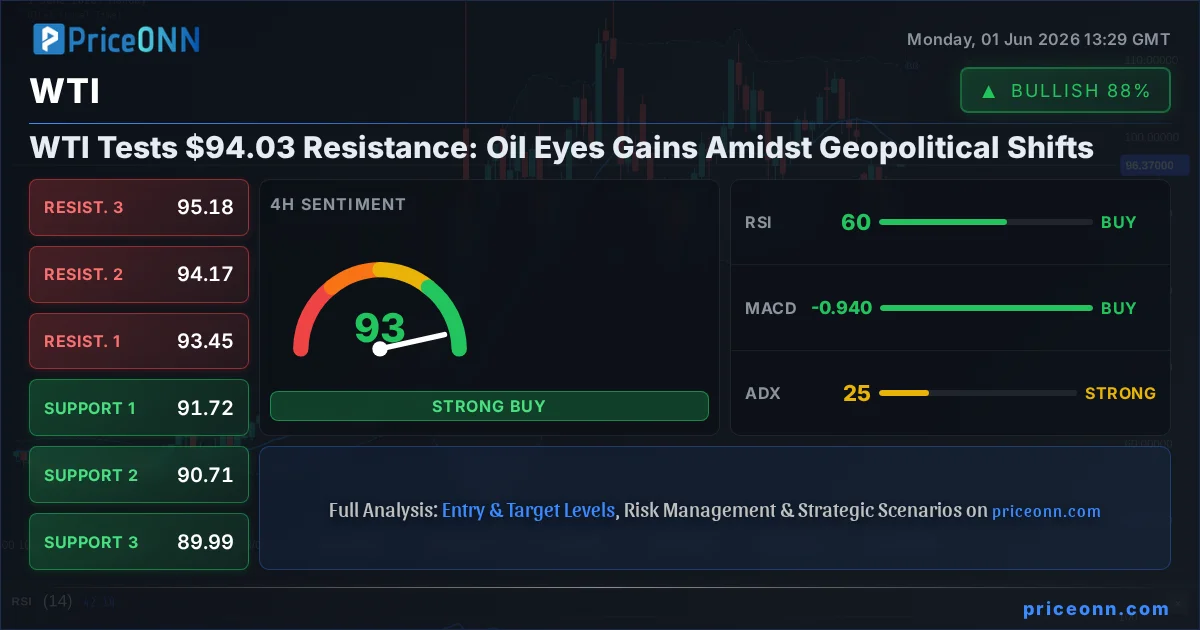
Recent market data shows oil prices are nearing critical levels, with some analysts suggesting a push towards $120 per barrel. Simultaneously, Treasury yields are approaching the 5% mark, and major equity indices are testing key support levels. These three factors-energy prices, yields, and equities-are being closely watched as potential confirmation that a structural stagflation regime is indeed taking hold.
Analysis & Drivers
The current geopolitical climate, described as a "war of attrition," is reinforcing a transition towards a "slow-boil" inflation regime rather than a sharp, short-lived surge. This persistent pressure on energy prices is a significant driver, as it filters through the broader economy. The "policy paradox" for central banks is a critical element. The Federal Reserve and other major central banks must balance the need to control inflation with the imperative to avoid triggering a severe recession. The memory of "Burns' failure"-referring to Fed Chair Arthur Burns' handling of inflation in the 1970s-weighs heavily, suggesting a stronger resolve to combat inflation this time around.
In this environment, traditional safe havens may behave differently. Gold, often a hedge against inflation, may struggle if real yields continue to rise. Conversely, the US Dollar, potentially bolstered by higher interest rates and the nation's relative energy independence compared to other regions, could emerge as a dominant force, acting as a "wrecking ball" against other currencies.
Trader Implications
Traders should closely monitor the interplay between oil prices, Treasury yields, and equity market performance. A sustained move in oil prices towards $120, Treasury yields consistently above 4.75%, and significant breakdowns in major stock indices would signal a strengthening stagflationary environment. This suggests a potential for increased currency volatility, with the US Dollar showing strength against a basket of major currencies.
Key levels to watch include:
- Oil: Resistance at $100, with a potential move towards $120.
- Treasury Yields: Key psychological level at 5%.
- Equities: Monitoring critical support levels for major indices like the S&P 500.
- USD: Watch for continued strength against EUR, JPY, and GBP.
The "policy paradox" means that any central bank communication will be crucial. Dovish signals could exacerbate inflation fears, while hawkish rhetoric might increase recession risks. Traders should remain nimble and prepared for sharp market reactions to economic data releases and central bank commentary.
Outlook
The current market narrative points towards a sustained period of stagflationary pressures, driven by supply-side shocks in energy markets and a resolute stance from central banks against entrenched inflation. While the lessons of the 1970s are being heeded, the path forward remains uncertain. The US Dollar's potential to act as a "wrecking ball" suggests a challenging outlook for global trade and risk assets. Investors and traders will be looking for clear signs of inflation moderating or a decisive policy shift from central banks to alter this trajectory. Upcoming inflation reports and central bank meeting minutes will be critical in shaping sentiment in the coming weeks.
Frequently Asked Questions
What are the key indicators of a return to 1970s-style stagflation?
The primary indicators are a "dual shock" of rising oil prices and climbing Treasury yields, signaling that inflation fears are dominating over traditional risk aversion. Market data shows oil approaching $120 and yields nearing 5%.
How might the US Dollar behave in this stagflationary environment?
The US Dollar could emerge as a "wrecking ball" due to higher interest rates and relative energy independence. Analysts suggest it may strengthen significantly against other major currencies as markets price in persistent inflation and tighter monetary policy.
What should traders watch for to confirm a stagflationary regime?
Traders should monitor oil prices potentially moving towards $120, Treasury yields testing the 5% level, and major equity indices hitting key support. Confirmation of these trends would support the view of a structural stagflationary shift.
Track markets in real-time
Empower your investment decisions with AI-powered analysis, technical indicators and real-time price data.
Join Our Telegram Channel
Get breaking market news, AI analysis and trading signals delivered instantly to your Telegram.
Join Channel PriceONN News
The US Dollar experienced a notable decline last week as markets priced in a potential diplomatic resolution to the US-Iran conflict, leading to a drop in oil prices and Treasury yields. This shift in sentiment suggests a move away from stagflation fears towards a more stable economic outlook.
PriceONN News
Markets are pricing in a potential de-escalation in the US-Iran conflict, leading to a significant drop in crude oil prices and a weakening US Dollar as diplomatic efforts appear to be gaining traction.
PriceONN News
Canada's economy showed signs of a slowdown in early 2026, but upcoming May jobs data is expected to reveal a modest uplift. Analysts anticipate the unemployment rate to fall to 6.8%.
PriceONN News
Canada's economy showed signs of life in early 2026, with analysts expecting a moderate job growth of around 25,000 positions and a potential dip in the unemployment rate to 6.8% for May.
PriceONN News
The New Zealand Dollar surged on Friday, with investors interpreting Reserve Bank of New Zealand (RBNZ) comments as a sign that interest rate hikes could resume sooner and be larger than previously anticipated. This hawkish pivot has created significant trading opportunities.
PriceONN News
The US Dollar experienced a notable dip as a renewed ceasefire between the US and Iran spurred a rally in global equities, particularly in tech stocks. However, persistent core PCE inflation at 3.3% YoY continues to fuel 'higher for longer' rate expectations.
PriceONN News
USDJPY has returned to the area of previous interventions. The ECB is moving towards a rate hike in June. The US dollar retreated on Friday amid new record highs for stock indices and rumours of amendments to the US-Iran agreement. However, tit-for-tat exchanges between the adversaries pushed the dollar index back into the support zone […] The post Yen Braces for a New Storm appeared first on ActionForex.
PriceONN News
Canada's labor market is showing signs of stabilization, with analysts predicting a dip in the unemployment rate to 6.8% in May, driven by an expected 25,000 new jobs. This follows a period of sluggish GDP growth and rising joblessness earlier in the year.
PriceONN News
USD/CAD faces pressure as Canada's economy shows signs of stalling, with Q1 GDP contracting 0.1% and domestic demand weakening. This comes as trade negotiations and geopolitical shifts add layers of uncertainty.
PriceONN News
AUD/USD’s late break of 0.7183 resistance suggests that pullback from 0.7277 has already completed at 0.7076, after defending 55 D EMA. Initial bias is back on the upside this week for retesting 0.7277 high first. Firm break there will resume larger up trend. For now, risk will stay on the upside as long as 0.7076 […] The post AUD/USD Weekly Report appeared first on ActionForex.
PriceONN News
USD/CAD is showing signs of potential upward movement as Canada's economy grapples with a significant slowdown, marked by weak domestic demand and stalled investment, while trade negotiations loom large.
PriceONN News
USD/JPY is testing the critical 160 level as stalled US-Iran negotiations and hawkish Federal Reserve rhetoric fuel inflation concerns and a potential for further rate hikes. Traders are closely watching upcoming US Non-Farm Payrolls and Eurozone CPI data for direction.