
Is the Dollar Set to Fall Further as Middle East Tensions and Fed Uncertainty Collide?


The US Dollar Index (DXY) has continued its descent, now marking two straight days of losses against a basket of major currencies. This weakening trend underscores a growing investor caution, amplified by converging geopolitical and monetary policy events. Market participants are adopting a measured approach, keenly awaiting the Federal Reserve's latest policy pronouncements scheduled for today, while simmering tensions in the Middle East introduce a significant layer of global uncertainty.
Market Context
The Greenback's softening comes as traders digest a complex interplay of global risk factors. While recent economic data in the United States had previously supported the dollar by signaling the potential for sustained higher interest rates, escalating regional conflicts are now presenting a counter-narrative. This geopolitical backdrop, particularly concerning energy markets, is prompting a cautious sentiment and potentially influencing central bank outlooks and investor risk appetite. Overnight, reports indicated that Israeli forces killed a senior Iranian security official, leading to Iranian missile strikes on Tel Aviv. This heightened conflict in the Middle East has direct implications for energy supply routes and global economic stability.
Analysis & Drivers
The primary driver for the dollar's recent decline appears to be a confluence of factors. Firstly, the escalating conflict in the Middle East has heightened global risk aversion, often leading investors to seek refuge in assets perceived as safer havens, which can sometimes include currencies other than the dollar, or even specific commodities. Secondly, the market is keenly focused on the Federal Reserve's upcoming policy meeting. While consensus expects no immediate changes to the benchmark interest rate, the accompanying statement, updated economic projections, and comments from Fed Chair Powell will be crucial. Analysts note that recent inflation data, potentially exacerbated by higher energy prices stemming from the Middle East conflict, could influence the Fed's forward guidance. Some market participants are pricing in one more rate cut later in the year, though analysts at PriceONN suggest two cuts might be more likely. The release of US February Producer Price Index (PPI) data this afternoon, ahead of the Fed decision, will also provide further insight into inflationary pressures.
Adding to the complexity, the Bank of Canada is also holding an interim policy meeting today. While a rate hold at 2.25% is widely anticipated, the Bank of Canada's tone regarding forward guidance will be closely monitored for any shifts in its economic outlook, particularly in light of global energy market dynamics. Furthermore, final February inflation data for the Eurozone is expected to confirm flash estimates, providing context for tomorrow's European Central Bank (ECB) policy decision.
Trader Implications
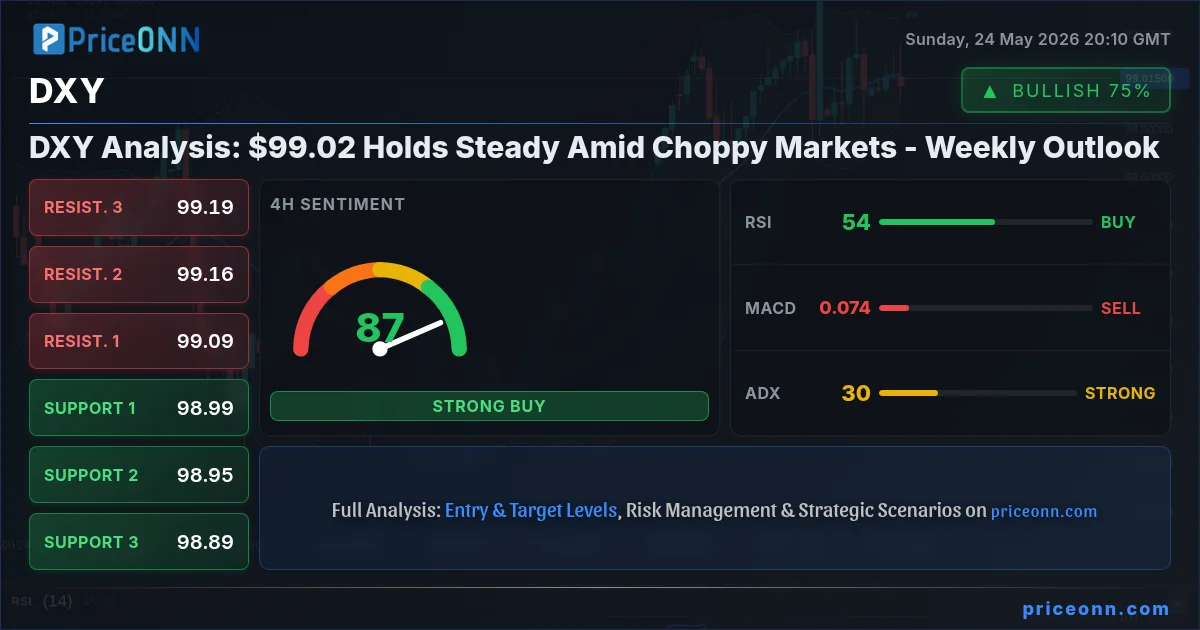
Traders should be closely watching several key levels and events. For the US Dollar Index (DXY), a sustained break below the 99.50 level could signal further downside, with immediate support potentially found around 99.00. Conversely, a hawkish surprise from the Fed could see the DXY rebound towards the 100.00 mark. The EUR/USD pair has seen a corresponding move, rising from 1.1505 to 1.1540, and could target resistance near 1.1580 if dollar weakness persists. The USD/JPY pair has also seen modest movement, currently trading around 158.75, and any significant shifts in risk sentiment or US yields could drive it towards 158.00 or back above 160.00.
Key risk factors include further escalation of the Middle East conflict, which could send oil prices significantly higher (Brent crude is currently around $100.80 per barrel), potentially impacting inflation expectations and the Fed's stance. Unexpectedly strong US PPI data could also shift market expectations regarding Fed policy. Traders should prepare for potential volatility around the Fed's announcement and press conference. A prudent strategy would involve monitoring these key data releases and geopolitical developments, managing risk exposure accordingly, and looking for clear technical breakouts or breakdowns before committing to significant positions.
Outlook
The immediate outlook for the US Dollar remains clouded by geopolitical uncertainty and anticipation of central bank actions. While the Fed is expected to maintain its current policy stance, any subtle shift in its economic projections or forward guidance could trigger significant currency movements. The ongoing conflict in the Middle East and its potential impact on energy prices will continue to be a critical factor influencing market sentiment and inflation outlooks. Should tensions de-escalate, the dollar might find some respite; however, persistent conflict could lead to further dollar weakness as global risk appetite shifts. The market will be looking for a clear direction, but for now, a 'wait-and-see' approach, mirroring the Fed's likely stance, may prevail.
Frequently Asked Questions
What is the current trend for the US Dollar?
The US Dollar has been weakening, extending losses for a second consecutive day. The US Dollar Index (DXY) has fallen from levels around 99.87 to test below 99.50 amid geopolitical concerns and anticipation of the Federal Reserve's policy decision.
How are Middle East tensions impacting currency markets?
Escalating Middle East tensions, particularly following the killing of a senior Iranian security official and subsequent missile strikes, are increasing global risk aversion. This can lead to a flight to safety, potentially weakening currencies like the USD if other assets become more attractive, and directly impacts oil prices, which are currently hovering around $100.80 per barrel for Brent crude.
What should traders watch for in the upcoming Federal Reserve announcement?
Traders should focus on the Federal Reserve's updated economic projections (dots), the accompanying statement, and Fed Chair Powell's press conference. While a rate hike is unlikely, any hawkish or dovish signals regarding future policy, especially in light of potential inflation from higher energy prices, could significantly impact the dollar. Keep an eye on the DXY's reaction around the 99.00 support and 100.00 resistance levels.
Track markets in real-time
Empower your investment decisions with AI-powered analysis, technical indicators and real-time price data.
Join Our Telegram Channel
Get breaking market news, AI analysis and trading signals delivered instantly to your Telegram.
Join Channel PriceONN News
USD/JPY is testing the critical 160 level as stalled US-Iran negotiations and hawkish Federal Reserve rhetoric fuel inflation concerns and a potential for further rate hikes. Traders are closely watching upcoming US Non-Farm Payrolls and Eurozone CPI data for direction.
PriceONN News
The US Dollar experienced a notable decline last week as markets priced in a potential diplomatic resolution to the US-Iran conflict, leading to a drop in oil prices and Treasury yields. This shift in sentiment suggests a move away from stagflation fears towards a more stable economic outlook.
PriceONN News
USD/CAD faces pressure as Canada's economy shows signs of stalling, with Q1 GDP contracting 0.1% and domestic demand weakening. This comes as trade negotiations and geopolitical shifts add layers of uncertainty.
PriceONN News
The USD/JPY pair is flirting with the 160 level as stalled US-Iran negotiations and hawkish Federal Reserve rhetoric fuel inflation concerns. Traders are closely watching upcoming US Non-Farm Payrolls and Eurozone CPI data.
PriceONN News
The US Dollar experienced a notable dip as a renewed ceasefire between the US and Iran spurred a rally in global equities, particularly in tech stocks. However, persistent core PCE inflation at 3.3% YoY continues to fuel 'higher for longer' rate expectations.
PriceONN News
The EUR/USD faces headwinds as core US PCE inflation unexpectedly rose to 3.3% year-over-year, reinforcing a 'higher for longer' interest rate narrative. Meanwhile, a US-Iran ceasefire extension boosted global risk appetite, potentially drawing capital away from safe-haven currencies.
PriceONN News
USDJPY has returned to the area of previous interventions. The ECB is moving towards a rate hike in June. The US dollar retreated on Friday amid new record highs for stock indices and rumours of amendments to the US-Iran agreement. However, tit-for-tat exchanges between the adversaries pushed the dollar index back into the support zone […] The post Yen Braces for a New Storm appeared first on ActionForex.
PriceONN News
Canada's labor market is showing signs of stabilization, with analysts predicting a dip in the unemployment rate to 6.8% in May, driven by an expected 25,000 new jobs. This follows a period of sluggish GDP growth and rising joblessness earlier in the year.
PriceONN News
Markets are pricing in a potential de-escalation in the US-Iran conflict, leading to a significant drop in crude oil prices and a weakening US Dollar as diplomatic efforts appear to be gaining traction.
PriceONN News
Canada's economy showed signs of a slowdown in early 2026, but upcoming May jobs data is expected to reveal a modest uplift. Analysts anticipate the unemployment rate to fall to 6.8%.
PriceONN News
Canada's economy showed signs of life in early 2026, with analysts expecting a moderate job growth of around 25,000 positions and a potential dip in the unemployment rate to 6.8% for May.
PriceONN News
AUD/USD’s late break of 0.7183 resistance suggests that pullback from 0.7277 has already completed at 0.7076, after defending 55 D EMA. Initial bias is back on the upside this week for retesting 0.7277 high first. Firm break there will resume larger up trend. For now, risk will stay on the upside as long as 0.7076 […] The post AUD/USD Weekly Report appeared first on ActionForex.