
ECB: Iran Peace Deal Won't Erase Europe's Energy Price Shock
 PriceONN Editorial Desk
Multi-source verification
PriceONN Editorial Desk
Multi-source verification
Lingering Energy Shock Challenges Eurozone Outlook
Despite a developing U.S.-Iran peace framework aimed at de-escalating tensions and potentially reopening critical shipping routes, the European Central Bank (ECB) is signaling that the economic fallout from elevated energy prices will endure. Central bank officials this week underscored that the inflationary pressures stemming from the Middle East conflict are unlikely to dissipate rapidly, suggesting a prolonged period of economic adjustment for the Eurozone.
The ECB’s commitment to price stability was recently demonstrated through a 25 basis point interest rate increase, bringing the benchmark rate to 2.25%. This marks the first such upward adjustment since 2023 and arrives as energy price spikes, exacerbated by regional instability, have begun to infiltrate core inflation metrics. The impact is tangible: annual inflation in the Eurozone accelerated to 3.2% in May, a noticeable climb from April's 3.0% reading, according to recent market data.
ECB policymakers are maintaining a hawkish stance, acknowledging that further rate hikes this year remain a possibility. The recently announced U.S.-Iran peace accord has provided some breathing room, easing immediate concerns about further supply disruptions and the potential closure of the Strait of Hormuz. However, the damage already inflicted on energy markets and supply chains cannot be reversed instantaneously. As one official noted, “Even with the just-announced US-Iran peace framework, the damage in the Middle East cannot be undone overnight.”
This persistent energy price shock is creating a challenging feedback loop within the European economy. Businesses are responding by increasing their selling prices, while employees and labor unions are pressing for higher wages. This dynamic risks entrenching inflation at levels significantly above the ECB’s 2% target, complicating the central bank’s efforts to restore price stability.
Reading Between the Lines
While the prospect of a reopened Strait of Hormuz offers a glimmer of hope, analysts suggest that the near-term inflation outlook for the Eurozone remains largely unchanged by this development. The immediate relief on inflationary expectations has not yet translated into a material shift in the underlying economic pressures. The ECB’s decision last week to raise rates was a preemptive measure, designed to prevent temporary, energy-induced inflation from becoming a permanent fixture in wage and price setting behaviors. This action directly reflects the central bank’s foundational duty: safeguarding price stability across the currency union.
Gabriel Makhlouf, a member of the ECB Governing Council and Governor of Ireland’s Central Bank, emphasized this point, stating, “Let me be clear: an end to the conflict does not necessarily mean an immediate end to the shock.” His remarks highlight the intricate nature of combating inflation when its primary drivers are external and deeply embedded in global supply dynamics. The ECB’s mandate prioritizes anchoring inflation expectations, and the recent rate hike is a clear signal of its resolve to achieve this, even in the face of geopolitical uncertainty and its economic repercussions.
Market Ripple Effects
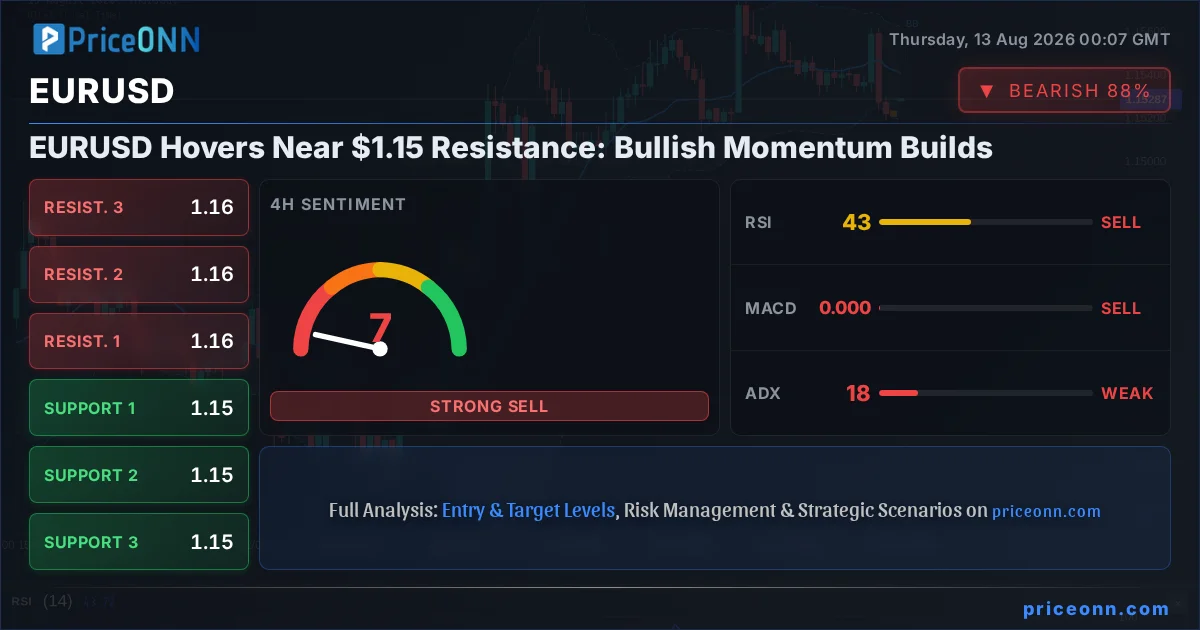
The persistent inflationary environment and the ECB's tightening monetary policy have significant implications for various financial instruments and asset classes. The Euro (EUR) faces a dual challenge: while higher rates can theoretically support the currency, persistent inflation and the underlying economic drag from energy costs could cap its upside potential. Traders will be closely monitoring the EUR/USD exchange rate for signs of how the market is weighing these competing factors.
Furthermore, European equity markets, particularly sectors heavily reliant on energy consumption or with significant pricing power challenges, could experience headwinds. Companies struggling to pass on increased energy costs to consumers may see their profit margins squeezed, impacting stock valuations. Conversely, energy producers might benefit from sustained high prices, though this could be tempered by potential government interventions or windfall taxes.
Government bond yields across the Eurozone are also a critical area to watch. The ECB's rate hikes directly influence borrowing costs for member states. While higher yields can attract investment, they also increase the debt servicing burden for governments, especially those with higher debt levels. The spread between German Bunds and peripheral Eurozone debt will likely remain a key indicator of underlying market confidence and perceived sovereign risk. Finally, commodities, particularly oil and natural gas, will remain sensitive to geopolitical developments in the Middle East, even with a peace accord, as the market digests the speed and extent of any supply normalization.
Track markets in real-time
Empower your investment decisions with AI-powered analysis, technical indicators and real-time price data.
Join Our Telegram Channel
Get breaking market news, AI analysis and trading signals delivered instantly to your Telegram.
Join Channel PriceONN News
Brent oil price rose to the highest in over one week on Tuesday, in extension of Monday’s nearly 5% advance, following the latest verbal escalation by President Trump that quickly changed the sentiment and countered efforts of Iran and Oman to find solution for reopening of strategic Hormuz strait. The latest demands from President Trump […] The post Brent Oil Price Falls After Recovery Failed to Clear Important $90 Barrier appeared first on ActionForex.
PriceONN News
A deal to reopen the Strait of Hormuz is not inevitable. Oil prices are rising amid growing risks of an escalation of the conflict in the Middle East. The US dollar continued to recover from losses caused by the jobs report, against a backdrop of rising geopolitical tensions in the Middle East with traders squaring […] The post Brent Is Following a Path of Demands Rather Than Commitments appeared first on ActionForex.
PriceONN News
The Consumer Price Index (CPI) rose by 0.1% month-on-month (m/m) in July – in line with expectations. On a twelve-month basis, CPI edged down to 3.4% (from 3.5% in June). Energy costs fell by 1.5% m/m, led by a 2.9% m/m decline in prices at the pump. Food prices rose 0.1% m/m – its softest […] The post US: Inflationary Pressures Remain Subdued in July appeared first on ActionForex.
PriceONN News
US inflation eased as expected in July, reinforcing case for Fed to stay on hold while it waits for clearer evidence on both prices and labor market. Headline CPI rose from -0.4% to 0.1% m/m, while annual rate slowed from 3.5% y/y to 3.4%. Core CPI increased from 0.0% to 0.2% m/m, with annual core […] The post US CPI Slows to 3.4% as Core Inflation Eases to 2.5% appeared first on ActionForex.
PriceONN News
Whatever the inflation figures may be, the precious metal will come out on top. Japan and the US don’t want to give the yen’s fate to speculators. The US dollar continues to recover from the blow dealt by the labour market statistics. A rally in Treasury bond yields is driving the rise in the USD […] The post Gold as a Sure-Fire Bet appeared first on ActionForex.
PriceONN News
Germany’s benchmark index just made history, breaking above 26,500 for the first time ever, extending a rally that has already delivered close to 10% over the past twelve months. The move came on fresh optimism around a potential resolution to the Iran conflict, though that optimism proved short-lived: President Trump’s latest demands, that Tehran compensate […] The post DAX 40: Record Highs, Real Fundamentals, One Channel Left to Test appeared first on ActionForex.
PriceONN News
Hello fellow traders. In this technical article we’re going to take a look at the Elliott Wave charts charts of Copper (HG_F) commodity published in members’ area of the website. As our members know, Copper Futures recently completed a pullback that provided a high-probability trading setup. The decline unfolded as a clear Elliott Wave Zig […] The post Copper (Hg_F) Elliott Wave: Targeting a Buy at the Blue Box appeared first on ActionForex.
PriceONN News
The NFIB’s Small Business Optimism Index rose 2.4 points to 99.8 in July, soundly beating expectations for a roughly flat reading of 97.5. Eight out of the ten index subcomponents improved during the month and two deteriorated. The largest improvement came from the net share of firms planning to increase employment (up 9 points to […] The post US: Small Business Optimism Spiked in July appeared first on ActionForex.
PriceONN News
Overnight, the RBA held its cash rate steady at 4.35%, as widely expected after June’s inflation data came in softer than forecast at 3.8% headline. Yet the accompanying statement struck a notably cautious tone, warning that trimmed mean inflation remains elevated and largely unchanged from the March quarter, with oil and related commodities still trading […] The post EUR/AUD: Two Central Banks on Hold, One Triangle About to Break appeared first on ActionForex.
PriceONN News
Gold rose to 4,400 USD per ounce on Tuesday, reaching a two-month high. Demand for the precious metal is growing rapidly, even amid heightened inflation risks and expectations of higher interest rates driven by elevated oil prices. Chinese institutional investors continue to build positions in gold as a defensive asset amid heightened volatility in other […] The post Gold Rallies: Long-Awaited Rise and Growing Safe-Haven Demand appeared first on ActionForex.
PriceONN News
RBA on hold as expected, recognising the data has broken against its hawkish narrative. Base case clearly an extended period on hold, but RBA will hike if upside risks to inflation materialise. As widely expected, the RBA Monetary Policy Board (MPB) kept the cash rate on hold at 4.35% at its August meeting. The accompanying […] The post RBA Holds at 4.35%, Narrows Risk of Hikes appeared first on ActionForex.
PriceONN News
Easing concerns over the situation in the Strait of Hormuz provided support for risk-sensitive assets. On 8 August, the Iranian side reported progress in talks with Oman over a possible new route through the strait, although the implementation of any agreement remains dependent on additional conditions. Reduced concerns over potential disruptions to energy supplies helped […] The post Ethereum Analysis: Attempted Breakout from the Sideways Structure appeared first on ActionForex.