ECB's Nagel: April rate hike certainly an option
Hawkish Signal from Frankfurt
Amidst ongoing discussions about inflation's trajectory in the Eurozone, a prominent voice from the European Central Bank (ECB) has put a potential interest rate increase at the upcoming April meeting firmly on the agenda. Joachim Nagel, who leads Germany's Bundesbank and holds a significant position on the ECB's Governing Council, stated during Thursday's European trading session that a rate hike in April is indeed a viable option for policymakers.
The ECB, headquartered in Frankfurt, serves as the central bank for the 20 nations utilizing the Euro. Its core mission is to safeguard price stability, aiming to keep inflation hovering around the 2% mark. This objective is pursued primarily through the strategic adjustment of interest rates. Generally, higher interest rates tend to bolster the Euro's value, while lower rates can exert downward pressure.
Monetary policy decisions are deliberated by the ECB Governing Council, a body comprising the governors of the Eurozone's national central banks and six permanent members, including ECB President Christine Lagarde. These pivotal meetings occur eight times annually. In extraordinary economic circumstances, the ECB possesses an additional policy instrument known as Quantitative Easing (QE). This unconventional measure involves the central bank creating new Euros to purchase assets, most commonly government or corporate debt, from financial institutions. The typical outcome of QE is a depreciation of the Euro.
QE is generally considered a measure of last resort, deployed when conventional interest rate cuts are deemed insufficient to achieve the mandated price stability. The ECB has previously resorted to QE during significant economic shocks, including the aftermath of the 2009-2011 Great Financial Crisis, a period in 2015 when inflation proved stubbornly low, and more recently, during the global COVID-19 pandemic. Conversely, Quantitative Tightening (QT) represents the unwinding of QE. This process is initiated when an economic recovery gains traction and inflationary pressures begin to mount. While QE injects liquidity by having the ECB acquire bonds, QT involves the central bank ceasing new bond purchases and allowing existing holdings to mature without reinvestment. This shift is often viewed as a positive signal for the Euro's strength.
Market Ripple Effects
Nagel's comments, suggesting an April rate hike is a serious consideration, introduce a notable degree of uncertainty into the market's outlook for Eurozone monetary policy. This stance contrasts with a more dovish interpretation of recent ECB communications, potentially leading to a recalibration of expectations among investors and traders. The immediate implication is a possible strengthening of the Euro (EUR) as markets price in a higher probability of tighter monetary conditions sooner rather than later.
Beyond the single currency, this development could influence the bond markets within the Eurozone. Higher policy rates typically translate to higher borrowing costs for governments and corporations, which could put upward pressure on bond yields. This might also affect equity markets, particularly interest-rate sensitive sectors like technology and real estate, as borrowing costs rise and discount rates for future earnings increase.
Furthermore, the hawkish undertone from Nagel could impact broader risk sentiment. If the ECB appears more aggressive in its fight against inflation than anticipated, it might signal a greater willingness to prioritize price stability over short-term economic growth. This could lead to a more cautious approach from other central banks globally, or conversely, spur a race to tighten policy if inflation fears are widespread.
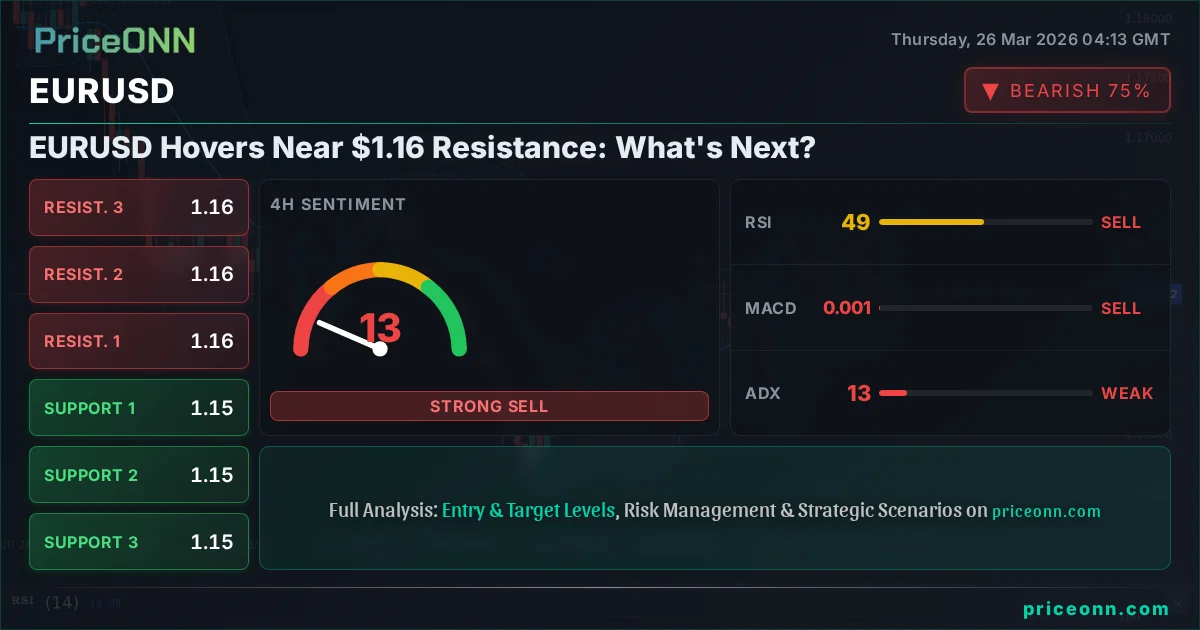
Traders will be closely watching the ECB's upcoming meeting minutes and subsequent statements from Governing Council members for further clarification. Key levels to monitor for the EUR/USD currency pair will be crucial, as any sustained move higher could indicate a significant shift in market sentiment. The divergence in monetary policy between the ECB and potentially other major central banks, such as the U.S. Federal Reserve, will be a critical theme to follow in the coming weeks.
Track markets in real-time
Empower your investment decisions with AI-powered analysis, technical indicators and real-time price data.
Join Our Telegram Channel
Get breaking market news, AI analysis and trading signals delivered instantly to your Telegram.
Join Channel