Europe's Recurring Energy Crisis: Why Hormuz and Gas Dependence Spell Trouble
For the third time in four years, Europe finds itself ensnared in an energy crisis, a stark reminder of its persistent vulnerability to global supply chain disruptions. The latest challenge, stemming from the effective closure of the Strait of Hormuz, underscores a recurring pattern of reliance on imported fossil fuels and a failure to fully secure the continent's energy future.
Market Context
The current predicament echoes the severe energy shock experienced in February 2022, when Russia's invasion of Ukraine exposed Europe's significant dependence on Russian natural gas, which previously accounted for approximately 40 percent of its supply. The ensuing sanctions triggered widespread energy poverty across European households. In the years since, despite pledges to diversify supply and bolster energy independence, the continent has faced additional crises. The disruption of vital maritime trade routes, first by conflict in the Red Sea during 2023 and 2024, and now by the closure of the Strait of Hormuz, highlights an enduring weakness.
A senior European diplomat, speaking anonymously, expressed frustration with this cycle: "We swore we'd learn. We promised things would change but here we are." This sentiment reflects a tendency towards reactive policy-making, where immediate price concerns and public anxieties often overshadow the necessity for long-term strategic planning. The continent's continued exposure to geopolitical instability affecting critical trade arteries leaves it susceptible to volatile global energy markets.
Analysis & Drivers
The recurring energy crises illustrate a fundamental flaw in Europe's energy strategy: an over-reliance on imported fossil fuels and insufficient diversification. While nuclear power, as seen in France, can offer some insulation from gas price volatility due to its existing capacity, it is not a panacea for new energy shocks. France's substantial nuclear fleet has historically provided a buffer, as its electricity costs are less directly tied to immediate natural gas prices. However, even France has experienced elevated electricity prices, indicating that no market is entirely immune when integrated into the broader European grid, which is still influenced by gas pricing dynamics.
The aspiration to achieve energy price stability through new nuclear construction faces significant hurdles. The timelines for building new nuclear facilities are prohibitively long, and the costs are astronomical. Projects like the Hinkley Point C in the United Kingdom, initially approved with an estimated cost of £12.5 billion, have seen their projected expenses escalate significantly, with current estimates now exceeding £30 billion. This reality makes nuclear power an impractical solution for addressing immediate or near-term energy security concerns driven by geopolitical events.
Trader Implications
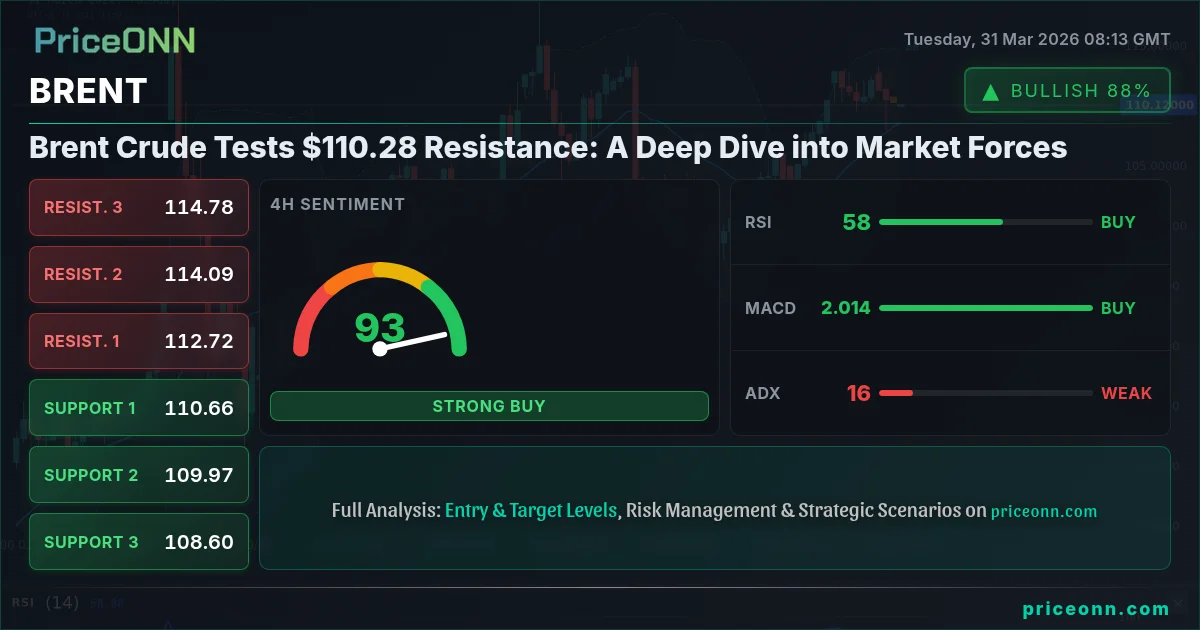
Traders should closely monitor the developments surrounding the Strait of Hormuz and other critical shipping lanes. Any sustained disruption in this region could lead to significant price spikes in crude oil and natural gas, impacting European energy benchmarks such as TTF. Key levels to watch for crude oil include the $80-$85 per barrel range for West Texas Intermediate (WTI) as potential support and resistance zones, while Brent crude could see volatility around the $85-$90 per barrel mark. Natural gas prices on the TTF benchmark are likely to be highly sensitive to supply news, with a retest of levels above €35 per MWh a distinct possibility if tensions escalate.
The ongoing geopolitical risks suggest a heightened premium for energy commodities. Traders should consider strategies that account for increased volatility, potentially looking at options strategies or carefully managed directional bets. The persistent dependence on imported energy means that geopolitical flare-ups will continue to be a primary driver of price action in the energy markets. Diversification efforts, while crucial for long-term stability, are unlikely to fully mitigate short-term shocks.
Outlook
Europe's energy future remains precarious as long as it fails to decisively address its dependence on imported fossil fuels. The recurring crises, now compounded by the closure of the Strait of Hormuz, signal that the continent is likely to remain susceptible to energy price shocks. While discussions around nuclear power persist, its role as a rapid solution is limited by cost and time constraints. Traders should brace for continued volatility, with geopolitical events and supply chain integrity remaining paramount factors influencing energy prices in the coming months.
Frequently Asked Questions
What is the primary driver of Europe's current energy crisis?
The current energy crisis is primarily driven by the effective closure of the Strait of Hormuz, a critical chokepoint for global oil and gas shipments. This geopolitical event exacerbates Europe's long-standing reliance on imported fossil fuels and its vulnerability to disruptions in vital maritime trade routes.
How does nuclear power's role in France compare to its potential for new builds?
France benefits from existing nuclear capacity, which provides a buffer against gas price volatility. However, building new nuclear power plants is a different story, facing prohibitive timelines and astronomical costs, with projects like the UK's Hinkley Point C now estimated to exceed £30 billion, making it an impractical solution for immediate energy security needs.
What are the key price levels traders should watch for oil and gas?
Traders should monitor West Texas Intermediate (WTI) crude oil around the $80-$85 per barrel range and Brent crude around $85-$90 per barrel. For natural gas, European TTF benchmark prices could see upward pressure, potentially retesting levels above €35 per MWh if supply tensions persist or worsen.
Track markets in real-time
Empower your investment decisions with AI-powered analysis, technical indicators and real-time price data.
Join Our Telegram Channel
Get breaking market news, AI analysis and trading signals delivered instantly to your Telegram.
Join Channel