
Is the Fed Back to Fighting Inflation as Labor Market Shows Balance?
Federal Reserve officials are increasingly signaling a pivot in their policy considerations, with a pronounced shift back towards inflation risks as the primary concern. This comes as the U.S. labor market is now widely viewed as being in a state of balance, diminishing its role as the dominant driver of monetary policy decisions.
Market Context
Recent commentary from key Federal Reserve figures, including Vice Chair Philip Jefferson, Governor Michael Barr, and Governor Lisa Cook, underscores this subtle yet significant change in emphasis. The narrative has moved from prioritizing employment growth to re-emphasizing the potential for rising price pressures, particularly those stemming from recent geopolitical events impacting energy markets. Vice Chair Jefferson noted expectations for overall inflation to rise in the near term, directly linking it to higher energy prices. The duration of these energy price disruptions is now considered a critical factor; a short-lived shock might impact inflation for a couple of quarters, whereas sustained elevated oil prices could pose more material threats to both inflation and economic growth.
Analysis & Drivers
Governor Barr highlighted the paramount risk of a shift in inflation expectations, which could embed higher price dynamics into the economy. He stressed the importance of monitoring the persistence of elevated energy prices, as prolonged disruptions present a greater challenge to price stability and overall economic health. Governor Cook further reinforced this sentiment, explicitly stating that while overall risks to the economy are balanced, the risks associated with inflation are currently deemed greater. This marks a clear departure from previous communications where employment or growth concerns might have taken precedence. The current stance suggests that policymakers are prioritizing inflation containment over potential, albeit currently balanced, labor market weaknesses. The labor market itself is described as balanced, with officials pointing to stable hiring conditions but acknowledging downside risks should external shocks intensify.
Trader Implications
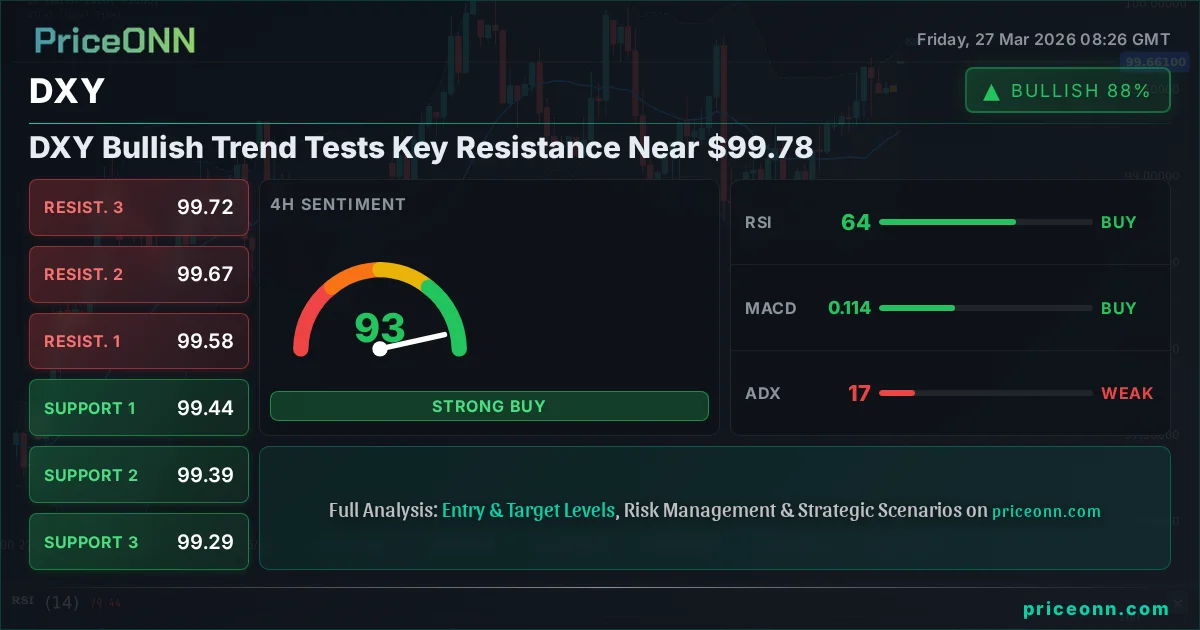
This renewed focus on inflation has direct implications for currency traders, particularly those monitoring the U.S. Dollar (USD) and interest rate-sensitive pairs. The Fed's hawkish tilt, even if implicit, suggests that expectations for interest rate cuts may need to be recalibrated. Traders should closely watch upcoming economic data releases, especially inflation indicators like the Consumer Price Index (CPI) and Personal Consumption Expenditures (PCE) price index. Any signs of persistent inflation, particularly driven by energy costs, could further solidify the Fed's stance, potentially leading to a stronger dollar in the short to medium term. Key support for the dollar index (DXY) might be found around the 104.50 level, with resistance eyed at 105.20. For EUR/USD, this could imply renewed downward pressure, with a break below 1.0700 potentially opening the door for a test of 1.0650. Conversely, any indications of energy prices easing or a significant weakening in the labor market could lead to a reassessment, but the current commentary points towards a higher-for-longer interest rate environment.
Outlook
The Federal Reserve's current communication signals a return to vigilance against inflation. While policy rates are expected to remain on hold for the immediate future, the balance of risks has clearly shifted. The market sentiment is likely to favor a more cautious approach to monetary easing, with the timing and pace of any potential rate cuts now more heavily dependent on inflation trajectory rather than labor market dynamics. Traders should prepare for increased volatility around inflation data releases and Fed official speeches, as the central bank navigates the delicate balance between price stability and economic growth in the face of external energy shocks.
Frequently Asked Questions
What is the Federal Reserve's current primary concern?
The primary concern for Federal Reserve officials has shifted back to inflation risks, particularly those driven by elevated energy prices. They now view the labor market as largely balanced, reducing its urgency as a policy driver.
How does this shift impact U.S. Dollar (USD) expectations?
A renewed focus on inflation and a less urgent need for rate cuts could support the U.S. Dollar. Traders are watching the Dollar Index (DXY) for potential strength, with key resistance around 105.20.
What key economic data should traders monitor?
Traders should closely monitor inflation indicators such as the Consumer Price Index (CPI) and the Personal Consumption Expenditures (PCE) price index. Any persistent upward trend in these figures will reinforce the Fed's hawkish stance.
Track markets in real-time
Empower your investment decisions with AI-powered analysis, technical indicators and real-time price data.
Join Our Telegram Channel
Get breaking market news, AI analysis and trading signals delivered instantly to your Telegram.
Join Channel
PriceONN