
Is the Fed Stuck Between Inflation and Geopolitics?
The U.S. Dollar is facing a complex outlook as geopolitical events, specifically the ongoing conflict involving Iran, introduce significant uncertainty into the Federal Reserve's monetary policy decisions. San Francisco Federal Reserve Bank President Mary Daly recently highlighted that this external pressure is making it difficult to chart a clear course for interest rates.
Market Context: Geopolitics Complicates Monetary Policy
President Daly suggested that unless the Iran conflict resolves swiftly, allowing the central bank to potentially "look through" a temporary surge in oil prices, the path for future interest rate adjustments remains unclear. This statement underscores the delicate balancing act the Federal Reserve must perform. Its primary mandates are to maintain price stability, typically targeting a 2% inflation rate, and to foster maximum employment. When inflation rises above this target, the Fed often tightens monetary policy by increasing interest rates. This action generally supports the U.S. Dollar by making dollar-denominated assets more attractive to global investors seeking higher yields.
Conversely, if economic conditions warrant, the Fed can lower rates to stimulate growth, which can weaken the dollar. These critical decisions are deliberated by the Federal Open Market Committee (FOMC) during their scheduled meetings. The current geopolitical backdrop, however, adds a layer of complexity not solely tied to domestic economic data. A significant disruption to oil supplies due to geopolitical conflict can lead to a sharp, albeit potentially temporary, increase in energy prices. This can directly fuel inflation, forcing the Fed's hand towards tighter policy, even if other economic indicators might suggest a need for easing.
Analysis & Drivers: Inflation vs. Stability
The core dilemma for the Fed lies in distinguishing between a broad-based, persistent inflation trend and a price shock driven by external factors like a geopolitical conflict. If the rise in oil prices is seen as a transient event stemming from the Iran situation, the Fed might be inclined to maintain its current policy stance or even consider easing if other domestic factors, such as a weakening labor market, become more prominent. However, if the conflict escalates or leads to sustained supply chain disruptions, the risk of inflation becoming more entrenched increases. This would likely push the Fed towards maintaining higher interest rates for longer, or even considering further hikes, a scenario that would typically bolster the U.S. Dollar.
Beyond interest rate adjustments, the Fed also has other tools. Quantitative Easing (QE), the process of injecting liquidity by purchasing bonds, has historically weakened the dollar. Conversely, Quantitative Tightening (QT), where the Fed shrinks its balance sheet and withdraws liquidity, generally supports the dollar. While these tools are less frequently used than the benchmark rate, their potential deployment or unwinding is always a factor in market analysis. The current environment, marked by geopolitical tensions and the Fed's cautious communication, suggests a period of elevated market sensitivity to both economic data and global events.
Trader Implications: Navigating Uncertainty
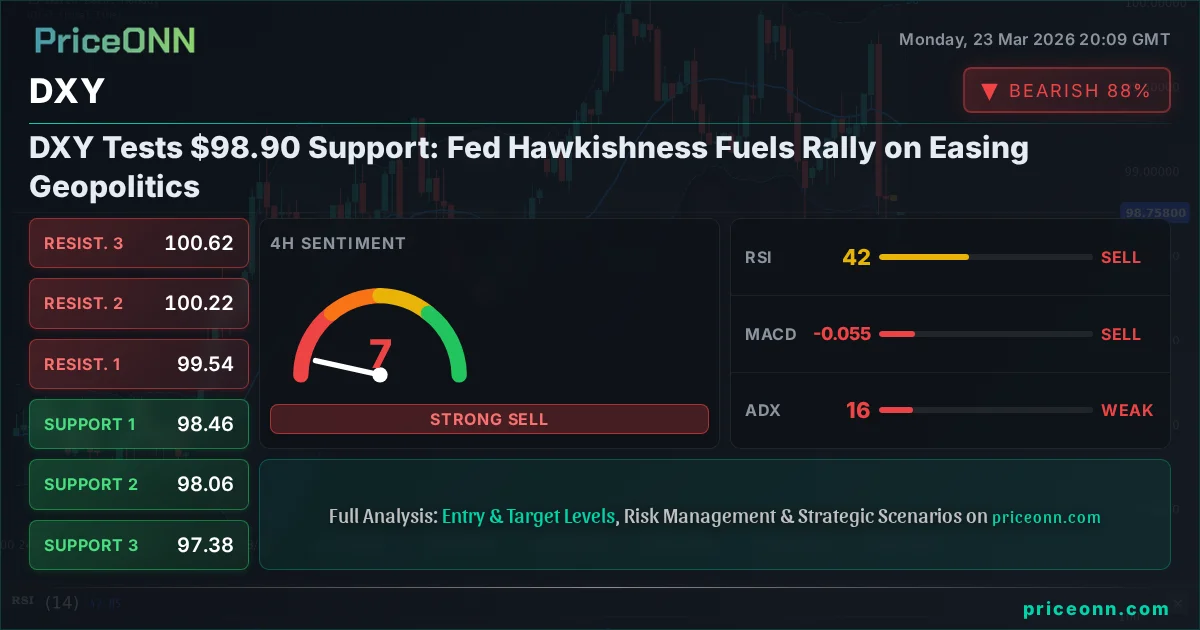
For forex traders, this uncertainty translates into a need for heightened vigilance. The U.S. Dollar's trajectory will likely be influenced by incoming economic data from the U.S. and, crucially, by developments in the geopolitical landscape. Key levels to watch for the U.S. Dollar Index (DXY) will depend on how market participants interpret the Fed's next steps. If the market perceives the Fed as being forced into a hawkish stance due to inflation fears stemming from the conflict, the dollar could find support. Conversely, if the Fed signals a patient approach, acknowledging the external nature of potential price shocks, or if the geopolitical situation de-escalates, the dollar might face headwinds.
Traders should monitor oil price movements closely, as significant spikes could trigger a hawkish reaction from the Fed, potentially strengthening the USD. Conversely, a stabilization or decline in oil prices, coupled with weaker U.S. employment or inflation figures, could pave the way for dollar weakness. The FOMC's official statements and the voting patterns of its members will be critical in discerning the underlying sentiment regarding the balance between inflation risks and economic growth concerns. The market will be looking for any indication of a divergence in opinion within the FOMC that could signal future policy shifts.
Outlook: A Data-Dependent, Geopolitically Sensitive Dollar
The Federal Reserve's path forward remains data-dependent, but the geopolitical situation has introduced a significant wildcard. Until the situation involving Iran stabilizes, or the Fed provides clearer guidance on how it intends to manage inflation shocks originating from global conflicts, the U.S. Dollar may experience increased volatility. Traders should prepare for a market environment where both domestic economic releases and international developments will play a crucial role in shaping currency pairs.
Frequently Asked Questions
How are geopolitical tensions like the Iran conflict impacting the Fed's interest rate decisions?
Geopolitical tensions can disrupt global energy supplies, potentially leading to a temporary surge in oil prices and thus inflation. This complicates the Fed's decision-making, as they must determine if the inflation is transient or requires a policy response like higher interest rates, which could strengthen the U.S. Dollar.
What is the Fed's primary inflation target, and why is it important for the U.S. Dollar?
The Federal Reserve's primary inflation target is 2%. Deviations from this target influence monetary policy; higher inflation typically leads to higher interest rates, which tend to strengthen the U.S. Dollar by increasing the attractiveness of dollar-denominated assets.
What should traders watch for to gauge the Fed's next move amidst this uncertainty?
Traders should closely monitor U.S. economic data (inflation reports, employment figures), oil price movements, and official statements from Federal Reserve officials. Any indication that the Fed views inflation risks as elevated due to external factors could lead to a hawkish stance and potential USD strength.
Track markets in real-time
Empower your investment decisions with AI-powered analysis, technical indicators and real-time price data.
Join Our Telegram Channel
Get breaking market news, AI analysis and trading signals delivered instantly to your Telegram.
Join Channel
PriceONN