
Is XAU/USD Set to Break Below $5000 Amid Inflation Fears and Geopolitical Turmoil?

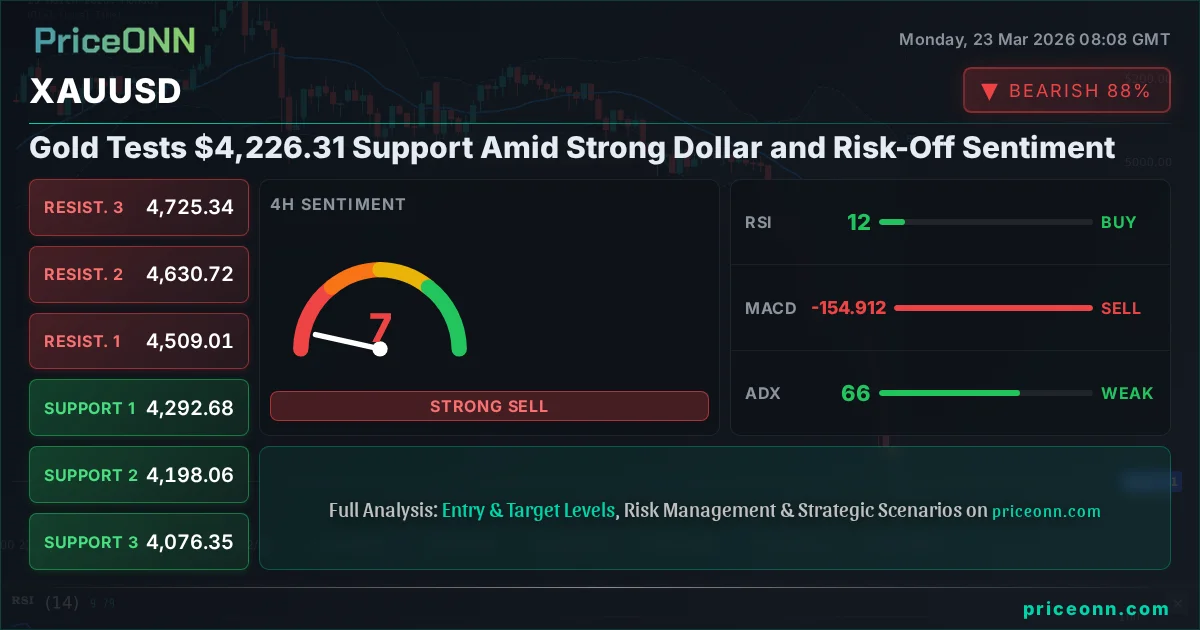
Gold prices have plunged dramatically, breaking below the crucial $5000 level, marking a significant 10% decline in recent trading. This sharp downturn for the precious metal is primarily attributed to a potent cocktail of resurgent inflationary pressures and escalating geopolitical instability in the Middle East.
Market Context
Last week was characterized by considerable market turbulence, with geopolitical tensions near the Strait of Hormuz acting as a major catalyst for volatility, particularly in crude oil markets. Oil prices repeatedly tested the $100 per barrel mark as traders priced in potential supply disruptions. Adding to market anxieties, U.S. Producer Price Index (PPI) data surprised to the upside, exceeding forecasts and reinforcing concerns that inflation is proving more persistent than previously anticipated. This has led to a significant reassessment of future monetary policy, with market participants now factoring in a reduced likelihood of near-term interest rate cuts and, conversely, a greater possibility of further rate hikes by the U.S. Federal Reserve. This shift in expectations has weighed heavily on equity markets, which have now posted their fourth consecutive week of losses. Central banks, including the Federal Reserve and the Bank of England, maintained their benchmark interest rates as widely expected. The Bank of Japan also kept its accommodative policy in place, though subtle remarks from Governor Ueda suggested a potential openness to future policy adjustments, which provided a brief lift to the Japanese Yen.
Analysis & Drivers
The primary drivers behind gold's precipitous fall are twofold: a hawkish shift in monetary policy expectations and a strengthening US dollar, often fueled by safe-haven demand during periods of geopolitical stress. The stronger-than-expected PPI data has significantly altered the market's calculus regarding the Federal Reserve's path. Where rate cuts were once anticipated by year-end, analysts now suggest that the Fed might be forced to hold rates steady for longer, or even consider further tightening, to combat stubborn inflation. This prospect makes holding non-yielding assets like gold less attractive. Furthermore, the heightened geopolitical risk in the Middle East, specifically concerning the Strait of Hormuz, typically drives investors towards the perceived safety of the US dollar. A stronger dollar inherently increases the cost of gold for holders of other currencies, thereby dampening demand. The combination of these factors has created a challenging environment for gold, pushing it below key technical support levels.
Trader Implications
Traders should be closely monitoring the $5000 psychological level for gold, as a sustained break below this mark could signal further downside. Key resistance levels to watch on any potential rebound are the $5100 and $5250 areas. The immediate outlook for gold appears bearish as long as inflation concerns and geopolitical risks persist. Traders should pay close attention to upcoming U.S. inflation data, such as the Consumer Price Index (CPI), and any further developments from the Middle East. A notable de-escalation of tensions or a surprise cooling in inflation figures could provide a reprieve for gold. Conversely, any escalation or hotter inflation prints would likely exacerbate the selling pressure. The U.S. Dollar Index (DXY) remains a critical barometer; a sustained rise in the DXY typically correlates with weakness in gold prices. Investors might consider hedging long positions or looking for short opportunities on pullbacks, provided risk management protocols are strictly followed.
Outlook
The path forward for gold appears fraught with challenges in the short term. Unless there is a significant de-escalation of geopolitical tensions or a clear sign that inflation is abating, the precious metal is likely to remain under pressure. The Federal Reserve's next policy meeting and commentary will be crucial in shaping market expectations regarding interest rates. A more hawkish stance from the Fed would further dampen sentiment for gold. However, if inflation data begins to show a sustained downtrend, or if safe-haven demand shifts away from the dollar towards gold due to unforeseen global events, a recovery could be on the horizon. For now, the market sentiment leans towards caution, with the potential for further price discovery downwards if key support levels fail to hold.
Frequently Asked Questions
What is the current price support level for gold?
Gold has recently broken below the significant psychological level of $5000. Traders are now watching this area closely, with further support levels potentially emerging around $4900 if the downward momentum continues.
Why are geopolitical tensions impacting gold prices?
Geopolitical instability, particularly around critical supply routes like the Strait of Hormuz, often drives investors towards safe-haven assets like the US dollar. This increased demand for the dollar typically strengthens it, making dollar-denominated assets like gold more expensive for foreign buyers and thus reducing demand.
What economic data should traders watch for gold price direction?
Traders should closely monitor U.S. inflation data, such as the Consumer Price Index (CPI) and Producer Price Index (PPI), as hotter-than-expected readings increase the likelihood of higher interest rates, which is bearish for gold. Any shifts in U.S. Federal Reserve policy statements regarding interest rates will also be critical.
Track markets in real-time
Empower your investment decisions with AI-powered analysis, technical indicators and real-time price data.
Join Our Telegram Channel
Get breaking market news, AI analysis and trading signals delivered instantly to your Telegram.
Join Channel
PriceONN