
Is GBP/USD Headed for 1.30 Amid Escalating Middle East Tensions?
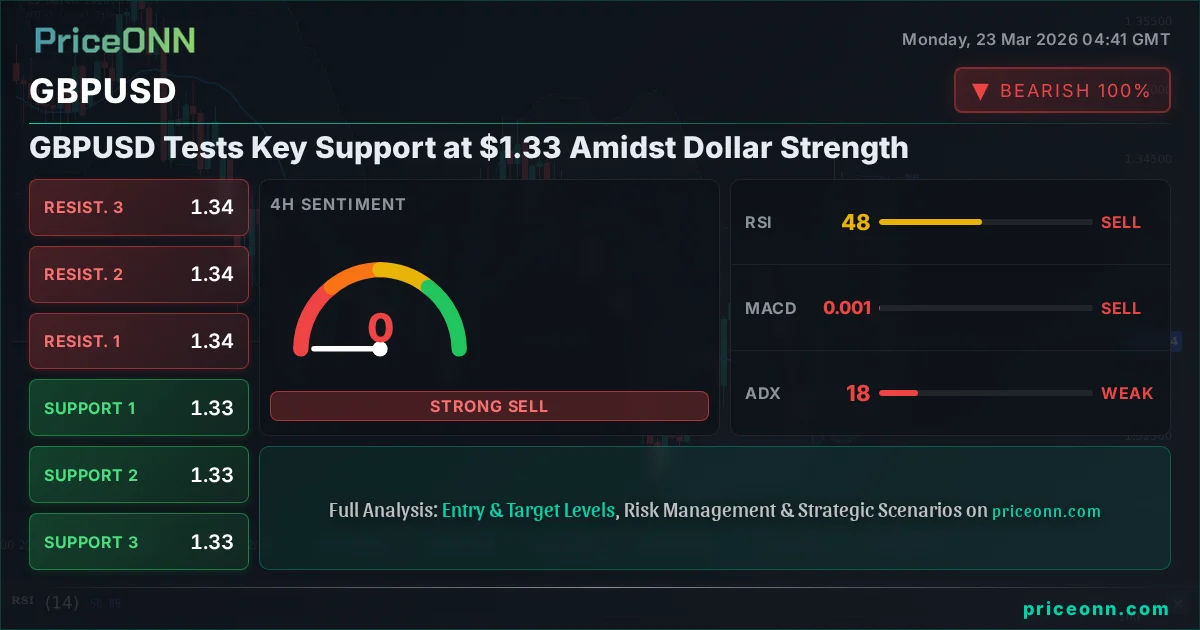
GBP/USD is experiencing selling pressure, hovering near 1.3320 in early Asian trading on Monday. This decline is not solely attributed to domestic UK economic factors but is significantly influenced by a palpable surge in global risk aversion.
Escalating geopolitical tensions in the Middle East are fueling increased demand for traditional safe-haven assets, with the US Dollar seeing a notable uptick. This shift in market sentiment creates headwinds for major currency pairs like GBP/USD, colloquially known as 'Cable'.
Market Context
Recent reports suggest a potential ground operation targeting Iran's Kharg Island, a crucial oil export hub. Such an escalation in regional conflict carries the distinct possibility of disrupting global oil supplies and introducing further uncertainty into already fragile financial markets. In this environment, investors typically divest from riskier assets and seek refuge in perceived havens, thereby propelling the dollar higher and exerting downward pressure on currencies such as the British Pound.
The Pound Sterling, one of the world's oldest currencies, maintains a significant position in the global foreign exchange market. Data indicates it is the fourth most actively traded currency, handling substantial daily volumes and participating in key trading relationships, most notably with the US Dollar.
Analysis & Drivers
The primary driver behind the current weakness in GBP/USD is the intensifying geopolitical risk emanating from the Middle East. The prospect of a military operation impacting Kharg Island, and by extension global oil flows, is amplifying safe-haven demand for the USD. This often leads to a decoupling of currency movements from purely domestic economic indicators, as global events take precedence.
The Bank of England (BoE) plays a pivotal role in Sterling's valuation. Its mandate to maintain price stability, typically targeting inflation around 2%, guides its monetary policy decisions. Interest rate adjustments are the primary tool. When inflation pressures rise, the BoE may increase rates to curb economic activity. Conversely, rate cuts can weaken the currency. The differential between UK interest rates and those set by other major central banks, particularly the US Federal Reserve, significantly impacts the GBP/USD exchange rate.
However, in the short term, the impact of geopolitical events often overshadows rate differentials. The market's immediate reaction to potential supply disruptions and increased uncertainty is a flight to the perceived safety of the US Dollar, creating a strong headwind for Cable.
Trader Implications
Traders should closely monitor developments in the Middle East. Any further escalation of conflict or confirmed disruption to oil supplies could lead to a sustained strengthening of the US Dollar, pushing GBP/USD towards key support levels. The 1.3300 mark is a psychological level, with a decisive break below it potentially opening the door for a move towards 1.3250 or even 1.3000 if the risk-off sentiment intensifies significantly.
Conversely, any de-escalation or diplomatic resolution in the region could trigger a reversal, with risk appetite returning to markets. In such a scenario, the Pound might find renewed strength, potentially challenging resistance levels around 1.3350 and 1.3400.
Key economic data releases from both the UK and the US will also be important, but their impact may be muted by the overriding geopolitical narrative. Traders should remain vigilant for any shifts in central bank rhetoric, particularly from the BoE and the Federal Reserve, regarding their future monetary policy stances.
Outlook
The immediate outlook for GBP/USD remains heavily dependent on the geopolitical situation in the Middle East. If tensions continue to simmer or escalate, the US Dollar is likely to remain the preferred safe-haven currency, capping any upside for Cable and increasing the probability of further declines. However, a swift resolution or a significant shift in global risk sentiment could see GBP/USD rebound. Traders should prepare for potential volatility as these competing forces play out.
Frequently Asked Questions
What is the immediate support level for GBP/USD given the current geopolitical climate?
The immediate support for GBP/USD is seen around the 1.3300 level. A break below this psychological barrier could lead to further declines, potentially targeting 1.3250.
How are Middle East tensions impacting the US Dollar and GBP/USD?
Escalating Middle East tensions are increasing demand for safe-haven assets like the US Dollar, which is strengthening against riskier currencies such as the British Pound (GBP/USD). This is creating downward pressure on the pair.
What could cause GBP/USD to recover in the near term?
A de-escalation of tensions in the Middle East or a significant positive shift in global risk appetite could lead to a recovery in GBP/USD. Positive UK economic data or hawkish signals from the Bank of England could also support a rebound, potentially targeting 1.3400.
Track markets in real-time
Empower your investment decisions with AI-powered analysis, technical indicators and real-time price data.
Join Our Telegram Channel
Get breaking market news, AI analysis and trading signals delivered instantly to your Telegram.
Join Channel

PriceONN