
Five Ways China Is Shielding Itself as the Hormuz Cease-Fire Collapses
 PriceONN Editorial Desk
Multi-source verification
PriceONN Editorial Desk
Multi-source verification
Global Oil Flows Under Threat Again
The tenuous peace accord meant to secure passage through the vital Strait of Hormuz has unraveled this week. American naval forces have reinstated a blockade on Iranian ports, launching strikes against targets along Iran's coastline. In response, Tehran has retaliated by targeting vessels transiting the strait without authorization.
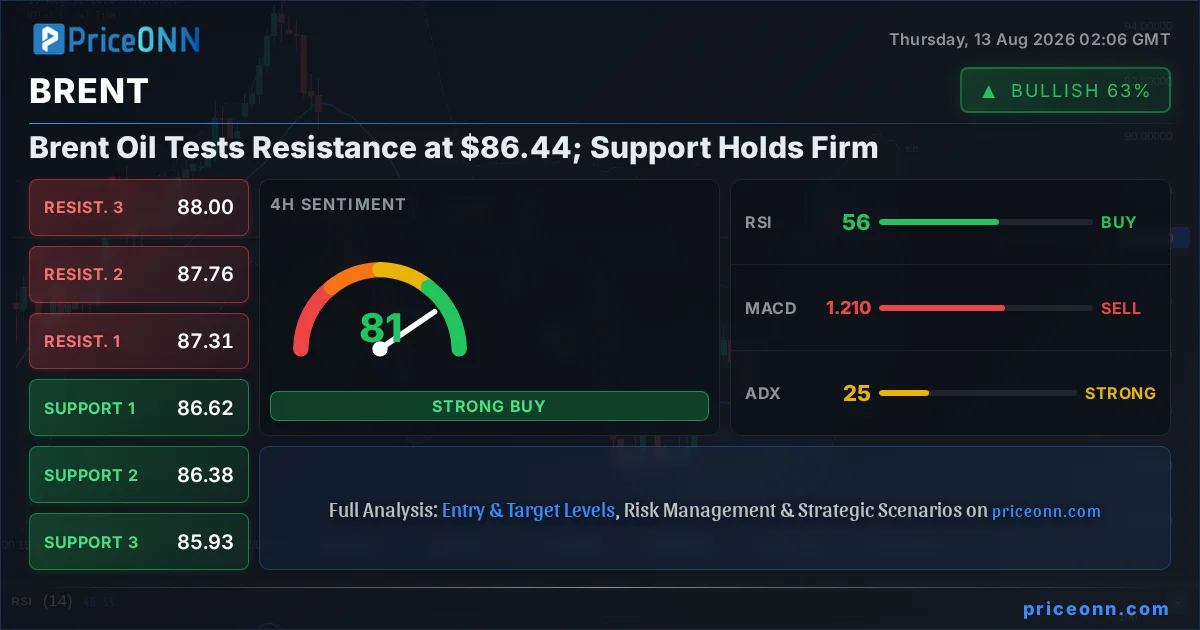
This escalation has sent shockwaves through the energy markets. Brent crude, which had settled into the mid-$70s during the brief period of calm following the June peace deal, has now climbed sharply, surpassing $85 a barrel. This marks its highest point since the truce was initially established, signaling renewed anxieties about global oil supply.
This is the second instance this year where the market has been forced to price in a substantial disruption to roughly one-fifth of the world's seaborne oil trade. Earlier in the year, predictions of $200 oil failed to materialize, a situation largely influenced by dynamics within China rather than direct conflict in the Gulf.
China's Shifting Energy Landscape
A significant factor mitigating the immediate impact of such geopolitical flare-ups originates from Beijing's evolving transportation sector. In China's major urban centers, the cost of using ride-sharing services has become more economical than operating a personal vehicle, even as gasoline prices continue their upward trajectory.
May saw a total of 3.05 billion taxi and rideshare trips, representing a 6% increase year-over-year. This shift is driven less by geopolitical events and more by domestic economic conditions. A subdued job market has compelled a considerable number of individuals to enter the ride-hailing sector for supplementary income. Simultaneously, the proliferation of affordable electric vehicles has lowered operational costs for these drivers, contributing to a sustained fare war despite rising fuel expenses for traditional car owners.
One commuter, identified only by her surname Yang, noted her preference for ride-hailing during periods of high gas prices, citing the avoidance of fuel costs and parking hassles. The rapid electrification of taxi fleets further amplifies these savings. Approximately half of China's 1.3 million taxis are electric, with this figure approaching 100% in its largest cities. Didi's fleet, encompassing hybrids and EVs, expanded to 8 million vehicles last year, now accounting for three-quarters of the platform's total mileage.
Consequently, China's gasoline consumption decreased by 10% and diesel by 14% in May compared to the previous year, despite a 2% rise in road freight and record holiday travel. Travel demand is robust, but it is increasingly being met by public transit and ride-sharing, rather than private vehicles, according to Daizong Liu of the Institute for Transportation and Development Policy.
Strategic Reserves and Overland Routes Provide a Buffer
Beyond domestic transport shifts, China has also strategically bolstered its energy security over the past year. Prior to the current hostilities, Chinese refiners amassed a substantial crude oil inventory, estimated to be close to 1 billion barrels across commercial and strategic reserves. This buildup capitalized on stable prices and significant discounts for sanctioned Russian and Iranian oil, which saw limited interest from other global buyers.
This strategic stockpile provided a crucial buffer. Crude imports into China saw a significant reduction, falling from 11.39 million barrels per day in February to 6.36 million by May, a decrease of over 44%. While refiners maintained near-normal operational levels, this gap was largely bridged by drawing down inventories. The International Energy Agency (IEA) estimated China withdrew approximately 41 million barrels from stockpiles in June alone.
This inventory management effectively placed a floor under global oil prices. However, the sustainability of this strategy is now being questioned. With inventories depleted, the reversal of China's demand slump is uncertain, with some analysts suggesting a potential permanent reduction in the country's overall oil requirements.
Furthermore, China has diligently diversified its oil import routes over two decades. Extensive pipeline infrastructure connecting Russia and Central Asia now handles between 40% to 50% of the country's seaborne oil imports, according to Rush Doshi of the Council on Foreign Relations. These overland routes bypass the Strait of Hormuz entirely, rendering them immune to maritime blockades or conflict in the region.
Market Dynamics and China's Influence
The market for Iranian oil, in particular, has seen a notable shift. While Iranian tankers retain guaranteed passage through the strait, the vast majority of their cargo is destined for China, which purchases around 90% of Iran's exports. Despite this, Chinese refiners have shown a marked reluctance to secure these cargoes.
During the brief cease-fire, available Iranian oil largely went unclaimed as buyers opted for alternatives. For instance, Shenghong Petrochemical secured alternative supplies from Iraq, the UAE, and Saudi Arabia for July delivery, benefiting from price reductions offered by those producers. Projections indicated Iranian imports into China would fall to approximately 556,000 barrels per day in July, a low not seen since early 2023. An estimated 30 million to 34.5 million barrels of Iranian oil are currently in floating storage without immediate buyers.
This situation highlights China's significant market leverage. As the world's largest crude importer, its ability to be selective and dictate terms rather than passively accept market prices is evident. Natasha Kaneva from J.P. Morgan observed that barrels exiting the Hormuz strait increasingly have limited destinations, with China being the primary but currently unwilling recipient.
The underlying trend of China's energy transition further reduces its long-term reliance on oil. New energy vehicles now constitute half of all new passenger car sales. Clean-tech exports, including solar panels, batteries, and EVs, reached a record high in March, coinciding with the escalation of the conflict in Iran. Beijing's objective is to increase the share of non-fossil fuels in its total energy consumption to 25% by 2030, a goal independent of geopolitical events.
Analysts suggest the current conflict may have merely accelerated pre-existing behavioral shifts, making China less susceptible to oil market volatility than previously assumed. The critical question remains whether this resilience will hold under sustained pressure. Some estimates suggest that a portion, perhaps as much as 10%, of China's reduced oil imports may represent a permanent structural shift, irrespective of the Strait of Hormuz's status.
Reading Between the Lines
The recent surge in Brent crude prices above $85 a barrel, driven by renewed tensions in the Strait of Hormuz, underscores the persistent fragility of global oil supply chains. While the immediate market reaction reflects a familiar fear premium, China's multifaceted approach to energy security offers a compelling counter-narrative.
The impact extends beyond crude oil. This geopolitical instability could affect related currency pairs such as USD/CAD, as a higher oil price often supports the Canadian dollar. Additionally, energy sector equities and broader equity indices like the S&P 500, which are sensitive to inflation expectations and corporate input costs, will be closely watched. Investors should monitor developments in the Persian Gulf and China's domestic energy policies for short-to-medium term directional cues.
Key risks include a prolonged conflict that could deplete China's strategic reserves faster than anticipated or lead to broader regional instability. Conversely, opportunities may arise for alternative energy producers and companies focused on energy efficiency. Smart money is likely assessing the true extent of China's reduced oil dependency and the potential for a sustained price cap, rather than a return to the extreme price spikes seen earlier in the year.
Track markets in real-time
Empower your investment decisions with AI-powered analysis, technical indicators and real-time price data.
Join Our Telegram Channel
Get breaking market news, AI analysis and trading signals delivered instantly to your Telegram.
Join Channel PriceONN News
Hormuz tensions are flaring again as Iranian exports collapse, pushing Brent toward $87 and raising the risk of another run toward $100. China’s Crude Drawdown Puts Iranian Barrels Back in Demand - Shrinking crude inventories in China might spur a buying spree over the upcoming weeks, particularly for Russian and Iranian crude, buoyed by a record-high July stock draw in Shandong. - Chinese teapots are expected to boost their purchases of Iranian oil in the upcoming days as stockpiles in the...
PriceONN News
Brent Crude oil prices rose above $89 per barrel in early trade in Europe on Wednesday as Iran and the United States offered contrasting claims about who controls the Strait of Hormuz. Brent Crude prices were up by 0.64% at $89.60 in the morning in Europe, and WTI Crude was rising by 0.94% at $83.90, amid persistent supply concerns and risks despite claims from the U.S. that traffic at Hormuz had normalized. Iran, for its part, said on Tuesday that the Strait of Hormuz will remain closed unless...
PriceONN News
Ukraine’s military claimed another drone attack on an oil refinery in Russia in the early hours on Tuesday as Ukrainian forces continue to target Russia’s energy producing and exporting infrastructure in an escalation of drone attacks at key oil refining hubs. The Ukrainian military on Tuesday said it had struck the Orsknefteorgsintez oil refinery in Orsk, in the Orenburg region. Orsk is about 1,500 kilometers (930 miles) from the frontline. “Fire was recorded. Damages are being ascertained,”...
PriceONN News
The latest Bloomberg data show that shipping transits through the Strait of Hormuz remained largely disrupted Monday morning, even as Iran and Oman reportedly moved closer to a deal. Brent crude futures traded near $85 a barrel as markets priced in the possibility that a deal to reopen the maritime chokepoint could be imminent. Yet global supply-chain stress remains near its highest level since the pandemic, and any normalization could take months, even if shipping traffic resumes. UBS senior...
PriceONN News
Crude oil inventories in the United States saw a massive increase of 17.4 million barrels during the week ending August 7, according to new data from the U.S. Energy Information Administration (EIA) released on Wednesday. The increase brings commercial stockpiles to 424.4 million barrels, according to government data, which are now just 2% below the five-year average for this time of year. The EIA’s data release follows API’s figures that were released a day earlier, which reported that crude...
PriceONN News
Norwegian aluminum producer Norsk Hydro's Alunorte plant in Brazil, one of the world's largest alumina refineries, reduced output by 50% following disruptions to natural gas availability. Bloomberg reports that disruptions to NatGas availability at Alunorte forced a 50% reduction in output and sent aluminum prices in London to a seven-week high. Hydro said production would return to full capacity once gas supplies normalize. Aluminum rose nearly 2% in London and traded at $3,373 a metric ton....
PriceONN News
Indian state-controlled oil refiners continue to search the market for spot crude supply as term deliveries are constrained by the ongoing crisis in the Middle East and its key oil chokepoint, the Strait of Hormuz. Mangalore Refinery and Petrochemicals Limited (MRPL) and Hindustan Petroleum Corporation Limited (HPCL) are looking to buy a combined 6 million barrels of crude oil via spot tenders, Reuters reported on Wednesday, citing tender documents it has seen. HPCL is seeking up to 4 million...
PriceONN News
The IEA has slashed its 2026 global oil supply forecast, with output now expected to plunge 4.3 million barrels per day this year as the failure to reopen the Strait of Hormuz pushes the market deeper into deficit. The latest forecast is considerably worse than the 3.7-million-bpd decline the agency projected just last month and would leave global supply at 102.02 million bpd, its lowest forecast for 2026 yet. Supply is now expected to fall 1.27 million bpd short of demand for the year,...
PriceONN News
Oil flows from the Middle East have normalized, with Sunday traffic alone above pre-conflict averages, U.S. Secretary of Energy Chris Wright said on Tuesday in a claim that appears not to be backed by ship-tracking data. On Tuesday, Secretary Wright posted on X that “Thanks to the coordinated efforts of the U.S. military and our gulf allies, the seven-day average for oil leaving the Strait of Hormuz is currently up to almost 9 million barrels per day.” He went on to add that “When combined with...
PriceONN News
A drone has struck a power station at the Zawiya oil export terminal in Libya, suggesting continued attacks on one of the country’s main oil hubs. The power plant is in close proximity to the largest oil refinery in Libya, the AP noted in a report on the news. The attack follows earlier ones that caused an explosion at an oil storage tank. No one has claimed responsibility for the drone attacks, the AP also reported. The tank, according to the company operating the facility, had 4.5 million...
PriceONN News
Whatever officially occurs next in the on-again/off-again negotiations towards a peace deal between the U.S. and Iran, unofficially Tehran knows that it has established de facto control over both the world’s two key maritime energy transit routes -- the Strait of Hormuz and the Bab el-Mandeb Strait -- for at least as long as the Islamic regime remains in place in Iran. Washington, London, Brussels, Beijing, and Moscow know it too. The Strait of Hormuz remains effectively controlled by vast...
PriceONN News
The Middle East conflict and the heightened threats to shipping in the Red Sea have prompted China to boost the use of the Arctic to move containers from the Chinese east coast to Europe. The fast-melting Arctic ice offers an alternative shipping route in the summer as the Houthi threats to shipping in the Red Sea and the Bab el-Mandeb Strait make cargo operators more cautious in transiting the key chokepoints in the Middle East. Shipping through the Arctic is not something new, but this time...