
Forex Today: US Dollar benefits from risk aversion as Middle East situation heats up
 PriceONN Editorial Desk
Multi-source verification
PriceONN Editorial Desk
Multi-source verification

Dollar Dominates as Geopolitical Fears Intensify
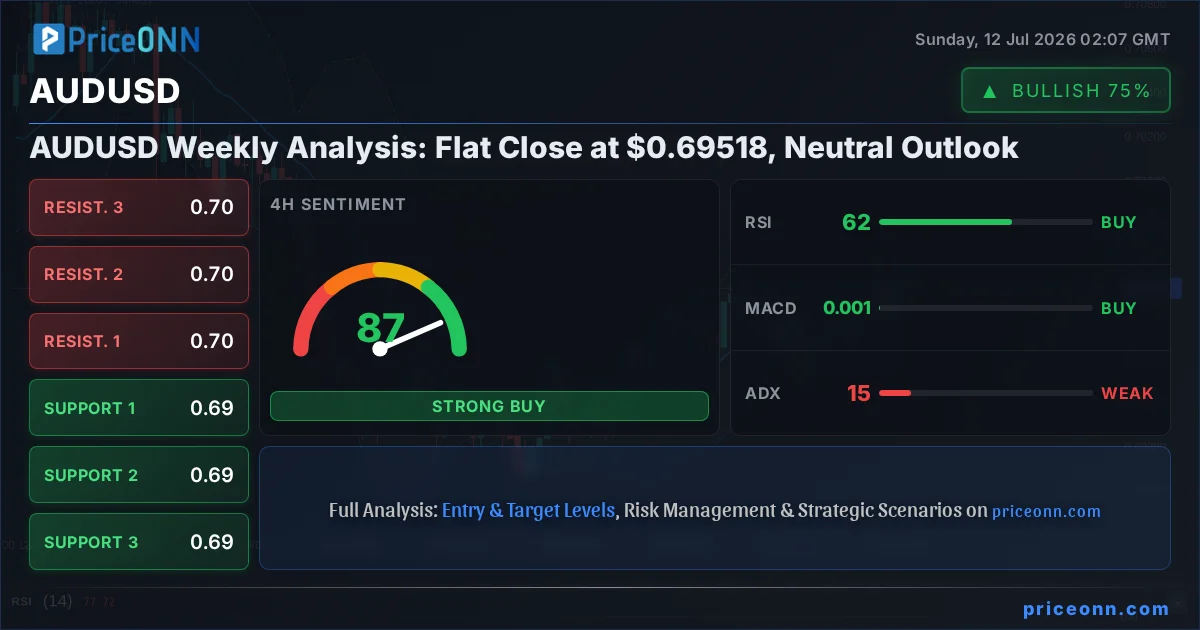
A palpable sense of unease gripping global markets on Monday saw the U.S. Dollar emerge as the clear winner, asserting its dominance across the currency spectrum. Data reveals the dollar notched its most significant gains against the Australian Dollar, underscoring a broad-based retreat from riskier market exposures. This shift reflects a classic 'risk-off' environment, a scenario where investor sentiment turns cautious, leading to a preference for assets promising capital preservation over aggressive growth.
The dichotomy between 'risk-on' and 'risk-off' periods is stark. When optimism prevails and investors embrace risk, stock markets typically rally, commodities (with Gold often an exception) see price appreciation, and currencies tied to commodity-exporting nations, such as the AUD and CAD, tend to strengthen. Cryptocurrencies also often find upward momentum in such periods. Conversely, a 'risk-off' phase triggers a flight to quality. High-grade government bonds, particularly those from major economies, become attractive. Gold historically shines as a store of value, and traditional safe-haven currencies like the Japanese Yen, Swiss Franc, and, crucially, the U.S. Dollar, all tend to appreciate.
The outperformance of currencies like the Australian Dollar, Canadian Dollar, New Zealand Dollar, and even minor currencies such as the South African Rand, is intrinsically linked to their economies' reliance on commodity exports. During periods of robust global economic activity, demand for raw materials surges, lifting commodity prices and consequently boosting these currencies. This dynamic paints a clear picture of how global economic health directly influences currency valuations.
However, when the global outlook darkens, the narrative shifts dramatically. The major currencies that typically benefit from such apprehension are the U.S. Dollar, the Japanese Yen, and the Swiss Franc. The dollar's premier status as the world's reserve currency, coupled with its role as a destination for capital seeking refuge, solidifies its appeal. Investors often flock to U.S. Treasury debt, perceived as exceptionally safe due to the sheer size and stability of the American economy, making default highly improbable.
The Yen's safe-haven status is bolstered by the stability of its domestic bond market. A significant portion of Japanese government bonds are held by domestic entities, reducing the likelihood of large-scale selloffs even during times of international turmoil. Similarly, the Swiss Franc draws strength from Switzerland's long-standing reputation for financial stability and robust banking secrecy laws, which offer investors a high degree of capital protection.
Market Ripple Effects
The current geopolitical climate, marked by escalating tensions in the Middle East, is creating a significant ripple effect across financial markets. This elevated risk aversion directly impacts currency pairs, commodity prices, and equity valuations. As investors pivot towards safety, the demand for traditional safe havens like the USD, JPY, and CHF is expected to remain elevated.
This dynamic places considerable pressure on currencies of commodity-exporting nations, particularly the AUD and CAD. Their economic models are sensitive to global growth expectations and commodity demand. A sustained period of risk aversion could lead to further depreciation for these currencies as global trade potentially slows and demand for raw materials wanes. Conversely, equity markets, especially those in emerging economies or sectors highly sensitive to economic growth, may face headwinds. Investors should closely monitor the spread between U.S. Treasury yields and those of other developed nations, as this differential often reflects risk appetite and can provide clues about future currency movements.
The price of Gold is also a key indicator to watch. While typically a safe haven, its performance can be complex during risk-off events. However, sustained geopolitical uncertainty often provides a floor for gold prices. Traders will be scrutinizing any official statements or actions from major global powers that could de-escalate or further inflame the situation, as these will be critical catalysts for market sentiment shifts.
Track markets in real-time
Empower your investment decisions with AI-powered analysis, technical indicators and real-time price data.
Join Our Telegram Channel
Get breaking market news, AI analysis and trading signals delivered instantly to your Telegram.
Join Channel PriceONN News
EUR/USD rose to 1.1429 on Thursday, with the US dollar continuing its moderate decline from the previous session. The market is assessing rising inflation risks driven by elevated energy prices against a backdrop of weakening economic data, while seeking further signals on Federal Reserve policy. At next week’s meeting, the regulator is expected to keep […] The post EUR/USD Recovers as Dollar Weakens appeared first on ActionForex.
PriceONN News
The Euro’s (EUR) modest upside attempt against the US Dollar (USD) witnessed during Wednesday’s Asian session has been short-lived. The EUR/USD pair was capped below 1.1420, before pulling back to levels a few pips above 1.1400 during the European trading session.
PriceONN News
TL;DR: Gold and Silver tumbled as markets returned to the oil-rates relationship that governed Q2, with Brent above $100 and 10-year Treasury yields above 4.7% restoring pressure on the metals - leaving their next move hostage to Trump’s binary decision on Iran. Why This Matters Gold and Silver tumbled as markets returned to trading precious […] The post Gold and Silver Tumble as Oil Link Returns; Trump’s Looming Decision on Iran Adds Binary Risk appeared first on ActionForex.
PriceONN News
Key insights from the week that was. The June Labour Force Survey offered both noise and signal. Employment surprised materially to the upside, rising 76.3k in the month. However, the gain was matched by a sizeable lift in labour supply, the participation rate bouncing 0.3ppts to 67.0%, a 13-month high. The ABS noted in the […] The post Cliff Notes: Markets on Edge appeared first on ActionForex.
PriceONN News
EURUSD is rising on expectations of ‘hawkish’ rhetoric from the ECB. The rally in Brent crude and Treasury yields is not helping the US dollar. The US dollar has retreated, despite rising oil prices and the resulting increase in US Treasury yields. Houthi attacks on tankers in the Red Sea have heightened geopolitical risks and […] The post Euro Focuses on the ECB appeared first on ActionForex.
PriceONN News
TL;DR: Brent oil has surged from to above $97 on Red Sea attacks and Strait of Hormuz escalation, bringing the psychological $100 level into view. While broader markets (stocks, bonds, currencies) have treated the move as a geopolitical risk premium, a decisive break above $100 could signal investors are pricing genuine supply disruption-a narrative shift that […] The post Red Sea Attacks Push Brent Oil Toward $100. Will Markets Finally React? appeared first on ActionForex.
PriceONN News
EUR/CHF may already be telling investors what to expect from today’s European Central Bank meeting. The cross broke decisively above 0.9278 this week, extending its recent rally as surging oil prices revived inflation concerns across Europe. The move suggests markets have begun positioning for a relatively more hawkish ECB even though policymakers are almost universally […] The post EUR/CHF Rally Points to Hawkish ECB Hold as Oil Reignites Inflation Risks appeared first on ActionForex.
PriceONN News
We expect the Federal Reserve to remain on hold in the July meeting, in line with consensus. Markets price in 20-25% probability for a hike. Without new projections or forward guidance from Warsh, the focus will be on the vote split. We think the most likely outcome is 2-4 votes in favour of a hike. […] The post US – Fed Preview: A Divided Hold appeared first on ActionForex.
PriceONN News
The strong support at 4,000 helps gold defy the fundamentals. Rising Treasury yields and a strong US dollar are creating headwinds. The US dollar staged a four-day growth against the backdrop of air strikes on Iran. Rumours of a temporary ceasefire have not been confirmed, pushing Brent to near $93 per barrel and fuelling inflation […] The post Gold: The Floor Has Been Found, but Where Is the Ceiling? appeared first on ActionForex.
PriceONN News
The Japanese Yen tumbled to another four-decade low today, with USD/JPY breaking above the 163 mark as investors continued to unwind Yen positions against the backdrop of widening global yield differentials and surging energy prices. The move has once again thrust Japan’s currency policy into the spotlight, raising familiar questions over whether authorities will step […] The post Yen Hits Fresh 40-Year Low. Can Japan Still Defend Its Currency? appeared first on ActionForex.
PriceONN News
Gold traded around 4,080 USD per ounce on Wednesday, having risen nearly 2% the previous day. Investors continue to assess developments in the Middle East and the impact of elevated oil prices on inflation and interest rates. Donald Trump has played down the prospects of an imminent resumption of negotiations with Iran and warned of […] The post Gold Rises Amid Heightened External Risks appeared first on ActionForex.
PriceONN News
The Japanese Yen (JPY) attracts significant bids against its major currency peers during the European trading session on Wednesday. The USD/JPY pair falls vertically to near 162.65, but quickly recovers some losses and rebounds to around 162.90.