
Gold and Silver Tumble as Oil Link Returns; Trump’s Looming Decision on Iran Adds Binary Risk
 PriceONN Editorial Desk
Multi-source verification
PriceONN Editorial Desk
Multi-source verification
Precious Metals Under Renewed Pressure
Gold and silver prices experienced a notable downturn, driven by a re-emergence of the market relationship that dominated the second quarter. This dynamic, where rising crude oil prices and increasing Treasury yields typically weigh on non-yielding assets, has firmly reasserted itself. Brent crude oil has surged past the $100 per barrel mark, reigniting inflation concerns. Simultaneously, the US 10-year Treasury yield has climbed above 4.7%, enhancing the appeal of interest-bearing assets over bullion.
This shift signifies a return to a more traditional macro environment after a brief period where geopolitical tensions provided a temporary buffer for precious metals. The recent resilience seen in gold and silver this week now appears to be an ephemeral anomaly rather than a sustained change in market correlations. The focus has pivoted from the immediate conflict itself to its broader economic ramifications, particularly concerning energy markets and central bank policy expectations.
Elevated oil prices present a persistent challenge to inflation control. Should inflation remain stubbornly high, it could compel the Federal Reserve to maintain its restrictive monetary policy stance for an extended duration. This prospect of higher interest rates for longer directly translates into higher Treasury yields, thereby diminishing the relative attractiveness of gold and silver. The market's pricing of Fed policy has begun to reflect this 'higher-for-longer' scenario, adding significant headwinds for the precious metals.
Trump's Iran Dilemma Creates Binary Risk
With the oil-rates transmission mechanism back in play, the immediate future for gold and silver is now heavily influenced by an impending decision from US President Donald Trump concerning Iran. As the regional conflict extends into its fifth month without a clear resolution, reports suggest growing impatience within the White House. There is an increasing inclination towards more forceful military actions over prolonged diplomatic efforts.
This sentiment is further underscored by the reported movement of additional US military assets, including medical units and weaponry, into the region. These developments suggest that the next phase of US engagement might be a significant escalation rather than a series of minor adjustments. President Trump appears to be navigating a critical binary choice: either a substantial military escalation, potentially involving ground troop deployment, or the pursuit of a negotiated settlement.
Regardless of the path chosen, either outcome carries the potential to trigger a sharp and unpredictable movement in oil prices. The critical factor for precious metals markets is the persistence of the current oil-rates linkage. This connection is expected to remain intact, amplifying the price reaction in both gold and silver, irrespective of the direction triggered by Trump's decision.
Escalation Scenario Impact
In an escalation scenario, a significant spike in oil prices would likely fuel further inflation expectations. This would reinforce the market's conviction that the Federal Reserve must maintain elevated interest rates, consequently pushing Treasury yields higher. Such a chain of events would intensify the existing downward pressure on gold and silver, potentially accelerating their price declines.
Settlement Scenario Impact
Conversely, if a diplomatic settlement is reached, it could lead to a softening of oil prices. Easing inflationary pressures might then prompt a reassessment of Fed policy expectations, potentially leading to lower Treasury yields. These conditions would create a fertile ground for a robust rebound in both gold and silver prices. The ultimate direction, therefore, appears contingent on the President's strategic choice, but the prevailing macro-economic correlations suggest a decisive impact on metals in either case.
Reading Between the Lines
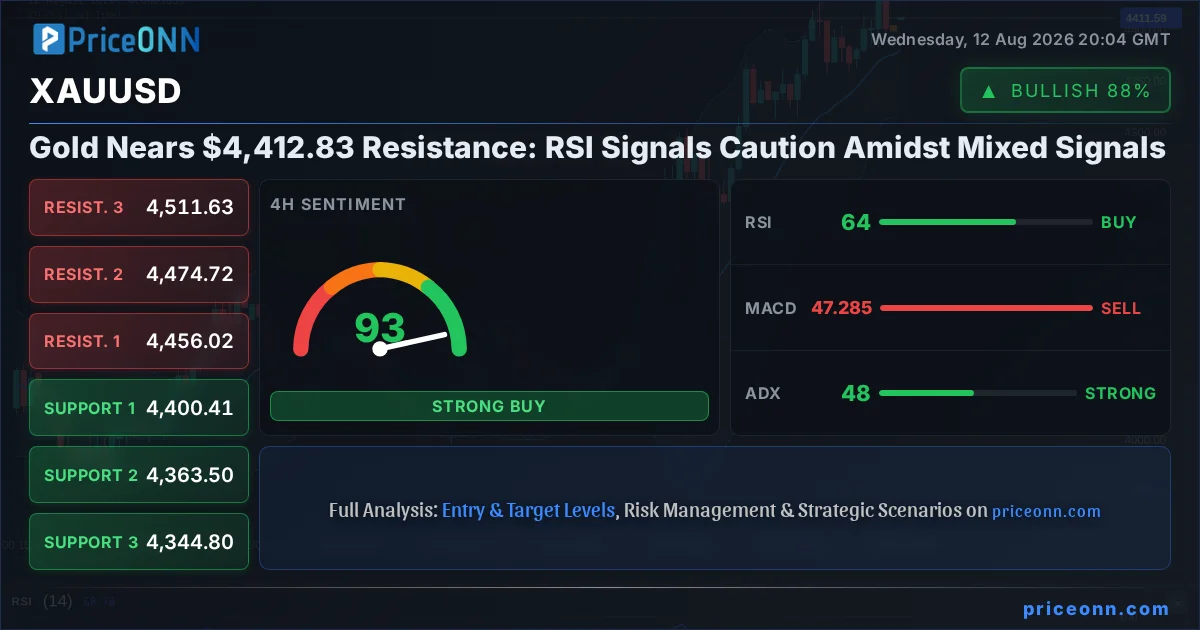
The technical charts for gold and silver suggest continued downside risk in the short to medium term, barring a significant geopolitical or policy shift. For Gold, the recent upward price movement from 3,959.42 to 4,166.08 appears to be a temporary retracement within a broader triangle consolidation pattern, rather than the commencement of a sustained recovery. The price remains significantly below its 55-day exponential moving average, reinforcing the bearish outlook that the decline initiated from 4,889.24 is not yet concluded. A decisive breach below the 3,942.23 level is anticipated, with subsequent targets at the 38.2% Fibonacci projection of 3,804.32 and then the 61.8% projection at 3,580.82. Any rebound attempting to move higher will likely face strong resistance at the 38.2% retracement level near 4,303.98, which must hold to maintain the bearish thesis.
Silver, while experiencing a slightly stronger rebound from its low of 54.77, still struggles to break through significant structural resistance at 63.25 and remains well below its falling 55-day exponential moving average. The expectation is for a renewed decline through 54.77, with the psychologically important $50 level serving as the next major target. This price zone is proximate to the 76.4% Fibonacci retracement of the prior move from 28.28 to 121.83, situated around 50.35. A break above the 63.25 resistance level is a prerequisite for any indication of a market bottom; until such a breakout occurs, the risk of further depreciation remains dominant.
Track markets in real-time
Empower your investment decisions with AI-powered analysis, technical indicators and real-time price data.
Join Our Telegram Channel
Get breaking market news, AI analysis and trading signals delivered instantly to your Telegram.
Join Channel PriceONN News
Brent oil price rose to the highest in over one week on Tuesday, in extension of Monday’s nearly 5% advance, following the latest verbal escalation by President Trump that quickly changed the sentiment and countered efforts of Iran and Oman to find solution for reopening of strategic Hormuz strait. The latest demands from President Trump […] The post Brent Oil Price Falls After Recovery Failed to Clear Important $90 Barrier appeared first on ActionForex.
PriceONN News
Whatever the inflation figures may be, the precious metal will come out on top. Japan and the US don’t want to give the yen’s fate to speculators. The US dollar continues to recover from the blow dealt by the labour market statistics. A rally in Treasury bond yields is driving the rise in the USD […] The post Gold as a Sure-Fire Bet appeared first on ActionForex.
PriceONN News
A deal to reopen the Strait of Hormuz is not inevitable. Oil prices are rising amid growing risks of an escalation of the conflict in the Middle East. The US dollar continued to recover from losses caused by the jobs report, against a backdrop of rising geopolitical tensions in the Middle East with traders squaring […] The post Brent Is Following a Path of Demands Rather Than Commitments appeared first on ActionForex.
PriceONN News
Gold rose to 4,400 USD per ounce on Tuesday, reaching a two-month high. Demand for the precious metal is growing rapidly, even amid heightened inflation risks and expectations of higher interest rates driven by elevated oil prices. Chinese institutional investors continue to build positions in gold as a defensive asset amid heightened volatility in other […] The post Gold Rallies: Long-Awaited Rise and Growing Safe-Haven Demand appeared first on ActionForex.
PriceONN News
The USD index plummeted amid a decline in US employment. Gold is benefiting from the Fed’s reluctance to raise interest rates. The US dollar touched a seven-week low after an unexpected labour market report. Employment in July unexpectedly fell by 23K. The figures for May were revised down from 129K to 63K, and those for […] The post The Dollar Let the Labour Market Down appeared first on ActionForex.
PriceONN News
The Consumer Price Index (CPI) rose by 0.1% month-on-month (m/m) in July – in line with expectations. On a twelve-month basis, CPI edged down to 3.4% (from 3.5% in June). Energy costs fell by 1.5% m/m, led by a 2.9% m/m decline in prices at the pump. Food prices rose 0.1% m/m – its softest […] The post US: Inflationary Pressures Remain Subdued in July appeared first on ActionForex.
PriceONN News
US inflation eased as expected in July, reinforcing case for Fed to stay on hold while it waits for clearer evidence on both prices and labor market. Headline CPI rose from -0.4% to 0.1% m/m, while annual rate slowed from 3.5% y/y to 3.4%. Core CPI increased from 0.0% to 0.2% m/m, with annual core […] The post US CPI Slows to 3.4% as Core Inflation Eases to 2.5% appeared first on ActionForex.
PriceONN News
Germany’s benchmark index just made history, breaking above 26,500 for the first time ever, extending a rally that has already delivered close to 10% over the past twelve months. The move came on fresh optimism around a potential resolution to the Iran conflict, though that optimism proved short-lived: President Trump’s latest demands, that Tehran compensate […] The post DAX 40: Record Highs, Real Fundamentals, One Channel Left to Test appeared first on ActionForex.
PriceONN News
Hello fellow traders. In this technical article we’re going to take a look at the Elliott Wave charts charts of Copper (HG_F) commodity published in members’ area of the website. As our members know, Copper Futures recently completed a pullback that provided a high-probability trading setup. The decline unfolded as a clear Elliott Wave Zig […] The post Copper (Hg_F) Elliott Wave: Targeting a Buy at the Blue Box appeared first on ActionForex.
PriceONN News
The NFIB’s Small Business Optimism Index rose 2.4 points to 99.8 in July, soundly beating expectations for a roughly flat reading of 97.5. Eight out of the ten index subcomponents improved during the month and two deteriorated. The largest improvement came from the net share of firms planning to increase employment (up 9 points to […] The post US: Small Business Optimism Spiked in July appeared first on ActionForex.
PriceONN News
Overnight, the RBA held its cash rate steady at 4.35%, as widely expected after June’s inflation data came in softer than forecast at 3.8% headline. Yet the accompanying statement struck a notably cautious tone, warning that trimmed mean inflation remains elevated and largely unchanged from the March quarter, with oil and related commodities still trading […] The post EUR/AUD: Two Central Banks on Hold, One Triangle About to Break appeared first on ActionForex.
PriceONN News
RBA on hold as expected, recognising the data has broken against its hawkish narrative. Base case clearly an extended period on hold, but RBA will hike if upside risks to inflation materialise. As widely expected, the RBA Monetary Policy Board (MPB) kept the cash rate on hold at 4.35% at its August meeting. The accompanying […] The post RBA Holds at 4.35%, Narrows Risk of Hikes appeared first on ActionForex.