
Red Sea Attacks Push Brent Oil Toward $100. Will Markets Finally React?
 PriceONN Editorial Desk
Multi-source verification
PriceONN Editorial Desk
Multi-source verification
Markets on Edge as Crude Oil Eyes Triple Digits
The price of Brent crude oil has dramatically climbed, now trading above $97 per barrel. This ascent is directly fueled by escalating hostilities in the Red Sea and heightened concerns surrounding the Strait of Hormuz, bringing the deeply significant $100 mark within striking distance. For weeks, financial instruments from equities to currencies have largely interpreted these geopolitical tensions as a manageable risk premium. However, a decisive move beyond the $100 threshold could signal a fundamental shift, indicating that investors are beginning to factor in tangible supply disruptions rather than mere potential threats. This potential narrative change carries profound implications for inflation forecasts across the entire financial landscape.
Why the $100 Oil Level is a Critical Juncture
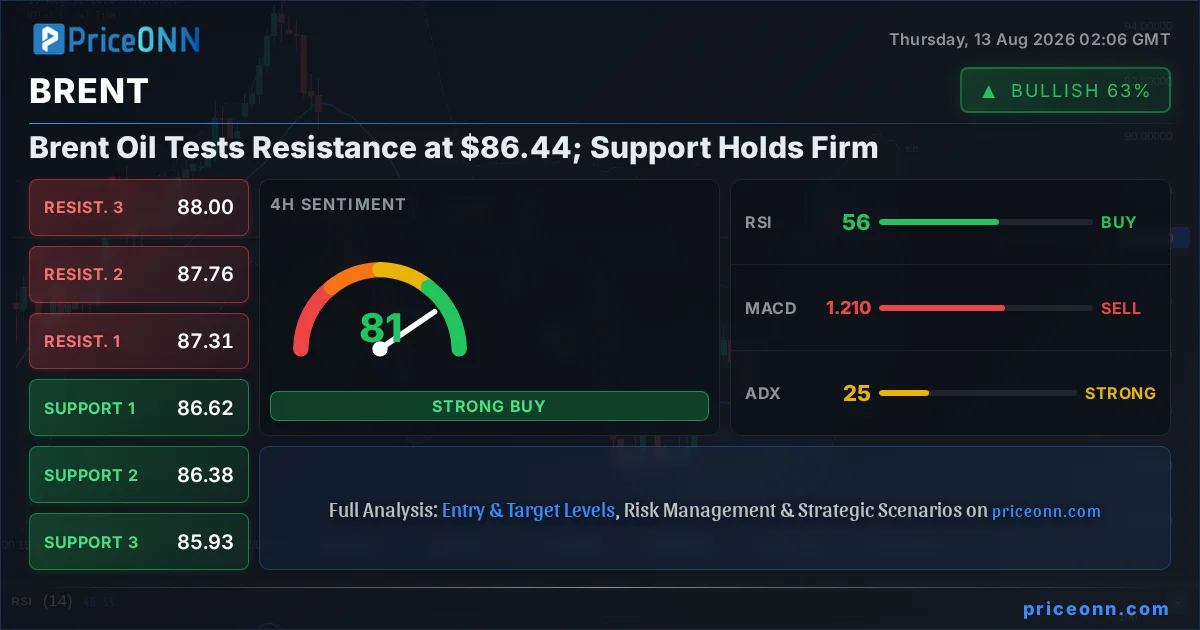
The trajectory of oil prices toward the $100 mark is far more than an isolated energy market event. For participants in currency markets, commodity trading desks, and equity investment firms, this level represents a crucial inflection point, both psychologically and fundamentally. As long as the current price surge is viewed primarily as a geopolitical risk premium, central banks may feel justified in maintaining their current stance on interest rates, inflation expectations can remain relatively stable, and currency fluctuations might stay within predictable bounds.
However, the scenario transforms if Brent crude firmly establishes itself above $100, signaling that supply disruptions are not just hypothetical but actual. Such a development could accelerate increases in Treasury yields, force equity markets to re-evaluate growth projections downward, and place renewed pressure on monetary authorities to sustain higher interest rates for a longer duration. Understanding the potential ramifications of breaking $100 is therefore paramount for strategic positioning across all major asset classes.
Three Factors Bolstering the Current Oil Rally
Several key developments are contributing to the current oil price surge, lending it a durability that distinguishes it from previous geopolitical flare-ups. These factors collectively paint a more bullish outlook for crude prices:
- Active Red Sea Front: Houthi forces have escalated their actions, claiming responsibility for missile and drone strikes targeting two commercial tankers, the Encelia and Layla. This marks a significant shift from prior threats to direct attacks on vital shipping lanes. Coupled with existing uncertainties around the Strait of Hormuz, two of the world's most critical maritime transit points are now facing simultaneous pressure.
- Automated US Retaliation Framework: A proposed protocol outlines an automatic response from the United States to any Iranian attacks on shipping passing through the Strait of Hormuz. This mechanism, reportedly involving strikes against specific Iranian infrastructure, aims to reduce ambiguity in US response but carries the risk of a self-reinforcing escalation spiral should attacks persist.
- Diminishing Diplomatic Avenues: Recent assessments suggest a lack of serious engagement from Iran in de-escalating tensions, particularly following violations of a previously agreed Memorandum of Understanding. With no clear diplomatic path toward a swift resolution, market participants are less inclined to bet on a rapid de-escalation that could curb the upward momentum in oil prices.
This confluence of actual attacks on shipping and the absence of a clear resolution path provides a more substantial foundation for the current rally compared to typical geopolitical-driven price spikes.
The $100 Threshold: From Risk Premium to Supply Crisis
Market attention is now intensely focused on the technical and psychological barrier around the $100 per barrel level. Specifically, a firm breach above this figure, extending to the 61.8% Fibonacci retracement level at $100.64, would signify more than just a milestone. It would likely indicate that investors are increasingly convinced the current geopolitical premium is transforming into a more concrete risk of genuine supply disruption.
The crucial distinction lies in how markets are interpreting the price increase. Thus far, higher oil prices have been viewed as an unwelcome but manageable geopolitical premium. Equity markets have absorbed this impact with relative resilience, and Treasury yields have seen only gradual increases. Currency pairs, too, have largely remained within established trading ranges. This dynamic would fundamentally change if Brent crude solidifies its position above $100, especially if evidence emerges that Red Sea attacks are materially impacting Saudi export volumes, not merely threatening them.
Should a simultaneous constraint on both the Red Sea and the Strait of Hormuz materialize, the market narrative would shift decisively from geopolitical uncertainty to confirmed supply shortfalls. This is the critical juncture where Treasury yields could experience a sharp acceleration, equity markets might begin to price in a more significant economic growth shock, and central banks could face intensified pressure regarding the necessity of maintaining restrictive monetary policies.
Technical Indicators Echo the Fundamental Narrative
The technical chart patterns are providing additional support to the bullish case for oil. The decline in Brent crude from its peak of $119.50 appears to have concluded as a three-part corrective pattern, bottoming out at $70.14. The subsequent upward movement exhibits characteristics consistent with the start of a new impulsive phase:
- The daily Relative Strength Index (RSI) has consistently stayed above the 70 level, indicating strong upward momentum.
- The daily Moving Average Convergence Divergence (MACD) has turned sharply higher, signaling strengthening momentum rather than fading.
- The overall trend structure suggests continuation of the rally is more probable than a reversal at this stage.
With both technical and fundamental indicators now aligning, the outlook for higher oil prices appears increasingly credible. Short-term price dips are certainly possible, particularly as the market approaches the psychological $100 level, and some profit-taking might occur. However, as long as Brent crude remains above the rising 55-day Exponential Moving Average (EMA) currently situated around $86.82, any pullback is likely to be interpreted as a temporary consolidation rather than the end of the uptrend. Buyers are expected to step in on any weakness, especially if geopolitical tensions continue to simmer. Establishing a firm position above $100.64 would significantly enhance the probability of a retest of the previous high at $119.50, with further upside targets heavily dependent on the evolving geopolitical situation and market sentiment.
Track markets in real-time
Empower your investment decisions with AI-powered analysis, technical indicators and real-time price data.
Join Our Telegram Channel
Get breaking market news, AI analysis and trading signals delivered instantly to your Telegram.
Join Channel PriceONN News
Brent oil price rose to the highest in over one week on Tuesday, in extension of Monday’s nearly 5% advance, following the latest verbal escalation by President Trump that quickly changed the sentiment and countered efforts of Iran and Oman to find solution for reopening of strategic Hormuz strait. The latest demands from President Trump […] The post Brent Oil Price Falls After Recovery Failed to Clear Important $90 Barrier appeared first on ActionForex.
PriceONN News
A deal to reopen the Strait of Hormuz is not inevitable. Oil prices are rising amid growing risks of an escalation of the conflict in the Middle East. The US dollar continued to recover from losses caused by the jobs report, against a backdrop of rising geopolitical tensions in the Middle East with traders squaring […] The post Brent Is Following a Path of Demands Rather Than Commitments appeared first on ActionForex.
PriceONN News
The Consumer Price Index (CPI) rose by 0.1% month-on-month (m/m) in July – in line with expectations. On a twelve-month basis, CPI edged down to 3.4% (from 3.5% in June). Energy costs fell by 1.5% m/m, led by a 2.9% m/m decline in prices at the pump. Food prices rose 0.1% m/m – its softest […] The post US: Inflationary Pressures Remain Subdued in July appeared first on ActionForex.
PriceONN News
US inflation eased as expected in July, reinforcing case for Fed to stay on hold while it waits for clearer evidence on both prices and labor market. Headline CPI rose from -0.4% to 0.1% m/m, while annual rate slowed from 3.5% y/y to 3.4%. Core CPI increased from 0.0% to 0.2% m/m, with annual core […] The post US CPI Slows to 3.4% as Core Inflation Eases to 2.5% appeared first on ActionForex.
PriceONN News
Whatever the inflation figures may be, the precious metal will come out on top. Japan and the US don’t want to give the yen’s fate to speculators. The US dollar continues to recover from the blow dealt by the labour market statistics. A rally in Treasury bond yields is driving the rise in the USD […] The post Gold as a Sure-Fire Bet appeared first on ActionForex.
PriceONN News
Germany’s benchmark index just made history, breaking above 26,500 for the first time ever, extending a rally that has already delivered close to 10% over the past twelve months. The move came on fresh optimism around a potential resolution to the Iran conflict, though that optimism proved short-lived: President Trump’s latest demands, that Tehran compensate […] The post DAX 40: Record Highs, Real Fundamentals, One Channel Left to Test appeared first on ActionForex.
PriceONN News
Hello fellow traders. In this technical article we’re going to take a look at the Elliott Wave charts charts of Copper (HG_F) commodity published in members’ area of the website. As our members know, Copper Futures recently completed a pullback that provided a high-probability trading setup. The decline unfolded as a clear Elliott Wave Zig […] The post Copper (Hg_F) Elliott Wave: Targeting a Buy at the Blue Box appeared first on ActionForex.
PriceONN News
The NFIB’s Small Business Optimism Index rose 2.4 points to 99.8 in July, soundly beating expectations for a roughly flat reading of 97.5. Eight out of the ten index subcomponents improved during the month and two deteriorated. The largest improvement came from the net share of firms planning to increase employment (up 9 points to […] The post US: Small Business Optimism Spiked in July appeared first on ActionForex.
PriceONN News
Overnight, the RBA held its cash rate steady at 4.35%, as widely expected after June’s inflation data came in softer than forecast at 3.8% headline. Yet the accompanying statement struck a notably cautious tone, warning that trimmed mean inflation remains elevated and largely unchanged from the March quarter, with oil and related commodities still trading […] The post EUR/AUD: Two Central Banks on Hold, One Triangle About to Break appeared first on ActionForex.
PriceONN News
Gold rose to 4,400 USD per ounce on Tuesday, reaching a two-month high. Demand for the precious metal is growing rapidly, even amid heightened inflation risks and expectations of higher interest rates driven by elevated oil prices. Chinese institutional investors continue to build positions in gold as a defensive asset amid heightened volatility in other […] The post Gold Rallies: Long-Awaited Rise and Growing Safe-Haven Demand appeared first on ActionForex.
PriceONN News
RBA on hold as expected, recognising the data has broken against its hawkish narrative. Base case clearly an extended period on hold, but RBA will hike if upside risks to inflation materialise. As widely expected, the RBA Monetary Policy Board (MPB) kept the cash rate on hold at 4.35% at its August meeting. The accompanying […] The post RBA Holds at 4.35%, Narrows Risk of Hikes appeared first on ActionForex.
PriceONN News
Easing concerns over the situation in the Strait of Hormuz provided support for risk-sensitive assets. On 8 August, the Iranian side reported progress in talks with Oman over a possible new route through the strait, although the implementation of any agreement remains dependent on additional conditions. Reduced concerns over potential disruptions to energy supplies helped […] The post Ethereum Analysis: Attempted Breakout from the Sideways Structure appeared first on ActionForex.