Forex Today: US Dollar firms after Fed hawkish hold

Dollar Dominance Emerges Post-Fed Decision
A notable strengthening of the U.S. Dollar rippled through foreign exchange markets today, particularly after the Federal Reserve concluded its latest policy meeting. The greenback asserted its dominance, showing the most pronounced gains against the Swiss Franc. This shift in currency valuations underscores the impact of central bank communication on global financial flows.
The market interpretation of the Fed's recent pronouncements has been decidedly hawkish. While policymakers opted for a pause in rate hikes, the accompanying commentary and economic projections have pushed back expectations for any imminent rate cuts. This signals a commitment to maintaining a restrictive monetary policy stance for a longer duration than many participants had anticipated. The implications for borrowing costs, investment strategies, and currency valuations are substantial.
Understanding West Texas Intermediate Crude Oil
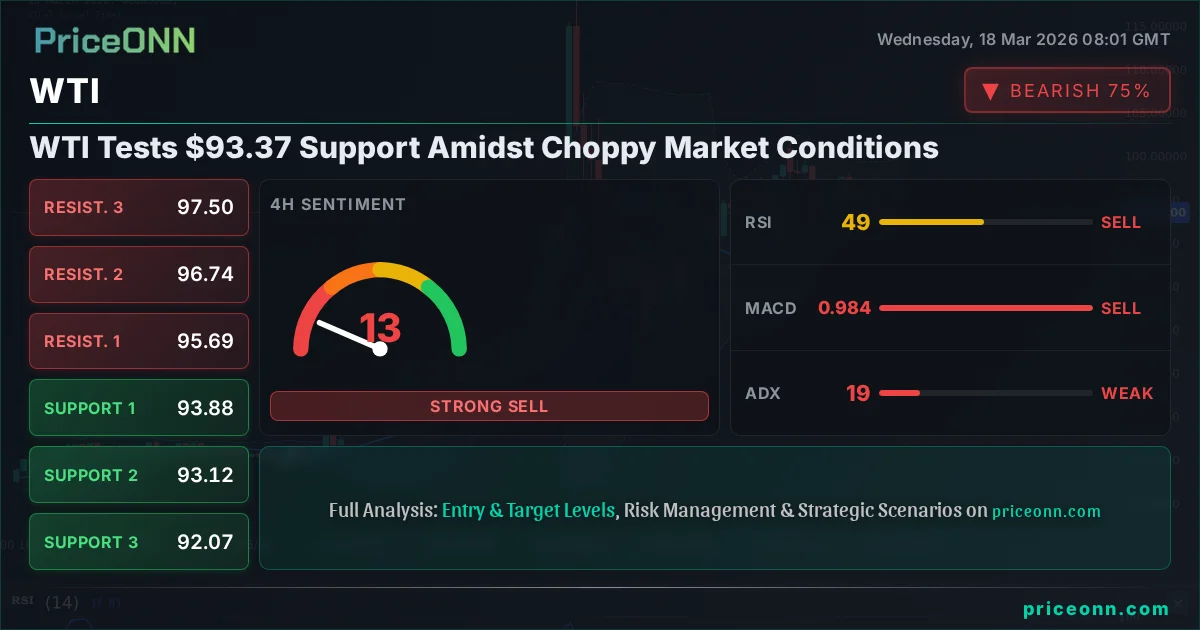
Beyond currency movements, the dynamics of energy markets, specifically West Texas Intermediate (WTI) Crude Oil, warrant close examination. WTI, a key benchmark for oil traded internationally, is characterized by its relatively low sulfur content and high API gravity, earning it the descriptors "sweet" and "light." This quality makes it highly desirable for refining processes.
Sourced predominantly within the United States, WTI's distribution is significantly influenced by the Cushing, Oklahoma hub, a critical nexus often dubbed "The Pipeline Crossroads of the World." The price of WTI, like any commodity, is fundamentally driven by the interplay of supply and demand.
Several factors can sway these forces. Robust global economic expansion typically fuels increased demand for energy, thereby supporting higher prices. Conversely, economic slowdowns tend to depress demand. Geopolitical tensions, including conflicts, political instability, and international sanctions, possess the potent ability to disrupt supply chains and send prices soaring.
The strategic decisions made by the Organization of the Petroleum Exporting Countries (OPEC), a cartel of major oil-producing nations, represent another significant price determinant. OPEC convenes twice a year to set production quotas for its member states, and these decisions can directly impact global supply levels and, consequently, WTI prices.
Furthermore, the health of the U.S. Dollar itself plays a crucial role in oil pricing. Given that crude oil is predominantly transacted in U.S. Dollars, a weaker dollar can make oil more accessible and thus more attractive to buyers using other currencies. The inverse is also true a stronger dollar can make oil more expensive, potentially dampening demand.
Inventory Reports and Their Market Impact
The weekly pronouncements from the American Petroleum Institute (API) and the U.S. Energy Information Administration (EIA) regarding oil inventories serve as critical barometers of supply and demand. These reports provide insights into the fluctuations in crude oil stocks, which can directly influence WTI prices.
A reported decrease in oil inventories often suggests that demand is outpacing supply, a scenario that typically pressures prices upward. Conversely, an increase in stored oil can signal an oversupply or weaker demand, potentially leading to price declines. The API releases its data every Tuesday, with the EIA following on Wednesday. While their findings generally align, with discrepancies rarely exceeding 1% approximately 75% of the time, the EIA's government-backed figures are generally regarded as more definitive.
OPEC+ Influence on Global Oil Dynamics
The broader group known as OPEC+, which includes OPEC members and ten additional non-OPEC allied nations, most notably Russia, wields considerable influence. When OPEC+ collectively decides to curtail production by lowering quotas, it can lead to a tightening of global supply, often resulting in upward pressure on oil prices. Conversely, an agreement to boost production typically exerts downward pressure on prices.
Reading Between the Lines
The Federal Reserve's recent signal of a sustained higher interest rate environment is a critical development for currency traders and investors. By pushing back the timeline for potential rate cuts, the Fed is reinforcing a 'higher for longer' monetary policy narrative. This strengthens the U.S. Dollar Index (DXY), which measures the dollar's strength against a basket of major currencies. Traders will be closely monitoring upcoming economic data releases, such as inflation reports and employment figures, for any signs that might force the Fed to alter its course prematurely. The resilience of the dollar could also put pressure on commodities priced in USD, such as Gold, potentially making it more expensive for holders of other currencies. Furthermore, this environment can impact global equity markets, particularly growth-oriented sectors that are sensitive to borrowing costs. Investors might pivot towards value stocks or sectors less dependent on cheap financing. The clear divergence in monetary policy between the Fed and other central banks, such as the European Central Bank or the Bank of Japan, could also create significant opportunities in currency pairs like EUR/USD and USD/JPY.
Track markets in real-time
Empower your investment decisions with AI-powered analysis, technical indicators and real-time price data.
Join Our Telegram Channel
Get breaking market news, AI analysis and trading signals delivered instantly to your Telegram.
Join Channel