Forex Today: US Dollar surges as Iran tensions keep markets cautious
Global Unease Fuels Dollar Strength
The international currency markets are witnessing a significant shift as geopolitical anxieties in the Middle East propel the US Dollar into a dominant position. The US Dollar Index (DXY), a key barometer of the greenback's strength against a basket of major currencies, has ascended to levels near 99.90. This upward trajectory is not merely a fleeting reaction but is underpinned by two critical factors: the enduring appeal of safe-haven assets during periods of global uncertainty and the sustained interest rate advantage offered by the United States.
As news of heightened tensions in the Middle East filters through financial channels, investors are instinctively seeking refuge in assets perceived as stable. The US Dollar, historically a primary beneficiary of such 'flight to safety' movements, is once again demonstrating its resilience. This demand is amplified by the stark contrast between current US monetary policy and that of many other developed economies, where central banks may be adopting more dovish stances or are further behind in their rate hike cycles. The resulting interest rate differentials make holding dollar-denominated assets more attractive, further bolstering the currency.
Understanding West Texas Intermediate Oil Dynamics
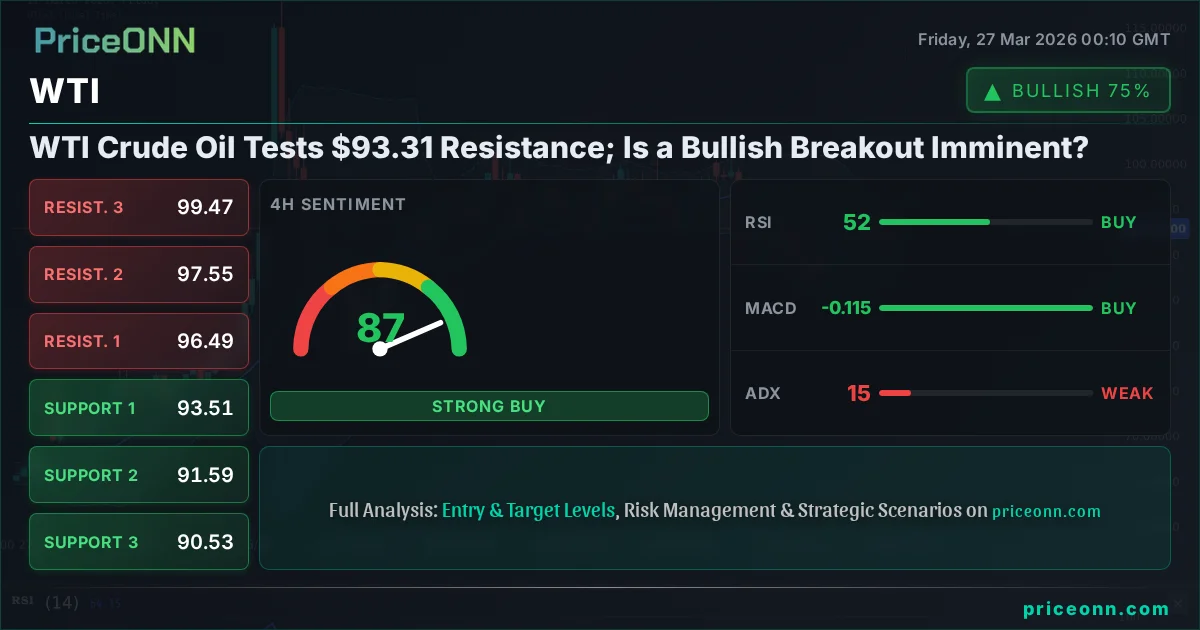
The global energy landscape, particularly the price of West Texas Intermediate (WTI) crude oil, is intrinsically linked to geopolitical events and currency fluctuations. WTI, a benchmark grade of crude oil, is prized for its relatively low sulfur content and lighter gravity, making it easier and more cost-effective to refine into usable fuels. Sourced primarily within the United States and distributed through the critical Cushing, Oklahoma hub, often dubbed the "Pipeline Crossroads of the World," WTI serves as a vital price indicator.
The price of WTI, like any commodity, is fundamentally dictated by the interplay of supply and demand. Global economic health plays a crucial role; robust growth typically spurs higher energy consumption, thereby increasing demand for oil. Conversely, economic slowdowns dampen this demand. Geopolitical instability, including wars, trade disputes, and international sanctions, can severely disrupt supply chains, leading to price volatility. Furthermore, the production decisions made by the Organization of the Petroleum Exporting Countries (OPEC) and its allies (OPEC+) significantly influence market supply and, consequently, prices.
The relationship between the US Dollar and WTI prices is also noteworthy. Given that crude oil is predominantly traded in US Dollars, a stronger dollar tends to make oil more expensive for holders of other currencies, potentially dampening demand. Conversely, a weaker dollar can render oil more affordable, potentially stimulating demand. This inverse correlation is a constant consideration for market participants.
Inventory Data and OPEC's Influence
Market watchers closely scrutinize weekly inventory reports released by the American Petroleum Institute (API) and the Energy Information Administration (EIA). These reports offer critical insights into the balance between oil supply and demand. A decline in stored crude inventories often signals robust demand or constrained supply, which can exert upward pressure on WTI prices. Conversely, an unexpected build-up in inventories may suggest oversupply or weaker demand, potentially leading to price declines.
The API releases its data every Tuesday, with the EIA following up the next day. While their findings are typically closely aligned, the EIA's figures are generally regarded as more authoritative due to its status as a government agency. Separately, OPEC, comprising 12 major oil-producing nations, convenes biannually to set production quotas. These decisions can dramatically impact global supply. When OPEC opts to reduce output, it can tighten the market and drive prices higher. The expanded OPEC+ group, which includes key non-OPEC producers like Russia, further amplifies the cartel's influence on global oil markets.
Market Ripple Effects
The current surge in the US Dollar, driven by geopolitical tensions and interest rate differentials, has significant implications beyond currency trading desks. The immediate impact is felt across global financial markets, creating a risk-averse environment. Investors are reallocating capital, often moving away from riskier assets like emerging market equities and high-yield bonds towards perceived safe havens such as US Treasuries and, of course, the dollar itself.
This scenario presents a complex interplay of forces for several key markets. Firstly, the strengthening dollar puts pressure on commodities priced in the currency, including WTI Crude Oil and Gold. While geopolitical fears might normally support oil prices, the stronger dollar acts as a counteracting headwind, potentially capping significant upside. Gold, another traditional safe haven, might see mixed signals; while it benefits from general uncertainty, its price can be suppressed by a strong dollar and rising real yields.
Secondly, currency pairs involving the dollar will experience heightened volatility. Pairs like USD/JPY, often sensitive to risk appetite and interest rate differentials, could see renewed upward momentum for the dollar. Conversely, the Euro (EUR/USD) might face downward pressure as the dollar gains broad strength. Finally, equity markets, particularly those sensitive to global growth and commodity prices, may experience increased choppiness. Emerging market currencies and equities could face significant outflows as capital seeks the perceived safety of dollar assets.
Traders should closely monitor the progression of Middle East tensions, as any de-escalation could swiftly reverse the dollar's gains. Simultaneously, upcoming central bank communications, particularly from the Federal Reserve, will be crucial in gauging the sustainability of the interest rate differential advantage. Key technical levels on the DXY should be observed, with a sustained hold above 99.50 suggesting further dollar appreciation potential.
Track markets in real-time
Empower your investment decisions with AI-powered analysis, technical indicators and real-time price data.
Join Our Telegram Channel
Get breaking market news, AI analysis and trading signals delivered instantly to your Telegram.
Join Channel