Gold jumps above $4,500 as war fears revive haven buying spree
Flight to Safety Accelerates as Conflict Intensifies
In a dramatic turn of events, gold prices have vaulted above the critical $4,500 mark, marking a significant jump of over 3% on Friday. This powerful ascent follows weeks of simmering geopolitical tensions that have now boiled over, igniting fresh demand for assets perceived as secure havens. As the fifth week of hostilities unfolds with no clear signs of de-escalation, investors are once again turning to the precious metal as a bulwark against uncertainty and rising price pressures.
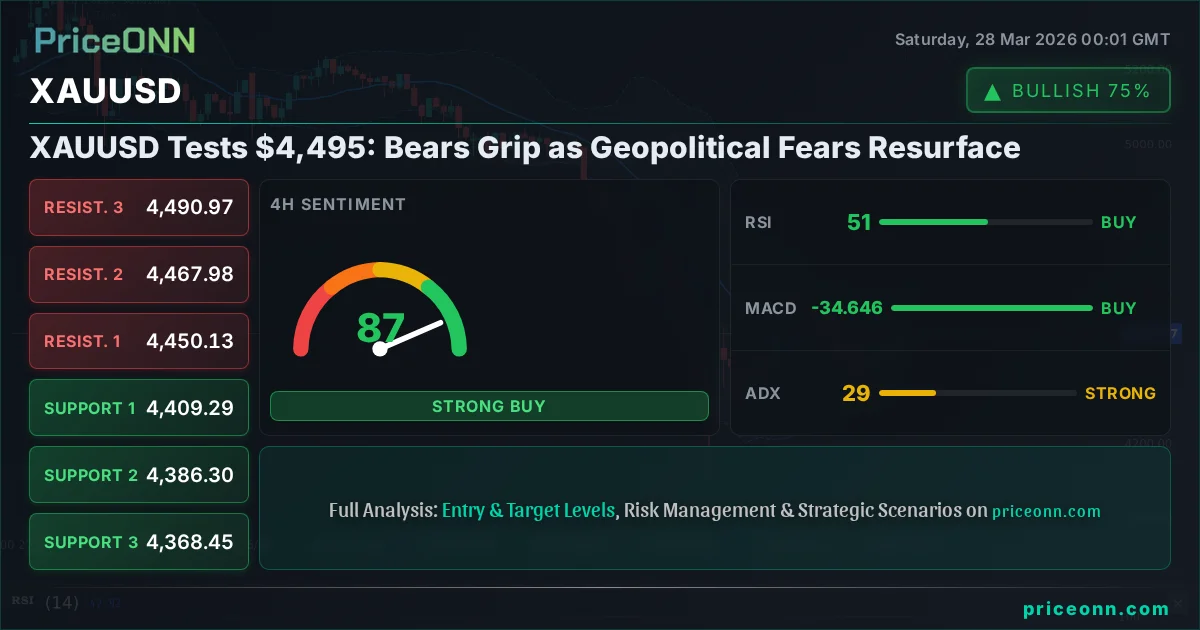
The yellow metal, trading at $4,510 at the time of this report, staged a strong recovery after touching intraday lows of $4,375. This bounce underscores the resilience of gold and its enduring appeal during periods of global stress.
The Enduring Power of Gold in a Volatile World
Throughout history, gold has served as a fundamental pillar of economic stability, functioning as both a store of value and a medium of exchange. Beyond its aesthetic appeal and use in adornments, its modern-day reputation as a premier safe-haven asset is firmly established. This status means that gold is widely considered a prudent investment when global markets are gripped by turmoil.
Furthermore, gold is a widely recognized hedge against inflation and the erosion of currency values. Its intrinsic worth is not tied to any single government or issuing authority, offering a degree of independence from conventional monetary systems. This characteristic is particularly attractive when inflation is rampant and fiat currencies face devaluation.
Central Banks Quietly Bolstering Gold Reserves
The world's central banks, historically the largest holders of gold, have been actively increasing their bullion stockpiles. In a notable trend, these institutions have been diversifying their reserve portfolios, especially during times of economic uncertainty, to bolster the perceived strength of their national economies and currencies. Substantial gold reserves can serve as a powerful signal of a nation's financial solvency and stability.
The scale of this shift is unprecedented. According to recent data, central banks collectively added an astonishing 1,136 tonnes of gold to their reserves in 2022, a haul valued at approximately $70 billion. This represents the highest annual purchase volume since record-keeping began, with emerging economies like China, India, and Turkey leading the charge in rapidly expanding their gold holdings.
Decoding Gold's Market Dynamics
Gold's price movements are intricately linked to several key market forces. It exhibits an inverse correlation with both the US Dollar and US Treasuries, assets that themselves are major global reserve and safe-haven instruments. When the dollar weakens, gold often strengthens, providing an avenue for investors and central banks to diversify their holdings amidst turbulent times.
The precious metal also moves counter to riskier assets. A robust stock market rally typically exerts downward pressure on gold prices, while significant sell-offs in equities and other riskier markets tend to propel the yellow metal higher. Geopolitical instability or the specter of a severe recession can trigger rapid escalations in gold prices, directly attributable to its safe-haven status.
As an asset that does not generate yield, gold tends to perform well in environments of lower interest rates. Conversely, a rise in the cost of borrowing money, or higher interest rates, usually weighs on the price of gold. However, a dominant influence on gold's trajectory remains the behavior of the US Dollar, given that gold is priced in dollars (XAU/USD). A strong dollar typically caps gold's upside potential, whereas a weaker dollar is a potent catalyst for pushing gold prices upward.
Market Ripple Effects
The current surge in gold prices, driven by escalating geopolitical risks and inflation concerns, has significant implications beyond the precious metal itself. Traders and investors should closely monitor related markets for potential shifts. The US Dollar Index (DXY), which measures the dollar's strength against a basket of major currencies, is likely to see increased volatility; a weaker dollar typically supports gold, so a sustained decline in the DXY could further fuel gold's rally.
Furthermore, the renewed strength in gold may signal a broader shift in investor sentiment away from riskier assets. This could put pressure on equity markets, particularly growth-oriented technology stocks, as capital seeks safer havens. Conversely, traditional safe-haven bonds, such as US Treasuries, might experience mixed reactions; while they offer safety, their yields could be impacted by inflation expectations and central bank policies, creating a complex interplay with gold's performance.
Finally, the inflationary pressures that are bolstering gold demand also impact commodity markets broadly. While not a direct correlation, sustained high gold prices can sometimes be an indicator of broader commodity strength, potentially influencing energy prices and industrial metals. Investors should remain attuned to how these interconnected markets react to the ongoing global uncertainty.
Track markets in real-time
Empower your investment decisions with AI-powered analysis, technical indicators and real-time price data.
Join Our Telegram Channel
Get breaking market news, AI analysis and trading signals delivered instantly to your Telegram.
Join Channel