
Why Did Gold Reclaim $4,500 Amid Escalating Global Tensions?
Gold has dramatically reclaimed the $4,500 level, experiencing a significant rally of over 3% on Friday. This surge is driven by escalating geopolitical tensions and renewed concerns over inflation, pushing investors back towards safe-haven assets. The yellow metal traded at $4,510 at the time of reporting, demonstrating a robust recovery from earlier lows of $4,375.
Market Context
The precious metal's price action this week has been volatile, reflecting a tug-of-war between diminishing hopes for de-escalation in ongoing conflicts and the persistent threat of rising inflation. After experiencing a sharp 3% decline just a day prior, gold prices managed to climb more than 1% on Friday, reaching approximately $4,432 at one point. Despite this intraday rebound, the commodity is still on track for a weekly loss, pressured by persistent inflation anxieties and the specter of further central bank interest rate hikes. The U.S. dollar has found some support amid a general risk-off sentiment, adding to the cautious trading environment.
Analysis & Drivers
The primary catalyst for gold's recent ascent is the intensification of geopolitical conflicts, now entering its fifth week with no apparent resolution in sight. Reports of fresh strikes across the Middle East, including actions targeting key infrastructure, have heightened global uncertainty. This instability naturally drives demand for gold, historically viewed as a premier safe-haven asset. Its intrinsic value, not tied to any single government or currency, makes it an attractive hedge against the erosion of purchasing power caused by inflation. Furthermore, market data indicates that central banks have been quietly bolstering their gold reserves, diversifying portfolios during periods of economic uncertainty to enhance national economic perceived strength. This institutional buying adds another layer of support for gold prices.
Conversely, earlier in the week, a brief period of optimism emerged following indications of a potential diplomatic breakthrough. Statements suggested a delay in threatened strikes against energy infrastructure and the possibility of negotiations progressing positively, which had led to a temporary dip in gold prices. However, these diplomatic overtures were met with continued military posturing and stern warnings, underscoring the fragile nature of the situation. Mixed signals regarding peace talks and the ongoing risks to vital oil supply routes, particularly concerning the Strait of Hormuz, continue to create significant market uncertainty.
Trader Implications
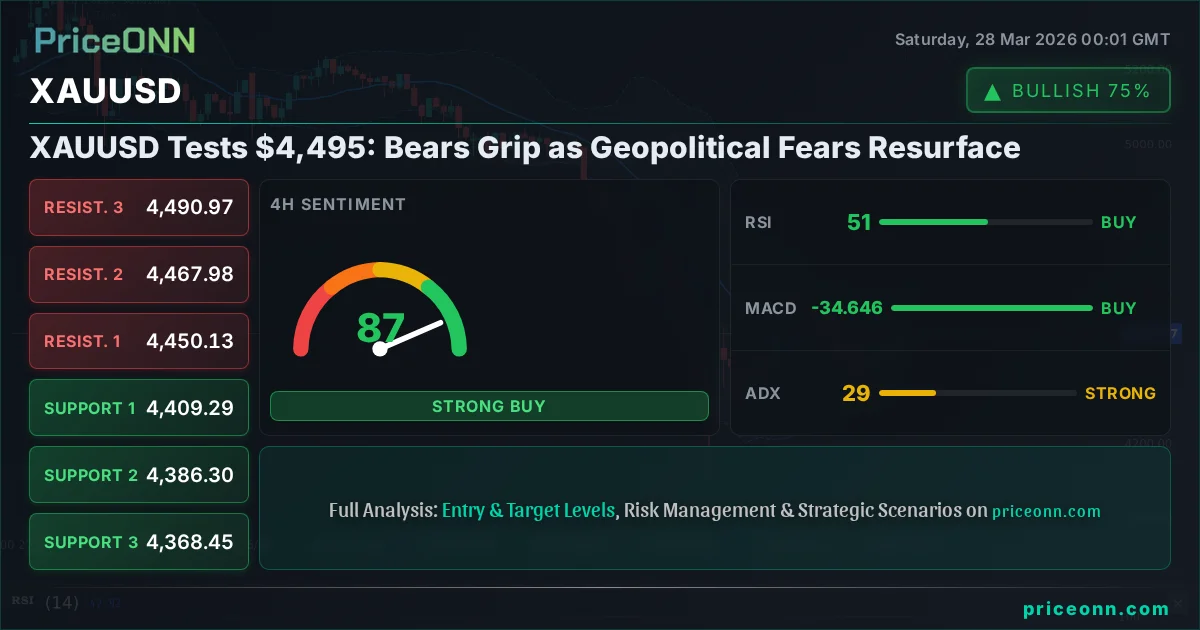
Traders should closely monitor geopolitical developments and inflation data. The immediate price action suggests that safe-haven demand is currently outweighing concerns about interest rate hikes. Key resistance levels to watch for gold (XAU/USD) are now above $4,500, with the previous day's low of $4,375 serving as a potential support zone. Any further escalation in the Middle East conflict could propel gold prices higher, potentially targeting levels seen during past crises. Conversely, significant de-escalation or a clear path to peace talks could trigger a sharp sell-off, especially if coupled with hawkish central bank commentary. The strength of the U.S. dollar also remains a key factor; a sustained weakening could provide additional tailwinds for gold.
Outlook
The outlook for gold remains heavily influenced by the unpredictable geopolitical landscape and the trajectory of global inflation. While diplomatic efforts may offer temporary respite, the underlying tensions suggest that safe-haven demand for gold is likely to persist. Traders should prepare for continued volatility, with significant price swings possible based on headline news. The long-term trend for gold may also depend on central bank policies regarding interest rates and quantitative tightening, as well as the continued diversification of reserves by global financial institutions.
Frequently Asked Questions
What is the current price of gold and what caused the recent surge?
Gold is currently trading around $4,510 per ounce. The price surged past $4,500 due to escalating geopolitical tensions in the Middle East and renewed concerns over rising inflation, which increases demand for safe-haven assets.
What are the key support and resistance levels for gold traders to watch?
Key resistance is observed above $4,500. A significant support level to watch is the intraday low of $4,375 reached recently. Breakouts or breakdowns from these levels could signal further price direction.
What is the short-term outlook for gold prices?
The short-term outlook for gold remains volatile and dependent on geopolitical developments. Continued conflict and inflation fears suggest upward pressure, but significant de-escalation could lead to a sharp correction. Traders should remain vigilant to news flow.
Track markets in real-time
Empower your investment decisions with AI-powered analysis, technical indicators and real-time price data.
Join Our Telegram Channel
Get breaking market news, AI analysis and trading signals delivered instantly to your Telegram.
Join Channel
PriceONN