
Why Did Gold Plunge 2.50% as Oil and the Dollar Surged Today?
Gold (XAU/USD) tumbled nearly 2.50% on Thursday, a significant retreat from its daily high of $4,544 to trade around $4,394. This sharp depreciation occurred as the US Dollar surged and oil prices climbed, fueled by geopolitical tensions and broader market anxieties.
Market Context
The precious metal's sharp decline highlights its sensitivity to macroeconomic shifts, particularly its inverse relationship with the US Dollar. As the greenback strengthened, gold became more expensive for holders of other currencies, exerting downward pressure. Simultaneously, rising oil prices, driven by concerns over potential US-Iran developments, added to inflationary pressures, further complicating the market environment for gold. The US Dollar Index (DXY) ascended to levels near 99.90, buoyed by safe-haven demand and interest rate differentials. This broad market movement also saw Silver (XAG/USD) slide, trading down 3.85% to hover around $68.50, as rising yields and dollar strength overshadowed its safe-haven appeal.
Analysis & Drivers
The primary catalysts for Thursday's market action appear to be escalating geopolitical tensions in the Middle East and the subsequent demand for safe-haven assets, which disproportionately benefited the US Dollar. Market data shows that as concerns over potential US-Iran diplomatic developments intensified, investors sought refuge in the dollar, pushing its index near 99.90. This 'flight to safety' was amplified by the interest rate advantage the US currently holds over many other developed economies, making dollar-denominated assets more attractive. The rise in oil prices, a direct consequence of Middle East instability, also contributed to a cautious market mood and potential inflation concerns, which typically pressure non-yielding assets like gold. Industry reports indicate that central banks have been significant buyers of gold, accumulating record amounts in recent years, signaling a long-term strategic diversification. However, short-term price action is heavily influenced by immediate macroeconomic and geopolitical drivers, which in this instance, heavily favored the dollar over gold.
Trader Implications
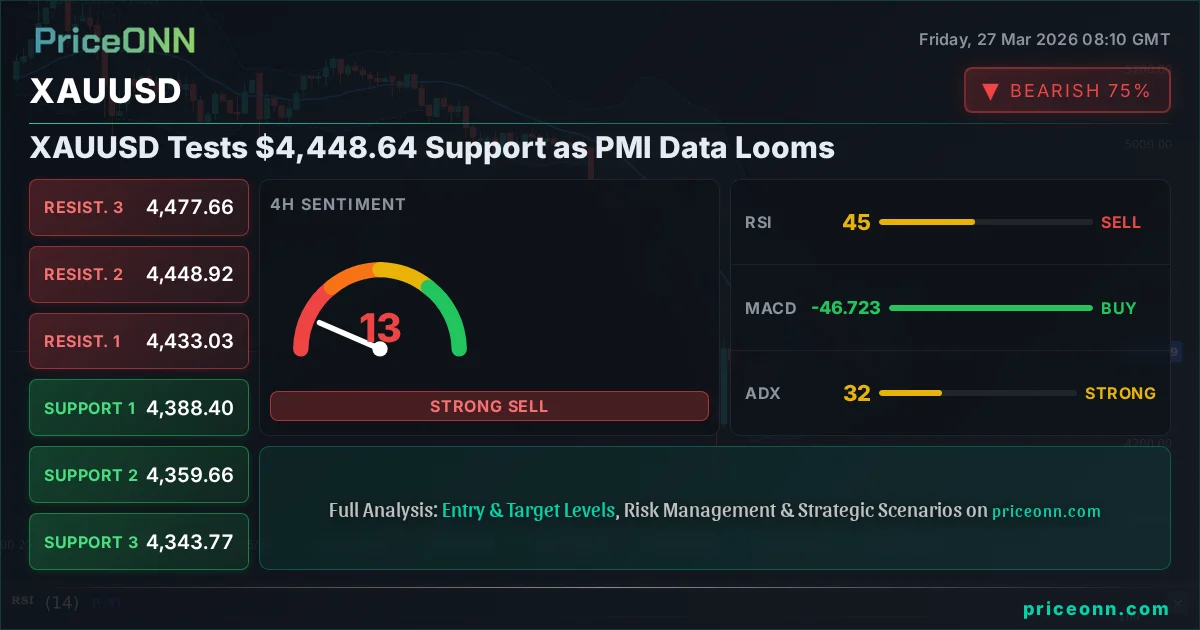
Traders should closely monitor the interplay between geopolitical developments, oil price movements, and the US Dollar Index (DXY). A sustained rise in the DXY above 99.90 could signal further pressure on gold, potentially testing lower support levels. Key technical levels to watch for gold include the recent low of $4,394 as immediate support, with a break below potentially leading towards the $4,300 psychological level. Conversely, any de-escalation in Middle East tensions could see a reversal, with gold potentially reclaiming higher ground. For silver traders, the $68.50 level is critical; a sustained hold above this could signal a temporary reprieve, while a fall below could lead to further declines towards the $65 mark. The correlation between oil and the dollar remains a significant factor; a continued ascent in crude prices could paradoxically support the dollar as a safe haven, while also fanning inflation fears that might eventually benefit gold if perceived economic stability is threatened.
Outlook
The immediate outlook for gold remains cautious, hinging on the trajectory of geopolitical events in the Middle East and the sustained strength of the US Dollar. While central bank demand provides a long-term floor, short-term price action is likely to be dictated by risk sentiment. Upcoming economic data releases from the US will be crucial in shaping Federal Reserve policy expectations, which in turn will influence dollar strength and gold's appeal. Traders should remain vigilant for any shifts in market sentiment that could trigger a rapid reassessment of asset valuations.
Frequently Asked Questions
What caused the significant drop in gold prices on Thursday?
Gold prices dropped nearly 2.50% on Thursday, falling to approximately $4,394. This decline was primarily driven by a surge in the US Dollar to near 99.90 on the DXY index and rising oil prices, fueled by geopolitical tensions in the Middle East.
How do rising oil prices and dollar strength impact gold?
Rising oil prices can signal inflationary pressures, which might typically support gold. However, when coupled with a surging US Dollar, which makes gold more expensive for foreign buyers and acts as a safe haven itself, the net effect can be downward pressure on gold, as observed with XAU/USD trading around $4,394.
What are the key levels to watch for gold and silver in the near term?
For gold, the immediate support is around $4,394, with a potential to test $4,300 if selling pressure continues. For silver, the $68.50 level is crucial; a failure to hold could lead it towards $65. Traders are watching these levels closely amid ongoing market volatility.
Track markets in real-time
Empower your investment decisions with AI-powered analysis, technical indicators and real-time price data.
Join Our Telegram Channel
Get breaking market news, AI analysis and trading signals delivered instantly to your Telegram.
Join Channel
PriceONN