
Why Did Gold Tumble 2.50% Today as the Dollar and Oil Prices Climbed?
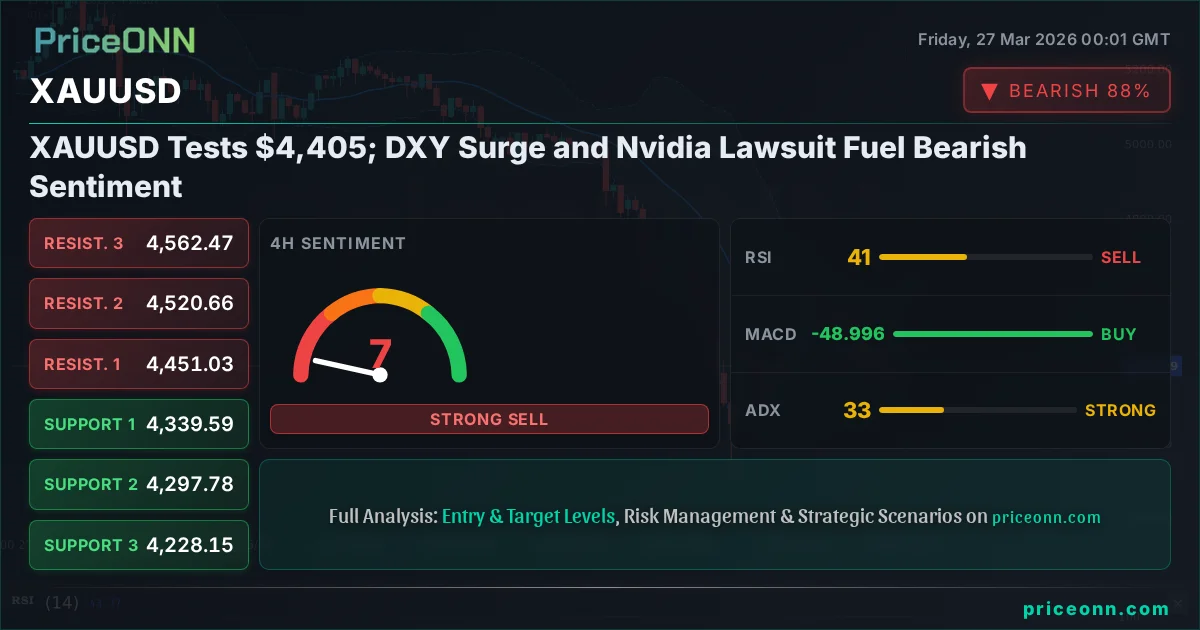
Gold (XAU/USD) prices experienced a significant downturn on Thursday, shedding approximately 2.50% of their value and trading around $4,394. The precious metal retreated from an earlier daily high of $4,544, marking a sharp reversal that was largely influenced by a strengthening US Dollar and rising crude oil prices.
Market Context
The dramatic sell-off in gold unfolded against a backdrop of escalating geopolitical tensions in the Middle East, specifically concerning potential US-Iran diplomatic developments. This uncertainty fueled demand for safe-haven assets like the US Dollar, while simultaneously putting upward pressure on oil prices. Historically, gold has been a traditional safe haven, but its recent performance highlights its sensitivity to macroeconomic shifts. The inverse relationship between gold and the US Dollar means a stronger greenback typically makes gold more expensive for holders of other currencies, thus exerting downward pressure on its price.
Analysis & Drivers
The primary drivers behind gold's sharp decline appear to be a confluence of factors. Firstly, the surge in the US Dollar Index (DXY) towards 99.90 provided significant headwinds. Market data shows the dollar's strength was supported by safe-haven demand stemming from Middle East tensions and attractive interest rate differentials compared to other major economies. Analysts note that as global uncertainty rises, investors tend to favor the perceived stability and yield offered by dollar-denominated assets.
Secondly, the upward pressure on oil prices contributed to concerns about inflation. This inflationary outlook, potentially exacerbated by geopolitical supply disruptions, often prompts central banks to consider more hawkish monetary policies. Expectations of higher interest rates globally tend to diminish the appeal of non-yielding assets like gold. Industry reports indicate that central banks have been significant buyers of gold in recent years, with record purchases of approximately 1,136 tonnes in 2022, valued at around $70 billion, according to World Gold Council data. However, even this strategic accumulation by monetary authorities did not prevent the precious metal from succumbing to the prevailing market pressures today.
Trader Implications
Traders should closely monitor the interplay between geopolitical developments, currency movements, and inflation expectations. Key levels to watch for gold include the recent low around $4,394 as immediate support, with a break below potentially leading to further declines towards previous support zones. Conversely, a sustained de-escalation of Middle East tensions or a weakening US Dollar could offer a reprieve for gold prices.
The current environment suggests that risk sentiment remains fragile. Investors seeking diversification may find the US Dollar offering immediate safe-haven appeal, while commodities like oil are sensitive to supply-side shocks. For gold, the immediate outlook appears bearish as long as the dollar remains strong and interest rate hike expectations persist. Traders should be prepared for continued volatility and consider hedging strategies against potential further price swings.
Outlook
The immediate future for gold remains clouded by geopolitical uncertainty and the strength of the US Dollar. While central bank demand provides underlying support for gold's long-term value, short-term price action will likely be dictated by the ebb and flow of international tensions and monetary policy expectations. A sustained resolution in the Middle East or a shift in global inflation trends could see gold prices recover, but current market data points towards continued pressure in the near term. Traders will be keenly watching upcoming economic data releases and central bank commentary for further direction.
Frequently Asked Questions
What caused gold prices to fall by 2.50% today?
Gold prices fell by approximately 2.50%, trading near $4,394, primarily due to a surge in the US Dollar and rising oil prices. Geopolitical tensions in the Middle East also contributed to market uncertainty, driving investors towards the dollar.
How is the US Dollar's strength impacting gold?
The US Dollar Index (DXY) surged towards 99.90. A stronger dollar makes gold more expensive for holders of other currencies, creating downward pressure on XAU/USD prices. This inverse relationship is a key factor in today's market action.
What is the outlook for gold prices in the coming days?
The outlook for gold remains cautious in the short term, influenced by ongoing geopolitical tensions and dollar strength. While central bank buying provides long-term support, immediate price direction will depend on de-escalation of conflicts and shifts in inflation expectations.
Track markets in real-time
Empower your investment decisions with AI-powered analysis, technical indicators and real-time price data.
Join Our Telegram Channel
Get breaking market news, AI analysis and trading signals delivered instantly to your Telegram.
Join Channel
PriceONN