
Why Did Gold Prices Tumble 2.50% As The Dollar And Oil Surged?
Gold prices experienced a dramatic sell-off on Thursday, shedding nearly 2.50% of their value and falling to approximately $4,394. This sharp depreciation occurred as the US Dollar surged and oil prices climbed, driven by lingering concerns over potential US-Iran diplomatic developments. The confluence of a strengthening dollar, rising commodity prices, and geopolitical tensions created significant headwinds for the precious metal, underscoring its intricate relationship with global economic and political currents.
Market Context
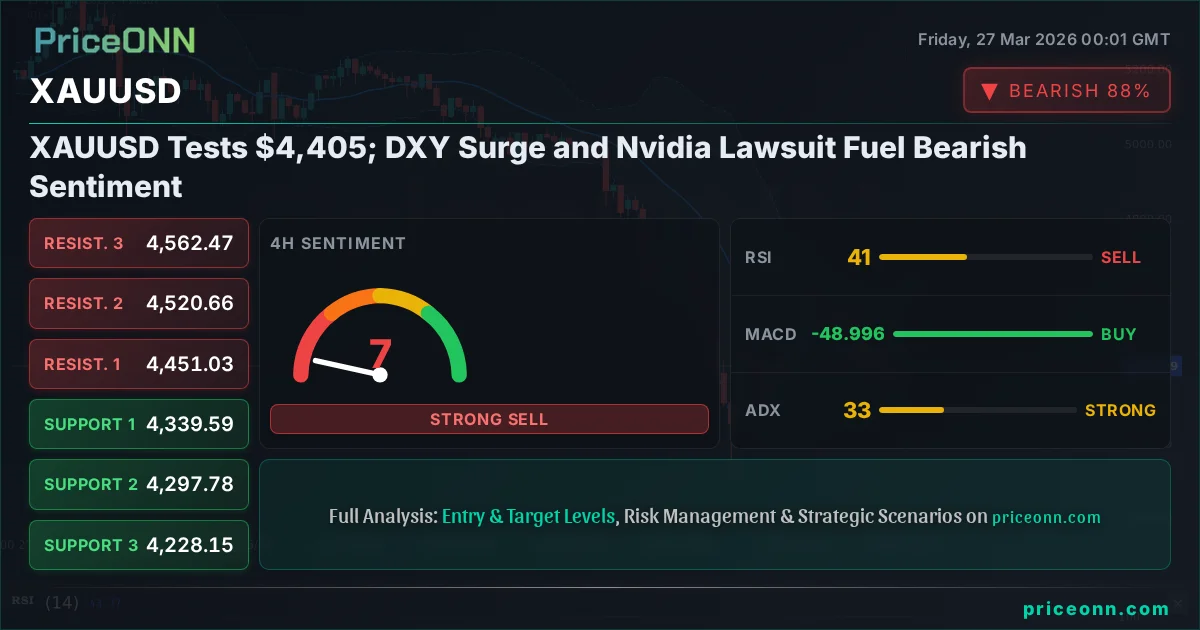
The precious metal's retreat marked a significant reversal after earlier gains this week. At its daily peak, gold had reached $4,544 before succumbing to selling pressure. This downturn highlights gold's complex role in modern markets, often serving as a safe-haven asset but also demonstrating vulnerability to macroeconomic shifts. The inverse relationship between gold and the US Dollar means a stronger greenback typically makes gold more expensive for holders of other currencies, thereby exerting downward pressure on its price. Simultaneously, rising oil prices, often a precursor to broader inflation concerns, can also indirectly impact gold by influencing interest rate expectations.
Analysis & Drivers
Several key factors contributed to Thursday's sharp decline in gold prices. Firstly, heightened geopolitical uncertainty stemming from Middle East tensions, particularly regarding US-Iran relations, fueled demand for the US Dollar as a safe-haven asset. This increased demand pushed the Dollar Index (DXY) towards 99.90. As oil prices also climbed, potentially exacerbating inflation concerns, global interest rate expectations began to lean more hawkish, further supporting the dollar.
The US Dollar's strength is a critical determinant for gold prices, as the commodity is predominantly priced in dollars. A robust dollar makes gold less attractive to international buyers. Market data shows that central banks have significantly increased their gold reserves in recent years, with approximately 1,136 tonnes added in 2022 alone, valued at around $70 billion. While this strategic accumulation by monetary authorities signals confidence in gold as an inflation hedge, short-term price action can be heavily influenced by currency movements and interest rate differentials.
Trader Implications
Traders should closely monitor the interplay between geopolitical developments, oil price movements, and US Dollar strength. Key levels to watch for gold include the immediate support around $4,350 and resistance at the recent high of $4,544. A sustained break above the latter could signal a renewed upward trend, while a fall below the former might indicate further downside. Given the current market sensitivity, positions should be managed with caution, employing appropriate stop-loss orders.
The inverse correlation with the US Dollar suggests that any signs of dollar weakness could offer a reprieve for gold prices. Conversely, continued dollar strength, especially if accompanied by rising US Treasury yields, is likely to cap gold's upside potential. Investors are advised to consider the broader macroeconomic environment, including inflation data and central bank commentary, which will shape future interest rate decisions and, consequently, gold's trajectory.
Outlook
Looking ahead, gold prices are expected to remain sensitive to geopolitical developments in the Middle East and global inflation outlooks. While central bank buying provides a structural underpinning for gold, short-term volatility is probable. Traders should remain vigilant for shifts in market sentiment driven by US Dollar performance and the trajectory of oil prices. Upcoming economic data releases and any further escalation or de-escalation in geopolitical tensions will be crucial in determining gold's next significant price move.
Frequently Asked Questions
What caused gold prices to fall by nearly 2.50% on Thursday?
Gold prices tumbled by almost 2.50%, reaching approximately $4,394, due to a surge in the US Dollar and rising oil prices. Geopolitical tensions, particularly concerning US-Iran relations, amplified safe-haven demand for the dollar and pressured gold.
What is the current support level for gold?
The immediate support level for gold is seen around $4,350. A break below this level could signal further downward movement, while resistance is observed at the recent high of $4,544.
What is the outlook for gold prices in the near term?
Gold prices are expected to remain volatile, heavily influenced by ongoing geopolitical developments and global inflation expectations. A strengthening US Dollar and rising oil prices could continue to cap upside potential in the short term.
Track markets in real-time
Empower your investment decisions with AI-powered analysis, technical indicators and real-time price data.
Join Our Telegram Channel
Get breaking market news, AI analysis and trading signals delivered instantly to your Telegram.
Join Channel
PriceONN