Gold tanks as US Dollar surges in tandem with Oil prices
Market Turmoil Sends Gold Tumbling
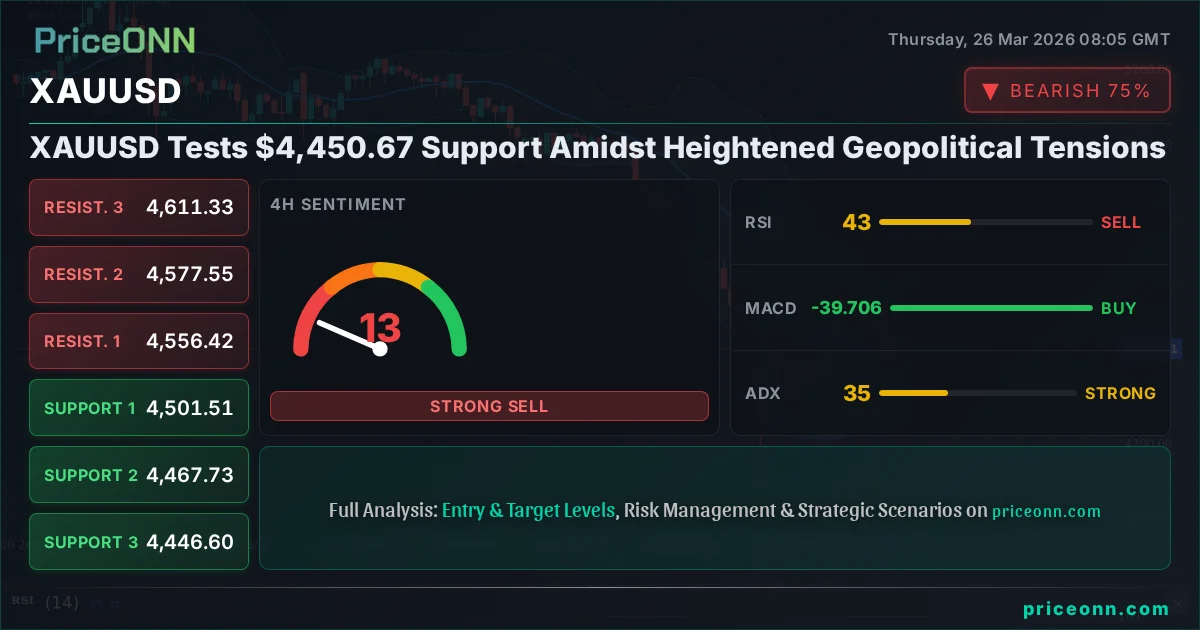
Thursday witnessed a dramatic sell-off in the gold market, with the precious metal shedding nearly 2.50% of its value. At the time of reporting, XAU/USD was exchanging hands at approximately $4,394, a significant retreat from its earlier daily peak of $4,544. This sharp depreciation occurred against a backdrop of escalating US Dollar strength and a notable uptick in oil prices, driven by lingering concerns over potential US-Iran diplomatic developments.
The interplay of these factors created a perfect storm for gold, often considered a traditional safe haven. While its historical role as a store of value is well-documented, its performance in recent trading sessions highlights its sensitivity to macroeconomic shifts. The yellow metal's inverse relationship with the dollar means a stronger greenback typically exerts downward pressure on gold prices, as it becomes more expensive for holders of other currencies.
The Shifting Sands of Central Bank Reserves
Central banks, historically the largest holders of gold, have significantly ramped up their acquisitions in recent years. In 2022 alone, these institutions added an unprecedented 1,136 tonnes, valued at roughly $70 billion, marking the largest annual increase on record, according to World Gold Council data. This surge in demand, particularly from emerging economies like China, India, and Turkey, underscores a strategic diversification away from traditional reserve assets and a move to bolster perceived economic stability.
This strategic accumulation by monetary authorities is often seen as a signal of confidence in gold's enduring appeal as a hedge against inflation and currency devaluation. Unlike fiat currencies or government bonds, gold's value is not tied to the fiscal policies of a single nation, offering a degree of insulation from geopolitical risks and economic instability.
Why This Matters Now
The recent price action in gold offers critical insights for investors and traders navigating today's complex financial landscape. The sharp decline, coinciding with a strengthening dollar and rising energy costs, underscores the delicate balance gold maintains within portfolios. While gold is often sought for its inflation-hedging properties, its direct correlation with the dollar means that periods of dollar strength can temporarily overshadow its safe-haven appeal.
Traders should closely monitor the US Dollar Index (DXY) and oil price movements. A sustained rise in the DXY could continue to cap gold's upside potential, while any signs of cooling in oil prices, perhaps due to de-escalating geopolitical tensions or a successful diplomatic resolution, could offer gold a chance to rebound. Furthermore, upcoming interest rate decisions from major central banks will be pivotal. Lower interest rate environments typically favor yield-less assets like gold, whereas higher rates increase the opportunity cost of holding the metal.
The implications extend beyond gold itself. A strong dollar can put pressure on emerging market currencies and increase the cost of dollar-denominated debt. The surge in oil prices, meanwhile, fuels broader inflation concerns, potentially prompting more aggressive monetary tightening from central banks, which could further impact risk assets like equities. Investors might consider looking at currency pairs like USD/JPY, where a stronger dollar typically pushes the pair higher, and commodity-linked currencies such as AUD/USD, which can be sensitive to broader commodity price trends.
Track markets in real-time
Empower your investment decisions with AI-powered analysis, technical indicators and real-time price data.
Join Our Telegram Channel
Get breaking market news, AI analysis and trading signals delivered instantly to your Telegram.
Join Channel