
Is Gold Poised for Further Gains as Oil Prices Plunge on De-escalation Hopes?

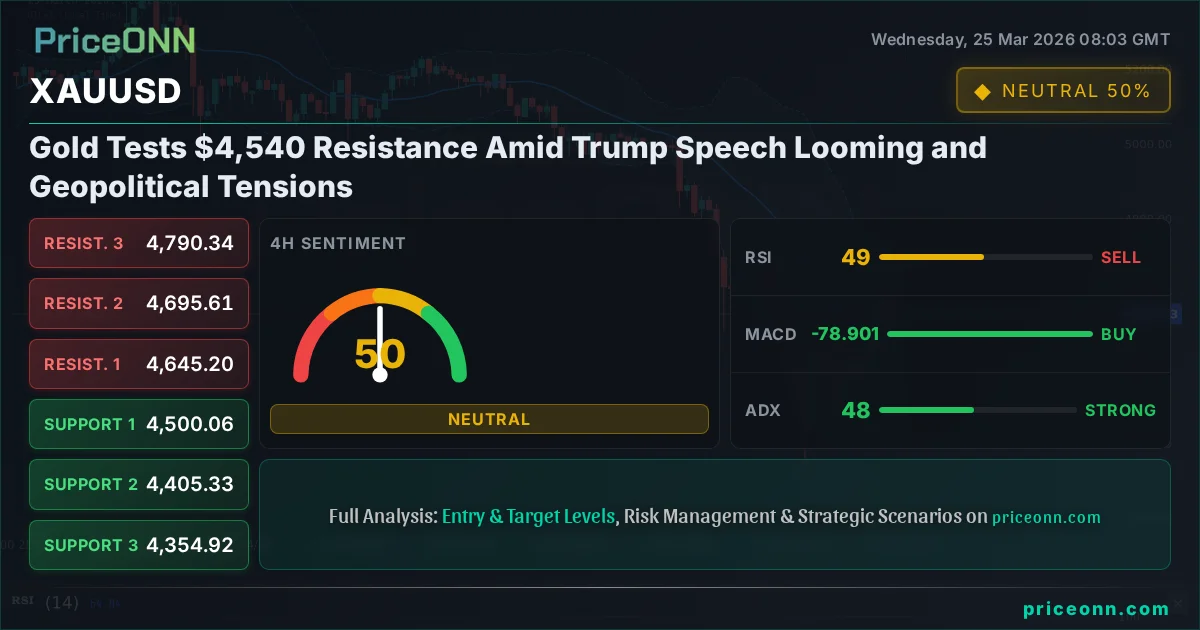
Gold prices experienced a significant surge on Wednesday, climbing over 2% to trade at $4,565.18 per ounce. U.S. gold futures also saw a substantial uptick, rising 3.6 percent to $4,595.67. This upward momentum in gold is largely attributed to a confluence of factors including a softer U.S. dollar and easing bond yields, driven by expectations of a de-escalation in geopolitical tensions between the United States and Iran.
Market Context
The significant jump in gold prices occurred amidst a sharp decline in crude oil, which plummeted more than 5 percent. This move in oil was triggered by statements from U.S. President Donald Trump suggesting that the U.S. and Iran were engaged in negotiations and were eager to reach a deal. Although Tehran officially dismissed claims of ongoing talks, a wave of media reports indicated intensified diplomatic efforts, including a reported 15-point plan from the U.S. to end Middle Eastern conflict and discussions around a potential one-month ceasefire. These developments have significantly reduced risk premiums in the energy market, leading to the sell-off in oil.
Analysis & Drivers
The primary driver behind gold's ascent is the shift in geopolitical sentiment. As fears of a direct military confrontation between the U.S. and Iran recede, investors tend to move away from riskier assets and seek refuge in safe-haven commodities like gold. The simultaneous drop in oil prices, typically a beneficiary of geopolitical instability, underscores the market's reaction to the perceived reduction in conflict risk. Furthermore, a softer U.S. dollar, evidenced by a dip in the dollar index, typically supports gold prices as it makes the precious metal cheaper for holders of other currencies. Easing bond yields also contribute to gold's appeal by reducing the opportunity cost of holding a non-yielding asset.
The Bank of Canada's monetary policy and oil prices remain intrinsically linked. Canada's status as a major energy exporter means that fluctuations in crude oil prices have a direct and often pronounced impact on the Canadian Dollar (CAD). Market data shows the USD/CAD pair has been extending its gains, trading around 1.3770, as softening oil prices weigh on the loonie. This highlights the divergence in asset performance, with safe-haven gold benefiting from de-escalation while commodity-linked currencies like the CAD face headwinds.
In contrast, central bank policy discussions are also providing a mixed backdrop. Federal Reserve Governor Michael Barr indicated that interest rates might remain steady for some time before any further cuts, emphasizing the need for sustainable evidence of falling inflation. Meanwhile, minutes from the Bank of Japan's January meeting revealed a sentiment among many board members favoring continued interest rate hikes to combat inflation and a weak yen.
Trader Implications
Traders should closely monitor the evolving geopolitical narrative. Any renewed escalation in U.S.-Iran tensions could quickly reverse the current trend, sending gold and oil prices higher. Key levels to watch for gold include the recent high of $4,565.18 as immediate resistance, with further upside potential targeting psychological levels above $4,600. Support can be found around the $4,500 mark.
For the Forex market, the USD/CAD pair's upward trajectory around 1.3770 is sensitive to oil price movements. A sustained decline in oil could push USD/CAD towards 1.3800 and potentially higher, while any rebound in crude could offer some respite to the loonie. The U.S. Dollar Index (DXY) is a crucial indicator; a continued decline below its recent lows could provide further tailwinds for gold and other non-dollar assets.
Outlook
The immediate outlook for gold appears cautiously optimistic, contingent on the continued de-escalation of Middle Eastern conflicts and the path of U.S. monetary policy. While diplomatic efforts seem to be gaining traction, markets remain sensitive to any unexpected developments. The interplay between safe-haven demand, dollar strength, and central bank policy will dictate gold's trajectory in the coming sessions. Traders should remain vigilant for shifts in risk sentiment and any official statements that could alter the current market narrative.
Frequently Asked Questions
What is the current price of gold and what drove the recent surge?
As of Wednesday, spot gold climbed to $4,565.18 per ounce. The surge was primarily driven by easing geopolitical tensions between the U.S. and Iran, a softer U.S. dollar, and declining bond yields, which increased demand for gold as a safe-haven asset.
How are falling oil prices impacting the Canadian Dollar?
Falling oil prices are weighing on the Canadian Dollar (CAD), as Canada is a major oil exporter. Market data shows USD/CAD extending gains and trading around 1.3770, indicating a weaker loonie against the U.S. dollar due to the slump in energy markets.
What are the key levels to watch for gold traders?
Traders should watch the immediate resistance level around $4,565.18. A sustained move above this could target psychological levels above $4,600. Key support is identified near the $4,500 mark, with any significant geopolitical escalation potentially invalidating these levels.
Track markets in real-time
Empower your investment decisions with AI-powered analysis, technical indicators and real-time price data.
Join Our Telegram Channel
Get breaking market news, AI analysis and trading signals delivered instantly to your Telegram.
Join Channel

PriceONN