
Can the US Dollar Hold its Gains Amidst Rising Oil Prices and Weak Eurozone Data?

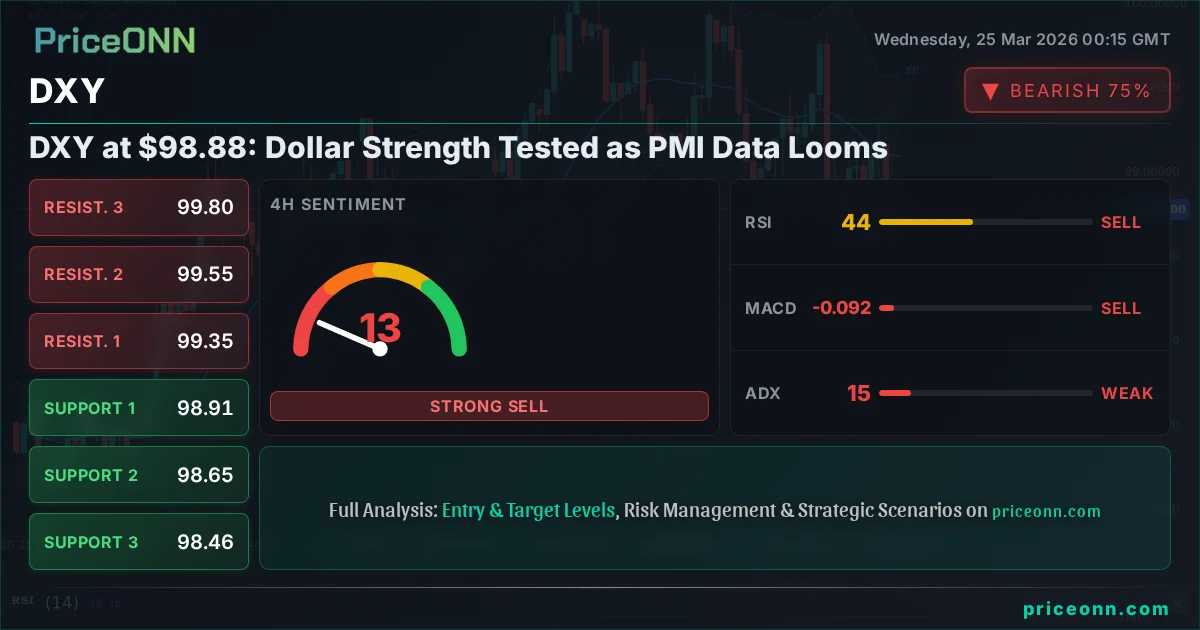
The US Dollar Index (DXY) has shown a firming bias, trading near the 99.50 level, as a confluence of factors including climbing US Treasury yields and expectations of a hawkish stance from the Federal Reserve lend support. This upward pressure on the Greenback is occurring despite mixed global risk sentiment, with elevated crude oil prices adding to existing inflation worries and indirectly bolstering the dollar's appeal.
Market Context
The past 24 hours have seen the US Dollar emerge as a relative outperformer against several major currencies. Market data indicates that the DXY has been steadily appreciating, finding strength from a supportive interest rate environment. Simultaneously, economic indicators from the Eurozone have painted a less optimistic picture, with Purchasing Managers' Index (PMI) data suggesting a slowdown, thereby weakening the Euro and contributing to the dollar's broad-based gains. The strength in oil prices, particularly West Texas Intermediate (WTI), is a significant talking point, reinforcing concerns about persistent inflation and influencing central bank policy expectations.
Analysis & Drivers
Several key drivers are at play. Firstly, the upward trajectory of US Treasury yields is a major tailwind for the dollar. Higher yields make dollar-denominated assets more attractive to international investors seeking better returns. This is amplified by increasing speculation that the Federal Reserve may maintain a hawkish monetary policy stance for longer than previously anticipated, potentially keeping interest rates elevated to combat inflation. Secondly, the persistent rise in crude oil prices, with WTI benchmarks showing notable strength, is a double-edged sword. While it fuels inflation fears which can support a hawkish Fed, it also poses a risk to global economic growth. The intricate relationship between a weaker dollar making oil more affordable and a stronger dollar making it more expensive continues to be a dynamic factor. Furthermore, the release of weak Eurozone PMI figures has put downward pressure on the Euro, as these indicators suggest contracting manufacturing and services activity, potentially signaling a broader economic malaise in the bloc.
Trader Implications
For traders, the current environment calls for close monitoring of several key levels and data releases. The 99.50 mark for the DXY represents a significant psychological and technical level to watch. A sustained move above this could signal further dollar strength. Key economic data from the US, including upcoming employment figures and inflation reports, will be crucial in shaping Fed policy expectations and, consequently, the dollar's direction. Traders should also keep a close eye on oil inventory reports from the API and EIA, as significant draws or builds can influence energy prices and, by extension, inflation expectations and currency markets. The Eurozone's economic trajectory, particularly any further signs of weakness, could present opportunities in EUR/USD. A break below recent support levels in EUR/USD would align with dollar strength.
Outlook
The outlook suggests continued volatility, with the US dollar likely to remain sensitive to shifts in interest rate expectations and inflation data. The interplay between rising oil prices and the Fed's inflation-fighting mandate will be a central theme. Should US economic data continue to surprise to the upside, or if Fed officials reiterate hawkish rhetoric, the dollar could extend its gains. Conversely, any indications that inflation is cooling faster than expected, or signs of significant economic slowdown, might temper the dollar's ascent. The upcoming OPEC meeting and its decisions on oil production will also be a key event to watch for its impact on energy markets and broader sentiment.
Frequently Asked Questions
What is the current trading level for the US Dollar Index (DXY)?
The US Dollar Index (DXY) is currently trading around the 99.50 level. This marks a significant point as it reflects the dollar's strength against a basket of major currencies, influenced by rising Treasury yields and Fed policy expectations.
How are high oil prices impacting the US Dollar?
Elevated oil prices, particularly for benchmarks like WTI, contribute to inflation concerns. This environment can indirectly support the US Dollar by reinforcing expectations that the Federal Reserve will maintain a hawkish monetary policy to combat rising price pressures.
What should traders watch for in the coming days regarding the US Dollar?
Traders should monitor upcoming US economic data, especially employment and inflation figures, for clues on Federal Reserve policy. Key oil inventory reports and any official statements from OPEC regarding production levels will also be critical for assessing market direction.
Track markets in real-time
Empower your investment decisions with AI-powered analysis, technical indicators and real-time price data.
Join Our Telegram Channel
Get breaking market news, AI analysis and trading signals delivered instantly to your Telegram.
Join Channel

PriceONN