Gold rallies on hopes for US-Iran talks and falling US Treasury yields
A Shift in Global Tensions Ignites Gold's Ascent
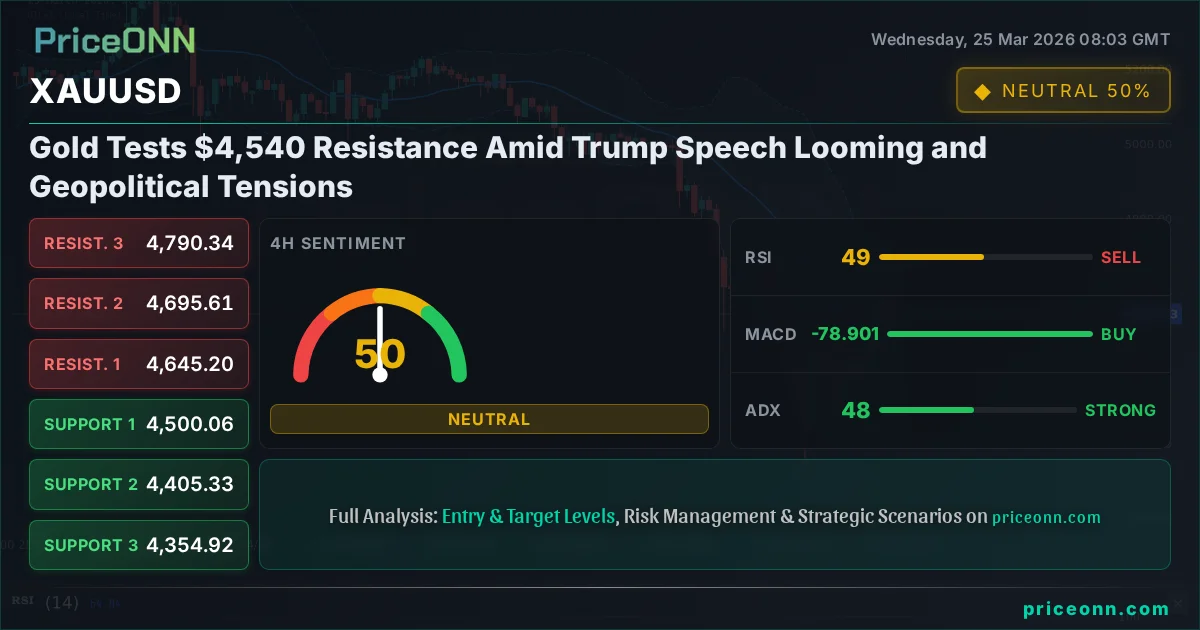
The price of gold experienced a significant uplift on Wednesday, climbing by almost 2% to trade at $4,556. This surge was predominantly fueled by burgeoning whispers of potential diplomatic overtures between the United States and Iran. The mere prospect of deescalation in a conflict that has gripped global attention for nearly four weeks sent shockwaves through energy markets, causing crude oil futures to tumble sharply. As oil prices retreated, investors sought refuge in traditional safe-haven assets, with gold emerging as the primary beneficiary.
Gold's historical role as a store of value is well-documented, stretching back through centuries of human civilization. Beyond its aesthetic appeal and use in adornments, the precious metal is now widely recognized as a critical safe haven. This designation means it's often perceived as a robust investment choice during periods of heightened economic or geopolitical uncertainty. Furthermore, gold is frequently viewed as a hedge against currency devaluation and inflationary pressures, largely because its intrinsic value is not tied to the policies or stability of any single government or central monetary authority.
Central Banks Quietly Accumulate Gold Reserves
The world's central banks represent the largest cohort of gold holders, strategically increasing their allocations. In an effort to bolster their respective currencies and fortify economic confidence during volatile times, these institutions often diversify their foreign reserves by acquiring gold. A substantial gold reserve can serve as a powerful signal of a nation's financial solvency and stability to the global community. Recent data from the World Gold Council highlights this trend dramatically: in 2022, central banks collectively added an unprecedented 1,136 tonnes of gold, valued at approximately $70 billion, to their holdings. This marks the highest annual purchase volume since records have been maintained.
Emerging economies, notably China, India, and Turkey, are at the forefront of this gold accumulation drive, rapidly expanding their gold reserves. This strategic diversification underscores a global shift in reserve management strategies, moving away from traditional fiat currencies towards tangible assets that offer perceived stability.
The Interplay of Gold, the Dollar, and Interest Rates
Gold typically exhibits an inverse correlation with both the US Dollar and US Treasury yields, both of which are significant global reserve assets and themselves considered safe havens. When the strength of the dollar wanes, the price of gold often strengthens, providing investors and central banks with an attractive avenue for asset diversification, particularly during turbulent economic climates. Similarly, gold tends to move in opposition to riskier assets like equities. A robust performance in the stock market can often exert downward pressure on gold prices, while significant sell-offs in riskier markets tend to enhance gold's appeal.
The price trajectory of gold is influenced by a complex web of factors. Geopolitical instability or even the palpable fear of a severe economic downturn can trigger a rapid escalation in gold prices, directly attributable to its safe-haven status. As an asset that does not generate yield, gold typically performs better in an environment of lower interest rates. Conversely, a rise in the cost of borrowing money often weighs on the precious metal. However, the prevailing behavior of the US Dollar remains a dominant driver, given that gold is priced internationally in dollars (XAU/USD). A strengthening dollar generally exerts a constraining influence on gold prices, whereas a weakening dollar typically propels gold prices upward.
Market Ripple Effects
The current dynamics surrounding gold are particularly interesting for traders and portfolio managers. The developing narrative of potential US-Iran talks, while easing pressure on oil, has created a clear divergence in asset performance. This event underscores the interconnectedness of geopolitical developments and financial markets. Investors are closely monitoring how this narrative unfolds, as it impacts not only gold but also broader risk sentiment and currency valuations.
The immediate impact has been a clear boost for gold as a safe haven. However, the implications extend further. The US Dollar Index (DXY) may see increased volatility as market participants reassess global risk premiums. Furthermore, this shift could influence emerging market currencies, which often benefit from a lower oil price environment but might also react to changing global risk appetites. Equity markets, particularly those sensitive to energy prices or geopolitical stability, could also experience fluctuations. Traders should pay close attention to the official statements from both the US and Iran, as well as the subsequent price action in crude oil and currency markets, to gauge the sustainability of gold's current rally.
Track markets in real-time
Empower your investment decisions with AI-powered analysis, technical indicators and real-time price data.
Join Our Telegram Channel
Get breaking market news, AI analysis and trading signals delivered instantly to your Telegram.
Join Channel