Gold and silver prices plunge as oil shock fuels inflation risks
Precious Metals Face Steep Sell-Off
Precious metals experienced a dramatic downturn on Thursday, with gold prices plummeting as escalating tensions in the Middle East sent crude oil prices soaring. This surge in energy costs has amplified global inflation concerns, simultaneously weakening the case for imminent interest rate reductions by the Federal Reserve.
Spot gold experienced a significant drop, shedding as much as 6% from its value and testing the critical $4,500 per ounce level. This price point had not been seen since the sharp market correction witnessed at the close of January. The yellow metal’s decline marks its seventh consecutive session of losses, representing the longest losing streak observed since 2023. It now stands more than $1,000 below its record high, which was established less than two months ago.
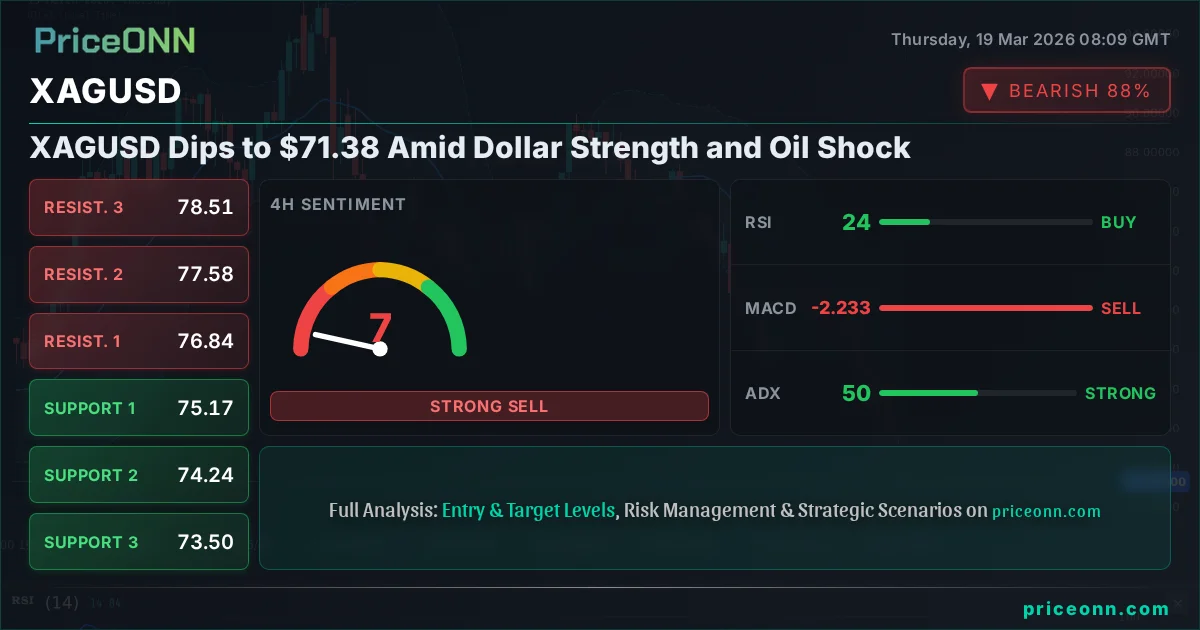
Silver fared even worse, falling over 10% to trade below $66 per ounce, a level not observed since late December. The white metal has now retracted over 45% from its January peak of $121.65.
Inflationary Pressures Mount
The escalating cost of crude and natural gas, directly linked to the ongoing conflict in the Middle East, has emerged as a primary catalyst for the precious metals’ recent retreat. These higher energy prices translate into increased inflationary pressures across the global economy. Such an inflationary environment typically diminishes the attractiveness of non-yielding assets like gold and silver, as central banks become less inclined to lower borrowing costs.
Just a day prior, the Federal Reserve maintained its benchmark interest rate, citing the prevailing uncertainty stemming from the geopolitical conflict's potential economic impacts. The central bank’s projections indicated a possibility of only a single rate cut for the year, with Fed Chair Jerome Powell emphasizing that any such reduction would be contingent on a sustained deceleration in inflation.
Since the significant US-Israeli strike on Iran nearly three weeks ago, gold had largely been trading within a confined range. However, this week saw a distinct bearish trend emerge as worries about inflation intensified, contributing to investor apprehension.
Market Sentiment Shifts Dramatically
Some market observers suggest that this heightened volatility has unsettled investors, transforming gold’s traditional role. "It’s no longer a secure haven, but rather a speculative instrument," noted Patrick Armstrong, chief investment officer at Plurimi Wealth. He further elaborated that with significant capital flows continuing into energy and chemical sectors, there is currently minimal support for metals.
BMO Capital Markets also weighed in, observing that funds are actively rotating into energy and chemicals, leaving metals prices with little backing while the geopolitical situation persists. This sentiment underscores a shift away from traditional safe havens.
Daniel Ghali, a commodity strategist at TD Securities, commented on the broader positioning in the gold market. "Gold is currently a very widely held position among institutional investors, largely driven by a 'debasement trade' narrative over the past year. However, the fundamental underpinnings of that trade are now showing signs of weakening," he stated.
Ghali anticipates further downside pressure in the near term. "For the immediate future, we continue to see downside risk. There remains substantial room for gold to decline while still respecting its longer-term bull market trend support," he added, suggesting that the current sell-off may have more room to run.
Analyst Perspective: What Smart Money Is Watching
The recent sharp decline in gold and silver prices, triggered by an oil shock and subsequent inflation jitters, represents a critical juncture for precious metal investors. The narrative has shifted from gold as a pure safe haven to a more complex, risk-sensitive asset influenced by broader macroeconomic trends. The Federal Reserve's hawkish stance, underscored by the projection of only one rate cut this year and a clear dependency on cooling inflation, directly impacts the opportunity cost of holding non-yielding assets like bullion.
This development has significant implications for several related markets. Firstly, the US Dollar Index (DXY) could see renewed strength as higher-for-longer interest rate expectations make dollar-denominated assets more attractive. Secondly, energy commodities like Brent and WTI crude oil will likely remain in focus, potentially experiencing further volatility depending on geopolitical developments. Thirdly, equity markets, particularly growth-oriented technology stocks, may face headwinds if inflation persists and keeps Treasury yields elevated, dampening investor appetite for riskier assets. Lastly, investors should monitor bond yields, especially US Treasury yields, as a key indicator of inflation expectations and Fed policy trajectory.
The primary risk for gold bulls is the sustained diversion of safe-haven flows towards energy assets and the continued possibility of further aggressive monetary tightening if inflation proves stubborn. Conversely, any unexpected de-escalation in the Middle East or a significant shift in central bank rhetoric towards easing could provide a floor for precious metals. Traders should closely watch the $4,500 level for gold and $66 per ounce for silver as key support zones; a decisive break below these could signal further steep declines. The long losing streak suggests a loss of momentum, making a swift recovery less probable without a significant change in the underlying macro drivers.
Track markets in real-time
Empower your investment decisions with AI-powered analysis, technical indicators and real-time price data.
Join Our Telegram Channel
Get breaking market news, AI analysis and trading signals delivered instantly to your Telegram.
Join Channel