
Gold Slides As U.S.-Iran Standoff, Strait Of Hormuz Closure Continue
 PriceONN Editorial Desk
Multi-source verification
PriceONN Editorial Desk
Multi-source verification

Geopolitical Tensions Sap Gold's Appeal
The precious metal experienced a downturn on Tuesday, a notable shift from its typical role as a safe haven. This decline occurred despite the persistent uncertainty surrounding U.S.-Iran relations and the critical chokepoint of the Strait of Hormuz remaining impassable for vital energy shipments. The market's muted reaction suggests a complex interplay of factors influencing gold's trajectory, moving beyond simple geopolitical risk premiums.
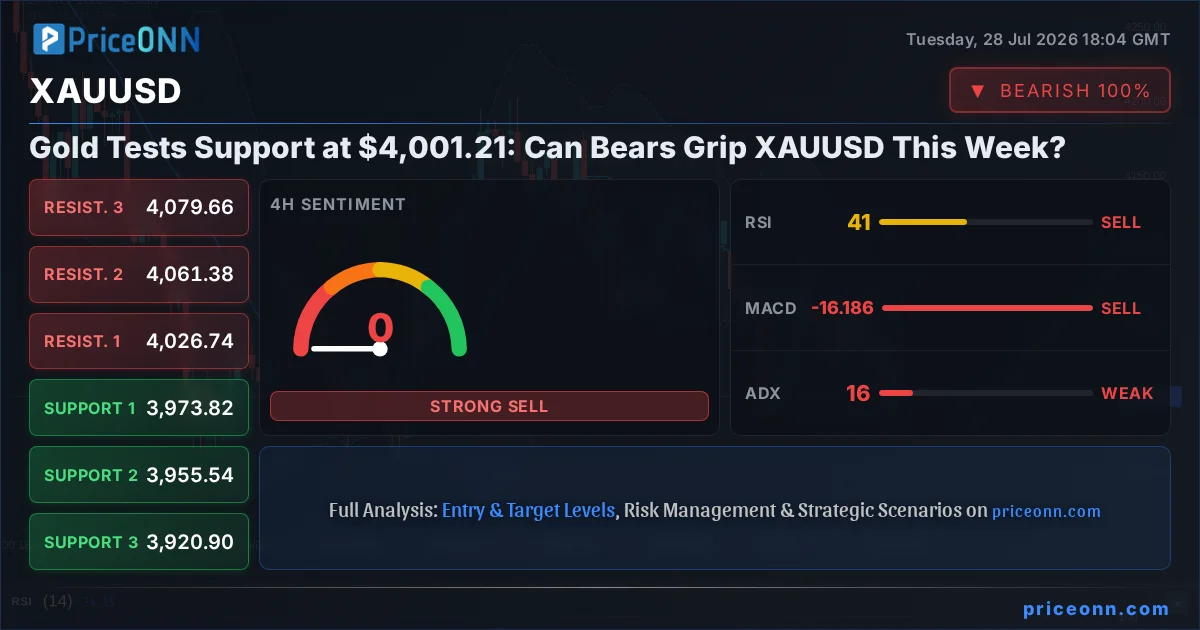
Front month Comex gold futures for June delivery saw a decline of $18.90, settling at $4,504.30 per troy ounce, representing a 0.42% dip. In contrast, its industrial counterpart, silver, managed a modest gain, with June futures climbing $0.388 or 0.51% to end the session at $76.320 per troy ounce. This divergence hints at differing market dynamics influencing each metal.
The ongoing conflict, now in its 88th day, has seen significant diplomatic maneuvers and escalations. Iran's closure of the Strait of Hormuz, a move made shortly after hostilities commenced, has significantly impacted global energy transit. This situation is further complicated by U.S. President Donald Trump's recent actions and statements, including a naval blockade on vessels approaching Iranian ports and his directive to U.S. representatives regarding the Abraham Accords.
Whispers of a potential peace deal, which reportedly involved a ceasefire extension, the immediate reopening of the Strait, and discussions on Iran's nuclear program, circulated over the weekend. However, President Trump publicly indicated a preference for a slower approach, stating he had instructed the U.S. team not to expedite a resolution. His insistence on the removal of enriched uranium from Iran clashes with the hardline stance of certain Iranian factions.
Amid these diplomatic crosscurrents, U.S. forces conducted limited strikes described as "self-defense" near Bandar Abbas and at Iranian missile launch sites. Iran's Foreign Ministry spokesperson deemed these actions a display of "bad faith and unreliability." The U.S. Central Command confirmed the strikes, noting that restraint was exercised during the existing ceasefire period.
Further complicating matters, Iran's Supreme Leader Mojtaba Khamanei issued a televised message, asserting that Gulf powers would no longer shield U.S. bases and predicting the elimination of Israel within 15 years. This rhetoric underscores the deep-seated animosity and the hardline elements within the Iranian regime.
Despite the heightened rhetoric, diplomatic channels remain open. U.S. Secretary of State Marco Rubio acknowledged that a deal might require additional time due to extensive negotiations but affirmed that the Strait of Hormuz would be reopened. The continuation of talks for a second day was viewed positively by experts, signaling a shared interest in de-escalating hostilities through diplomatic means. Yet, the persistent concerns regarding elevated inflation, fueled by these geopolitical undercurrents, appear to be weighing on gold prices.
Reading Between the Lines
The recent price action in gold, while seemingly counterintuitive given the geopolitical backdrop, reveals a market grappling with competing narratives. The immediate reaction to U.S.-Iran tensions often involves a surge in gold as a safe haven. However, the current scenario presents a more nuanced picture. The stated concerns about inflationary pressures, ostensibly linked to the Strait of Hormuz disruptions, are a key driver, but the market's muted response to the direct conflict suggests other forces are at play.
The market appears to be digesting the possibility of a diplomatic resolution, however fragile. The back-and-forth between President Trump's public statements and Iran's official responses indicates a complex negotiation process. While hardliners on both sides present significant obstacles, the continued engagement suggests that a complete breakdown is not yet priced in. This cautious optimism, paradoxically, dampens the immediate appeal of gold as a pure geopolitical hedge.
Furthermore, the U.S. market's observance of Memorial Day on Monday meant that price discovery for gold was delayed, with Tuesday's trading session absorbing some of the weekend's developments. The divergence between gold and silver is also noteworthy. Silver, often more sensitive to industrial demand, is showing resilience. This could indicate underlying strength in manufacturing or a belief that any inflationary impact from energy disruptions will not be severe enough to cripple industrial output.
The reference to the Abraham Accords and President Trump's desire to link a settlement with Iran to these agreements highlights the broader strategic considerations influencing U.S. foreign policy. This suggests that any resolution will likely be part of a larger regional realignment, which could have longer-term implications for energy markets and investor sentiment.
Market Ripple Effects
The ongoing standoff and the Strait of Hormuz situation directly impact several key markets. The most immediate connection is to crude oil prices, which typically react sharply to any perceived threat to supply from this critical transit point. While not explicitly detailed in the price action of gold, sustained disruptions here would undoubtedly fuel inflationary expectations globally, a factor that was cited as a reason for gold's dip.
The U.S. Dollar Index (DXY) also warrants attention. As a barometer of global risk appetite and U.S. monetary policy expectations, the dollar's performance against a basket of major currencies will be influenced by the geopolitical narrative. A de-escalation could strengthen the dollar, while prolonged conflict might see a flight to safety, potentially benefiting the dollar as well, albeit through different mechanisms.
Emerging market currencies, particularly those in the Middle East and those heavily reliant on energy imports, are also exposed. Volatility in oil prices and broader geopolitical uncertainty can lead to capital outflows and currency depreciation in these regions. Traders will be monitoring the exchange rates of countries like Turkey and India, which are significant energy importers.
Finally, the broader equity markets, especially those with significant exposure to energy sectors or global trade, will be sensitive to developments. Uncertainty can lead to increased volatility, while a resolution could provide a tailwind for risk assets. The performance of major global indices will serve as a key indicator of overall market sentiment.
Track markets in real-time
Empower your investment decisions with AI-powered analysis, technical indicators and real-time price data.
Join Our Telegram Channel
Get breaking market news, AI analysis and trading signals delivered instantly to your Telegram.
Join Channel PriceONN News
(RTTNews) - Gold prices have edged higher on Friday, partially offsetting the losses from yesterday's plunge after crude oil prices plummeted, lowering both oil-linked inflation concerns and the consequential expectations of an interest-rate hike by the U.S. Federal Reserve.
PriceONN News
(RTTNews) - Gold prices fell from a two-week high on Thursday as escalating West Asia tensions rekindled inflation fears and clouded the outlook for interest rates.
PriceONN News
(RTTNews) - Gold prices traded higher on Wednesday, extending gains for a fourth consecutive session and hitting a two-week high as investors reacted to escalating Middle East tensions and looked ahead to next week's Federal Reserve meeting.
PriceONN News
Gold price (XAU/USD) is up 1.5% to near $4,067 during the European trading session on Tuesday. The precious metal outperforms as the rally in oil prices has stalled, with investors turning confident that negotiations between the United States (US) and Iran towards peace have resumed.
PriceONN News
Silver price (XAG/USD) trades 1.33% lower to near $58.00 during the European trading session on Thursday. The white metal faces selling pressure as elevated energy prices due to renewed aggression between the United States (US) and Iran have de-anchored inflation expectations again.
PriceONN News
The Gold price turns negative on Wednesday, even though the last two US inflation reports showed that prices are dropping, though developments in the Middle East sent energy prices higher. At the time of writing, the XAU/USD traded at $4,034, down some 0.53%.
PriceONN News
(RTTNews) - Gold prices were sharply lower on Tuesday as traders waited for the Federal Reserve policy decision.
PriceONN News
(RTTNews) - Gold prices have advanced on Monday, extending the gains from Friday's session as a pause on mutual attacks by both the U.S. and Iran eased escalation tensions in the ongoing gulf crisis. Expectations of a tighter monetary policy in the U.S. diminished amid a freefall
PriceONN News
(RTTNews) - Gold prices have tumbled on Thursday as the Middle East crisis deepens after Iran-backed Houthi militants of Yemen attacked two Saudi Arabian vessels in the Red Sea, raising concerns of intense oil supply disruption for an extended period. The possibility of an intere
PriceONN News
Gold (XAU/USD) rallies to an over two-week high, around the $4,140-$4,141 area, during the Asian session on Wednesday amid hopes that US-Iran diplomacy could ease energy prices and temper hawkish US Federal Reserve (Fed) expectations.
PriceONN News
Silver price (XAG/USD) gains ground for the fourth successive day, trading around $59.70 per troy ounce during the Asian hours on Wednesday. Silver prices are surging despite rising rate-hike expectations, as powerful market forces outweigh the drag of higher interest rates.
PriceONN News
Gold (XAU/USD) edges higher on Tuesday as buying interest around the $4,000 psychological level supports prices, while traders assess developments in the Middle East and their potential economic fallout. At the time of writing, XAU/USD trades around $4,058, up 1.27% on the day.