Gold slips near $4,500 as Oil rally and US yields weigh on bullion
Precious Metal Under Pressure as Safe Haven Status Tested
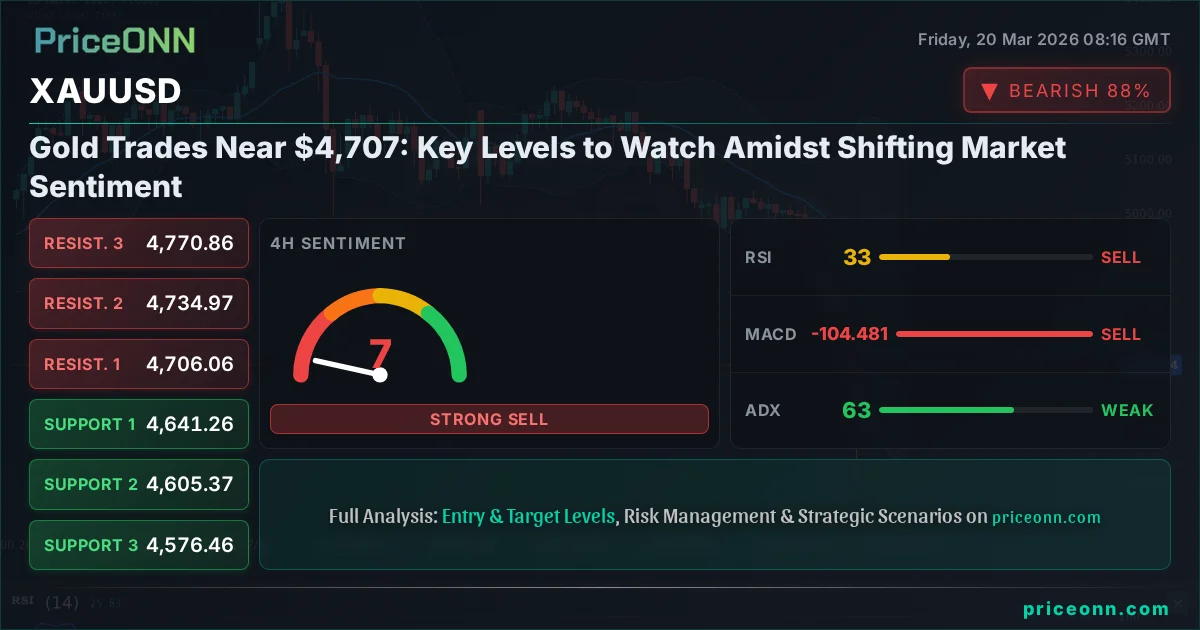
The price of gold has plunged for a remarkable eighth consecutive trading session, signaling a significant downturn that has seen the precious metal lose more than 8.50% of its value over the past week. This extended sell-off comes as a robust rally in oil prices strengthens the appeal of the US dollar, a key rival safe-haven asset, while rising US Treasury yields further diminish gold's attractiveness.
Historically, gold has served as a cornerstone of value, functioning as a universal medium of exchange and a trusted store of wealth. Beyond its aesthetic appeal and use in adornment, its contemporary role as a safe-haven asset is paramount. This designation means investors often flock to gold during periods of market uncertainty and economic turmoil, seeking refuge from volatility. Its intrinsic value, independent of any single government or issuing authority, also positions it as a potent hedge against currency devaluation and inflationary pressures.
Central banks, the largest holders of gold globally, frequently diversify their foreign exchange reserves by acquiring the precious metal. This strategy is often employed to bolster national currencies during challenging economic climates, thereby enhancing the perceived stability and strength of their economies. Substantial gold reserves can indeed serve as a critical indicator of a nation's financial solvency and trustworthiness.
Recent data from the World Gold Council reveals a striking trend: central banks collectively added an astonishing 1,136 tonnes of gold, valued at approximately $70 billion, to their reserves in 2022. This represents the highest annual purchase volume on record. Emerging economies, notably China, India, and Turkey, have been particularly aggressive in expanding their gold holdings, signaling a strategic shift in global reserve management.
The intricate relationship between gold, the US dollar, and US Treasuries is well documented. Typically, gold exhibits an inverse correlation with both the dollar and Treasury yields, both of which are themselves considered major reserve assets and safe havens. When the dollar weakens, gold prices often ascend, presenting opportunities for investors and central banks to diversify their portfolios amidst turbulent times. Similarly, gold tends to move counter to riskier assets; a booming stock market often correlates with a weaker gold price, while sharp declines in riskier markets typically lend support to the precious metal.
The price trajectory of gold is influenced by a complex interplay of factors. Geopolitical tensions or the pervasive fear of a significant economic downturn can trigger rapid price escalations, driven by gold's established safe-haven status. As an asset that does not generate yield, gold typically thrives in an environment of low interest rates. Conversely, a rise in the cost of capital generally exerts downward pressure on the yellow metal. Nevertheless, the performance of the US dollar remains a dominant driver, given that gold is priced in dollars (XAU/USD). A strengthening dollar tends to cap gold's upward movement, while a weakening dollar often fuels its ascent.
Market Ripple Effects
The current sustained downturn in gold prices, exacerbated by the rally in crude oil and rising US Treasury yields, presents a complex scenario for market participants. This environment highlights a significant shift in safe-haven preferences and inflation hedging strategies.
The strength in crude oil prices, while beneficial for energy producers and oil-exporting nations, contributes to broader inflationary concerns. This could theoretically support gold as an inflation hedge, yet the concurrent rise in US Treasury yields is creating a powerful counterforce. Higher yields increase the opportunity cost of holding non-yielding assets like gold, making dollar-denominated fixed income more attractive by comparison. This dynamic is currently overpowering gold's traditional inflation-fighting narrative.
The US dollar's resilience, buoyed by both oil's gains and yield differentials, is a critical factor weighing on gold. Traders will be closely monitoring the USD Index (DXY) for any signs of topping out, as a potential reversal in the dollar could offer some relief to bullion. Furthermore, the performance of US Treasury yields, particularly the 10-year note, is a key indicator. A sustained move higher in yields could signal further headwinds for gold, while a pullback might provide a technical floor.
Beyond gold itself, this market dynamic could influence other precious metals like silver (XAG/USD), which often trades with a higher beta to gold, potentially experiencing amplified declines or recoveries. Investors might also re-evaluate their exposure to traditional safe havens, potentially increasing allocations to assets that benefit from rising rates or commodity strength, such as certain sectors of the equity market or commodity-linked currencies like the Canadian Dollar (CAD), given its strong correlation with oil prices.
Track markets in real-time
Empower your investment decisions with AI-powered analysis, technical indicators and real-time price data.
Join Our Telegram Channel
Get breaking market news, AI analysis and trading signals delivered instantly to your Telegram.
Join Channel