
Is Gold's Rally Over as Geopolitical Tensions Escalate and Dollar Strengthens?

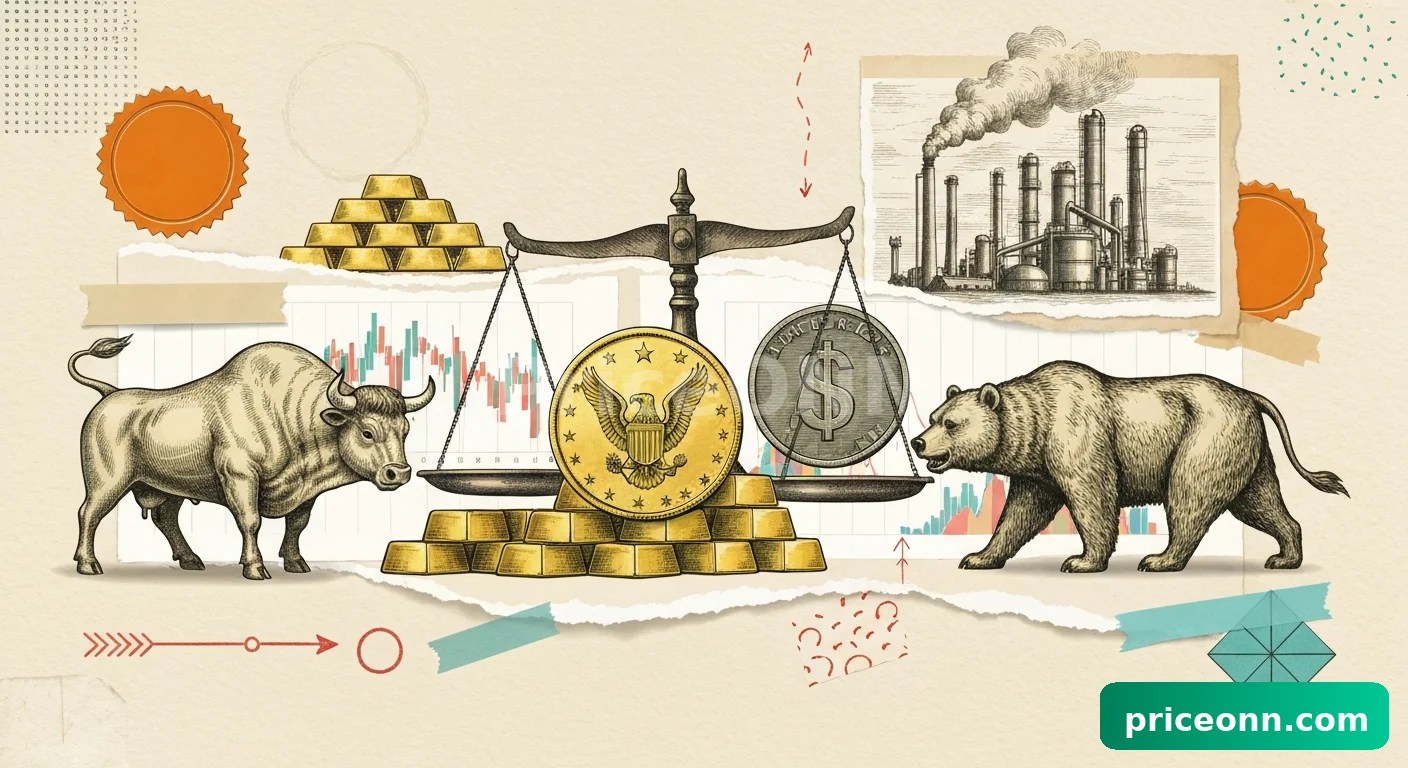
Gold prices extended their losses for a second consecutive session on Friday, driven lower by intensifying attacks in the Gulf region. While these events typically stoke inflationary concerns, the immediate market reaction saw a significant shift away from safe-haven assets as the U.S. dollar strengthened, and expectations for a near-term Federal Reserve rate cut diminished entirely.
Market Context
Front Month Comex Gold for April delivery slid by $30.10, marking a 0.65% decline to settle at $4,575.60 per troy ounce. Similarly, Front Month Comex Silver for April delivery saw a sharper plunge, falling by $1.489 or 2.10% to $69.485 per troy ounce.
The catalyst for this market shift appears to be a series of retaliatory strikes in the Middle East. Reports indicate that Iranian drones targeted Kuwait's largest oil refinery, Mina al-Ahmadi, a facility processing approximately 730,000 barrels of oil daily, leading to the shutdown of several operational units. This follows earlier attacks, including Israel's strikes on Iran's South Pars gas field, prompting Iran to retaliate against an oil refinery in Haifa, Israel, and the Ras Laffan LNG plant in Qatar. The extensive damage to Qatar's largest LNG facility is expected to take over a year for repairs, according to state-owned QatarEnergy.
Prior to these escalations, Iran had also conducted drone attacks on Saudi Aramco's SAMREF refinery in Yanbu. The persistent conflict, which began on February 28, has virtually blocked tanker traffic through the Strait of Hormuz. This disruption has a direct impact on crude oil prices and, consequently, fuels global inflation concerns. In response, major central banks are adopting a more 'hawkish' stance, supporting the U.S. dollar.
Analysis & Drivers
The current market dynamic presents a complex interplay of geopolitical risk and monetary policy expectations. Typically, heightened geopolitical tensions in oil-producing regions would drive gold prices higher as investors seek a safe haven. However, the recent price action suggests a different narrative is unfolding.
The strengthening U.S. dollar, bolstered by the 'hawkish' central bank sentiment, is making dollar-denominated assets like gold more expensive for overseas buyers. This reduced demand from international investors, coupled with the potential for sustained high energy prices due to supply disruptions, is creating a bearish environment for gold in the short term.
Furthermore, the significant financial commitment from the Pentagon seeking over $200 billion from Congress to fund U.S. forces in the Gulf war, with $11 billion already expended in the initial week, raises concerns about the broader economic implications. Such massive expenditures, potentially exceeding half of Iran's annual GDP, could lead to increased sovereign debt and inflationary pressures that central banks are now prioritizing controlling over immediate easing measures.
The market's reaction indicates that investors are currently pricing in a higher probability of sustained inflation and a delayed pivot to interest rate cuts by the Federal Reserve. This environment favors the U.S. dollar over traditional safe-haven assets like gold, which often performs best when real interest rates are falling or expected to fall.
Trader Implications
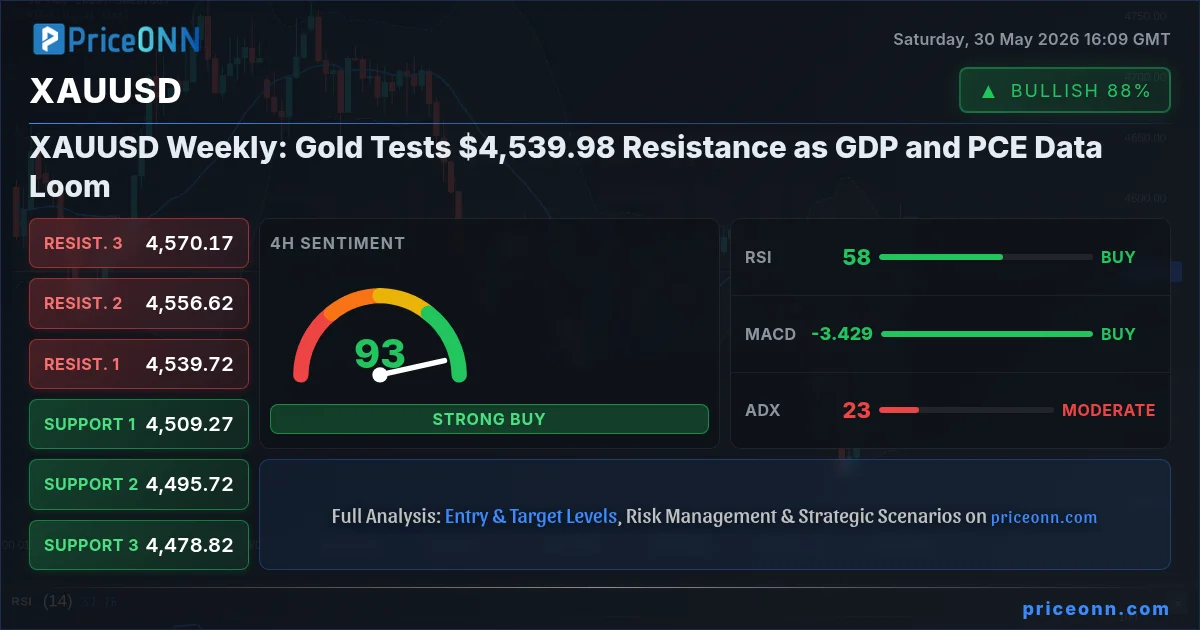
Traders should monitor key support and resistance levels for gold. A break below the $4,500 level could signal further downside momentum, potentially targeting $4,400. Conversely, any de-escalation in the Gulf or a shift in central bank rhetoric could see gold retest higher levels, with $4,650 acting as initial resistance.
The strengthening dollar is a critical factor to watch. Any signs of weakness in the dollar index (DXY) could provide a reprieve for gold. Additionally, updates on the conflict's impact on oil supply and refinery operations are crucial. A sustained disruption to global oil supply could reignite inflation fears, potentially supporting gold despite dollar strength.
For short-term traders, the current trend suggests caution on the long side for gold. The focus should be on dollar strength and the evolving geopolitical landscape. Options strategies that benefit from increased volatility or a range-bound market might be considered, given the conflicting signals.
Outlook
The immediate outlook for gold remains cautious. The intensifying geopolitical situation in the Gulf, coupled with a strong U.S. dollar and fading rate cut expectations, suggests that downward pressure on gold prices may persist. However, any significant escalation or unforeseen economic shock could quickly reverse this trend, re-establishing gold's role as a primary safe-haven asset. Traders will be closely watching upcoming economic data releases and central bank commentary for further direction.
Frequently Asked Questions
What is the current price of gold and its recent performance?
As of Friday's close, April Comex Gold was trading at $4,575.60 per troy ounce, reflecting a 0.65% decline. This marks a continuation of losses from the previous two trading sessions.
Why are geopolitical tensions in the Gulf impacting gold prices negatively?
Despite typical safe-haven demand, escalating conflicts are strengthening the U.S. dollar and reducing the likelihood of Fed rate cuts, making gold more expensive for international buyers and thus decreasing demand.
What are the key levels to watch for gold traders?
Traders should watch for a potential break below $4,500, which could lead to a test of $4,400. Resistance is seen around $4,650. The U.S. dollar index and oil supply updates are critical factors influencing these levels.
Track markets in real-time
Empower your investment decisions with AI-powered analysis, technical indicators and real-time price data.
Join Our Telegram Channel
Get breaking market news, AI analysis and trading signals delivered instantly to your Telegram.
Join Channel PriceONN News
Gold prices experienced a significant decline on Wednesday, falling over 1% as diplomatic optimism surrounding U.S.-Iran talks grew, despite ongoing military actions. The June gold contract settled at $4,444.50.
PriceONN News
Gold prices experienced a significant downturn, shedding 2% this week to settle near $4,444.50 per ounce. This decline is attributed to evolving U.S.-Iran diplomatic efforts and concerns over potential central bank rate hikes.
PriceONN News
Gold prices fell below the $4500 mark on Wednesday, extending previous losses as oil prices tumbled and geopolitical tensions between the US and Iran remained a key market driver. Investors are weighing inflation concerns against hopes of de-escalation.
PriceONN News
Gold prices fell on Friday as concerns over crude oil inventories and the prolonged closure of the Strait of Hormuz fueled inflation anxieties, overshadowing U.S.-Iran peace talks. The June Comex Gold contract settled down 0.55% at $4,517.40.
PriceONN News
Gold futures broke above $4,500 per ounce on Friday, driven by increasing optimism for a de-escalation in the U.S.-Iran conflict and the potential reopening of the Strait of Hormuz. Silver also saw significant gains, reflecting a broader shift towards precious metals as geopolitical tensions ease.
PriceONN News
(RTTNews) - Gold held firm above $4,500 an ounce on Friday, the dollar headed for a small weekly loss on improved risk sentiment in markets, and oil prices slipped to a one-month low amid investor optimism that the Middle East conflict is inching toward an end and that the reopen
PriceONN News
(RTTNews) - After moving sharply lower earlier in the day, the price of gold has shown a significant turnaround over the course of the trading session on Thursday.
PriceONN News
(RTTNews) - Extending the losses from yesterday's session, gold prices have slumped on Wednesday as traders watch the ongoing efforts to end the U.S.-Iran standoff with cautious optimism while the blockade on the Strait of Hormuz continues. The rising inflationary pressure weighe
PriceONN News
(RTTNews) - Gold prices traded lower on Wednesday, extending losses from the previous session as investors fretted about oil-driven inflation and the potential impact on interest rates.
PriceONN News
Gold prices retreated to $4,504.30 per troy ounce despite ongoing geopolitical tensions and the closure of the Strait of Hormuz, suggesting a complex market dynamic beyond typical safe-haven demand. Silver, however, managed a modest gain.
PriceONN News
(RTTNews) - Gold prices have edged lower on Tuesday amid renewed concerns of inflationary pressure following fresh U.S. military strikes on Iran yesterday while the Strait of Hormuz remains closed for oil and energy transit.
PriceONN News
Gold prices surged by 1% to approximately $4,556 on Monday as market participants reacted to developing news of a potential US-Iran peace deal. The speculation weakened the US Dollar and sent oil prices tumbling.