
Gold Soars to $5,200 Amid US Tariff Concerns; Pound Slides on UK Political Jitters


Gold's Safe-Haven Appeal Amid Tariff Uncertainty
Gold (XAU/USD) is attracting buyers, trading around $5,195 in early Asian trading. The precious metal is gaining ground as uncertainty surrounding US tariffs fuels safe-haven demand. Investors are also closely watching the upcoming US Producer Price Index (PPI) data for further market direction.
Throughout history, gold has served as a reliable store of value and a medium of exchange. Beyond its use in jewelry, gold is primarily viewed as a safe-haven asset, particularly during economic instability. Its perceived safety stems from its independence from issuers or governmental control, making it an effective hedge against inflation and currency depreciation.
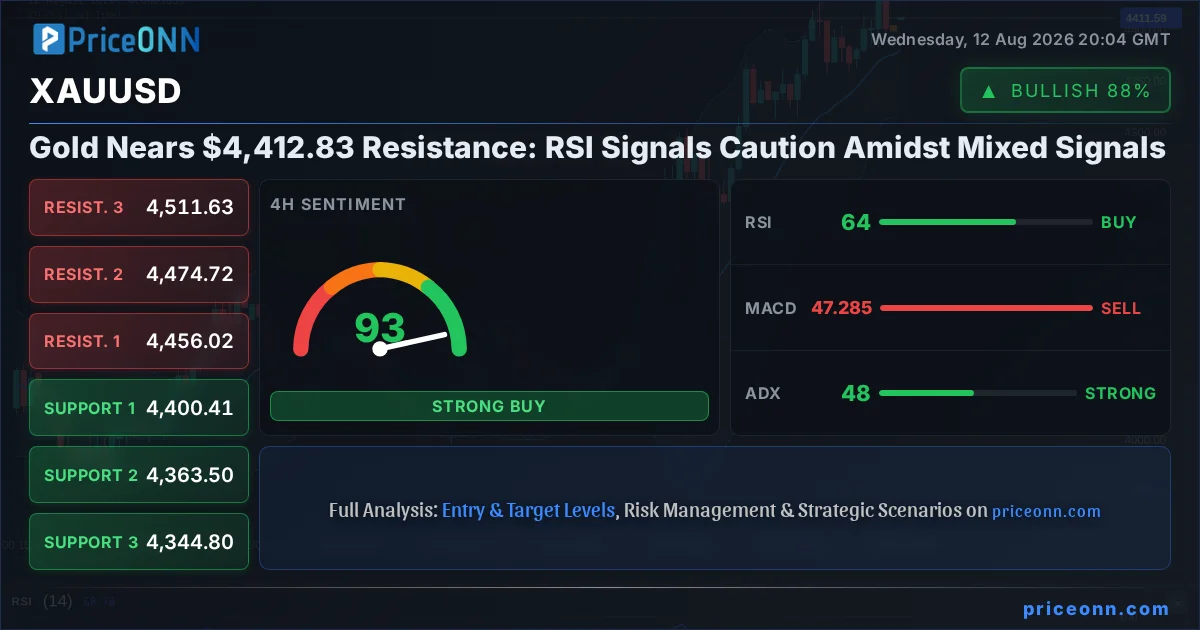
The current geopolitical landscape, marked by trade tensions and economic uncertainties, is contributing to gold's appeal. Investors are seeking refuge in safe-haven assets to buffer against potential market volatility. The anticipation surrounding the U.S. PPI data further intensifies this sentiment, as traders attempt to gauge the Federal Reserve's future monetary policy decisions.
Central Banks and Gold Reserves
Central banks are major players in the gold market, strategically using gold to bolster their currencies during economic turmoil. Diversifying reserves with gold enhances the perceived strength of their economies, instilling confidence in a nation's financial stability. Data from the World Gold Council indicates that central banks collectively added 1,136 tonnes of gold, valued at approximately $70 billion, to their reserves in 2022. This represents the highest annual purchase volume on record, with emerging economies such as China, India, and Turkey leading the charge in increasing their gold holdings.
Market Dynamics and Influences
Gold exhibits an inverse correlation with the U.S. Dollar and U.S. Treasuries. When the Dollar weakens, gold prices typically increase, allowing investors and central banks to diversify their portfolios during uncertain times. Similarly, gold tends to move inversely with risk assets. A strong stock market rally can depress gold prices, while sell-offs in riskier markets often boost gold.
Pound Sterling Under Pressure
The GBP/USD pair is losing ground, trading near 1.3485 in early Asian trading. The Pound Sterling (GBP) is weakening against the Greenback amid rising UK political uncertainty surrounding the Gorton and Denton by-election.
The Pound Sterling (GBP), dating back to 886 AD, remains a pivotal player in the global financial arena. As the official currency of the United Kingdom, it ranks as the fourth most actively traded currency worldwide. In 2022, the Pound accounted for approximately 12% of all foreign exchange (FX) transactions, averaging around $630 billion daily. The Bank of England (BoE) issues the Pound Sterling.
Key currency pairs involving the Pound include GBP/USD ('Cable'), which constitutes roughly 11% of FX trading volume, GBP/JPY ('Dragon') at 3%, and EUR/GBP at 2%. These pairings highlight the Sterling's role in international commerce and investment flows.
The single most influential factor shaping the Pound Sterling's valuation is the monetary policy framework established by the Bank of England. The BoE's primary mandate is to maintain price stability, targeting an inflation rate of around 2%. The BoE adjusts official interest rates to achieve this target. Higher interest rates generally bolster the Pound's value by attracting international capital. Conversely, lower interest rates may stimulate borrowing and investment when inflation falls below the target level.
Track markets in real-time
Empower your investment decisions with AI-powered analysis, technical indicators and real-time price data.
Join Our Telegram Channel
Get breaking market news, AI analysis and trading signals delivered instantly to your Telegram.
Join Channel PriceONN News
(RTTNews) - Gold prices were up more than 1 percent on Wednesday amid rising bets that the U.S. Federal Reserve will not hike interest rates anytime soon.
PriceONN News
Saxo Bank says bullion has to hold $4,360 to keep the rally alive, with headwinds building from oil, yields and the dollar into Wednesday’s inflation print.
PriceONN News
(RTTNews) - Gold was subdued on Tuesday after two consecutive sessions of gains on receding Fed hike bets and reports suggesting that China's central bank stepped up gold purchases in July.
PriceONN News
Barrick sank as much as 9.7% after analysts judged its $1.95 billion Fourmile deal too cheap, while hedge funds turned their most bullish on gold in six months.
PriceONN News
(RTTNews) - Gold prices held steady on Monday after U.S. employers unexpectedly cut jobs in July and hiring figures for the prior two months were also revised downward, helping ease the risk of an immediate U.S. interest-rate hike.
PriceONN News
An $18 billion July gain hides stock swings of 40% in a month, a $50 billion gap at the top no ranking has seen before, and a spinning revolving door at the bottom.
PriceONN News
Bullion’s two-month high sent producers sharply higher, while junior miners and the TSX Venture posted outsized gains.
PriceONN News
Negative payrolls reduce September rate-hike odds to 44%, metals reverse after summer's hawkish Fed.
PriceONN News
(RTTNews) - Gold climbed above $4,300 an ounce on Friday and was set for its biggest weekly gain since January on hopes of peace in the Middle East, eased inflation concerns and reduced expectations for a Federal Reserve rate hike in September.
PriceONN News
Peru has paid most of arbitration award, clearing the way for the first contingent value rights distribution.
PriceONN News
(RTTNews) - Gold prices traded higher for a fourth straight session to hit a seven-week high on Thursday, driven by softer U.S. labor market data released overnight, a weaker dollar and lower Treasury yields.
PriceONN News
(RTTNews) - Gold prices surged 2 percent to hit a one-month high on Wednesday as a sharp fall in oil prices helped ease concerns around inflation and interest rates.