
Lower Oil Prices Lend Support For The Gold Rally
 PriceONN Editorial Desk
Multi-source verification
PriceONN Editorial Desk
Multi-source verification
Energy Market Shifts Fuel Precious Metals Rally
The global oil market is witnessing a notable recalibration, with prices experiencing a second consecutive week of declines. This downturn is largely attributed to an unexpected thaw in U.S.-Iran relations, sparking optimism about the potential reopening of the critical Strait of Hormuz shipping lane. U.S. President Donald Trump's announcement on Monday regarding the resumption of talks between Washington and Tehran, coupled with regional allies like Saudi Arabia advocating for a pause in hostilities, has significantly eased immediate supply anxieties.
Adding to this de-escalation narrative, Iran and Oman have reportedly reached a preliminary accord on navigational pathways for a temporary, partial transit route through the Strait. While this development has eased immediate fears of supply disruption, the broader energy landscape remains complex. Despite the recent dip, Brent crude futures for October delivery managed to reverse a prior downtrend, climbing over 4.5% by Thursday evening. Nevertheless, oil prices are still trading nearly $20 a barrel below their July 23 peak, which surpassed $100 a barrel following the breakdown of a 60-day ceasefire between the U.S. and Iran.
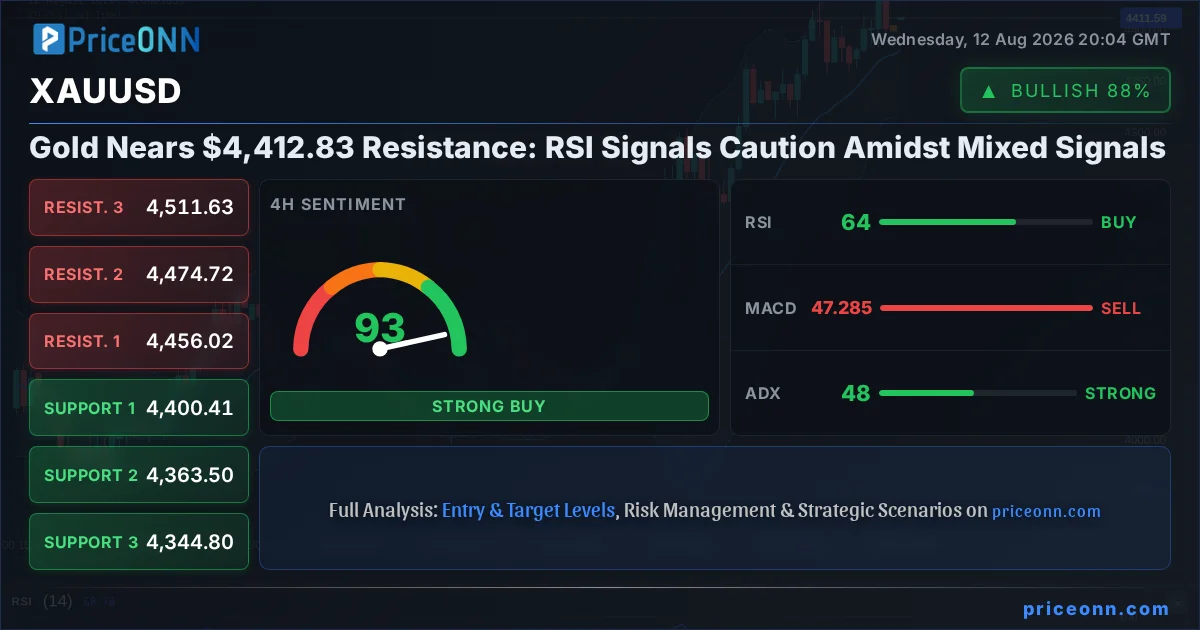
Several factors continue to exert downward pressure on oil prices. The International Energy Agency (IEA) recently issued a revised forecast, projecting a downward adjustment of approximately 1.1 million barrels per day for global oil demand in 2026. This revision stems from demand destruction observed amidst sustained high oil prices. Prolonged periods of acute shipping bottlenecks and physical supply disruptions within the Middle East have demonstrably hampered industrial output, leading to a significant reduction in fuel consumption, particularly across key Asian markets.
Further contributing to the supply-side narrative, OPEC+ has approved a final quota increase of 188,000 barrels per day for September 2026. This decision marks the conclusion of a phased rollback of the 1.65 million barrels per day in voluntary supply cuts initially agreed upon in 2023. Key alliance members, including Saudi Arabia, Russia, Iraq, Kuwait, Kazakhstan, Algeria, and Oman, endorsed this September expansion following a virtual assembly. This represents the sixth consecutive monthly increment this year, effectively completing the unwinding of the 2023 voluntary reductions. However, a substantial buffer of 2 million barrels per day in cuts, implemented in 2022, remains in effect through the end of the current year.
The alliance is currently engaged in auditing member production capacities, a crucial step in establishing new output quotas for upcoming negotiations in 2027. Reports indicate that nations such as Iraq are advocating for higher production limits. This ongoing assessment highlights the delicate balance OPEC+ seeks to maintain between managing supply and accommodating the production ambitions of its members.
The Gold-Silver Crossroads
The narrative of potential oil market oversupply is regaining traction. Last month, the U.S. Energy Information Administration (EIA) forecasted that the combined effect of reopening the Strait of Hormuz and escalating production levels could slow inventory drawdowns in late 2026, potentially leading the global market into an oversupplied state by 2027. The EIA's projection indicates an average Brent crude price of just $65 a barrel in 2027, a significant decrease of nearly $20 a barrel from current price levels.
For investors seeking refuge, this energy market dynamic presents a complex picture for precious metals. Gold and silver currently stand at a critical juncture, influenced by a tug-of-war between geopolitical developments and the monetary policies enacted by the Federal Reserve. While heightened geopolitical tensions historically bolster demand for safe-haven assets like bullion, the recent conflict has also stoked inflation concerns. This dual pressure forces traders to weigh the protective value of precious metals against the rising opportunity cost of holding non-yielding assets in an environment characterized by elevated interest rates.
The ongoing Middle East conflict has been a recurring trigger for sharp spikes in oil prices. Elevated energy costs invariably exacerbate global inflation expectations, often prompting a more hawkish stance from the Federal Reserve, which could lead to prolonged or additional interest rate hikes. As gold and silver do not offer interest income, high real yields and a strong U.S. dollar typically suppress their safe-haven appeal. Conversely, a decline in crude oil prices provides a supportive backdrop for gold rallies by mitigating inflation fears and encouraging central banks to consider easing monetary policy.
When crude oil prices decrease, the costs associated with manufacturing and transportation tend to fall, which in turn helps to cool broader inflationary pressures across the economy. This effect is clearly illustrated by the recent performance of spot gold, which has surged by over 4% to trade near the $4,250-$4,270 per ounce range, marking an impressive gain of approximately 6% within the past week alone. This sharp rebound is directly traceable to the observed pullback in crude oil prices.
Simultaneously, the stabilization observed in energy markets has exerted downward pressure on the U.S. Dollar. A weaker dollar renders gold more affordable and consequently more attractive to international buyers acquiring the metal in non-U.S. currencies. Global central banks, particularly those in Asian markets such as China, are actively and aggressively increasing their gold reserves, having added a record 289 metric tons in Q2 2026 alone. This strategic diversification aims to reduce reliance on the U.S. dollar and sovereign debt.
Beyond the energy sector's influence, a stream of weaker-than-expected U.S. macroeconomic data, including subdued ADP private payroll figures, a slowdown in job openings, and declining factory orders, has collectively diminished the likelihood of an aggressive Federal Reserve rate hike in September. As one market observer noted, "I’ve been taking a break basically for the last six months, and I think it’s time to be really invested and be bullish again."
However, this bullish outlook is tempered with caution. A return to record highs for gold is not immediately anticipated. Projections suggest gold could reach $4,500 this summer, with potential upside to $4,800-$4,900 if key resistance around $4,490 is decisively cleared. Nonetheless, a new all-time high within the current year is not expected. This outlook remains decidedly positive from current levels but suggests a more measured ascent than forecasts predicting an immediate return to previous peaks.
Market Ripple Effects
The interplay between energy prices, geopolitical stability, and monetary policy creates a complex environment for traders. The recent cooling in oil prices, driven by diplomatic progress and revised demand forecasts, directly benefits gold by reducing inflation expectations and easing pressure on central banks to maintain hawkish stances. This suggests a favorable short-term outlook for precious metals, provided geopolitical risks do not re-emerge to significantly disrupt energy markets.
Traders should monitor the ongoing U.S.-Iran diplomatic efforts closely, as any breakdown could quickly reignite oil price volatility and shift the narrative away from gold's bullish momentum. Furthermore, upcoming U.S. inflation data and Federal Reserve commentary will be critical in determining the path of interest rates, which significantly impacts the opportunity cost of holding non-yielding assets like gold. The persistent buying from global central banks, particularly in Asia, provides a strong underlying support for gold, acting as a counterbalance to interest rate concerns.
Potential market connections include the U.S. Dollar Index (DXY), which often moves inversely to gold. A sustained weaker dollar, supported by a less hawkish Fed and potentially lower oil prices, would likely provide further upside for gold. Additionally, energy sector equities may face headwinds if oil prices remain subdued, while sectors sensitive to consumer spending could see some relief from lower energy costs. The broader equity markets might also benefit from reduced inflation fears, although the prospect of continued high interest rates remains a limiting factor.
Track markets in real-time
Empower your investment decisions with AI-powered analysis, technical indicators and real-time price data.
Join Our Telegram Channel
Get breaking market news, AI analysis and trading signals delivered instantly to your Telegram.
Join Channel PriceONN News
A drone has struck a power station at the Zawiya oil export terminal in Libya, suggesting continued attacks on one of the country’s main oil hubs. The power plant is in close proximity to the largest oil refinery in Libya, the AP noted in a report on the news. The attack follows earlier ones that caused an explosion at an oil storage tank. No one has claimed responsibility for the drone attacks, the AP also reported. The tank, according to the company operating the facility, had 4.5 million...
PriceONN News
Indian state-controlled oil refiners continue to search the market for spot crude supply as term deliveries are constrained by the ongoing crisis in the Middle East and its key oil chokepoint, the Strait of Hormuz. Mangalore Refinery and Petrochemicals Limited (MRPL) and Hindustan Petroleum Corporation Limited (HPCL) are looking to buy a combined 6 million barrels of crude oil via spot tenders, Reuters reported on Wednesday, citing tender documents it has seen. HPCL is seeking up to 4 million...
PriceONN News
The IEA has slashed its 2026 global oil supply forecast, with output now expected to plunge 4.3 million barrels per day this year as the failure to reopen the Strait of Hormuz pushes the market deeper into deficit. The latest forecast is considerably worse than the 3.7-million-bpd decline the agency projected just last month and would leave global supply at 102.02 million bpd, its lowest forecast for 2026 yet. Supply is now expected to fall 1.27 million bpd short of demand for the year,...
PriceONN News
Brent Crude oil prices rose above $89 per barrel in early trade in Europe on Wednesday as Iran and the United States offered contrasting claims about who controls the Strait of Hormuz. Brent Crude prices were up by 0.64% at $89.60 in the morning in Europe, and WTI Crude was rising by 0.94% at $83.90, amid persistent supply concerns and risks despite claims from the U.S. that traffic at Hormuz had normalized. Iran, for its part, said on Tuesday that the Strait of Hormuz will remain closed unless...
PriceONN News
Oil flows from the Middle East have normalized, with Sunday traffic alone above pre-conflict averages, U.S. Secretary of Energy Chris Wright said on Tuesday in a claim that appears not to be backed by ship-tracking data. On Tuesday, Secretary Wright posted on X that “Thanks to the coordinated efforts of the U.S. military and our gulf allies, the seven-day average for oil leaving the Strait of Hormuz is currently up to almost 9 million barrels per day.” He went on to add that “When combined with...
PriceONN News
Whatever officially occurs next in the on-again/off-again negotiations towards a peace deal between the U.S. and Iran, unofficially Tehran knows that it has established de facto control over both the world’s two key maritime energy transit routes -- the Strait of Hormuz and the Bab el-Mandeb Strait -- for at least as long as the Islamic regime remains in place in Iran. Washington, London, Brussels, Beijing, and Moscow know it too. The Strait of Hormuz remains effectively controlled by vast...
PriceONN News
The Middle East conflict and the heightened threats to shipping in the Red Sea have prompted China to boost the use of the Arctic to move containers from the Chinese east coast to Europe. The fast-melting Arctic ice offers an alternative shipping route in the summer as the Houthi threats to shipping in the Red Sea and the Bab el-Mandeb Strait make cargo operators more cautious in transiting the key chokepoints in the Middle East. Shipping through the Arctic is not something new, but this time...
PriceONN News
(RTTNews) - Crude oil prices have surged on Tuesday, extending the gains from the two previous sessions as the U.S.-Iran stalemate over new demands for compensation for war-related damages continued, diminishing the expectations of an early reopening of the Strait of Hormuz.
PriceONN News
Five months after the U.S. and Israel opened a war with Iran, global fuel markets still haven't settled down, and the latest IEA data prove it. The IEA's monthly end-use price tracker, updated Aug. 7 and covering prices through July, shows the average per-liter cost of automotive diesel across the countries it tracks sitting near $1.94 in U.S. dollar terms. That's roughly 14% above where it stood in February, before the war started, and it's actually higher than June, even as crude oil kept...
PriceONN News
Hormuz tensions are flaring again as Iranian exports collapse, pushing Brent toward $87 and raising the risk of another run toward $100. China’s Crude Drawdown Puts Iranian Barrels Back in Demand - Shrinking crude inventories in China might spur a buying spree over the upcoming weeks, particularly for Russian and Iranian crude, buoyed by a record-high July stock draw in Shandong. - Chinese teapots are expected to boost their purchases of Iranian oil in the upcoming days as stockpiles in the...
PriceONN News
Ukraine’s military claimed another drone attack on an oil refinery in Russia in the early hours on Tuesday as Ukrainian forces continue to target Russia’s energy producing and exporting infrastructure in an escalation of drone attacks at key oil refining hubs. The Ukrainian military on Tuesday said it had struck the Orsknefteorgsintez oil refinery in Orsk, in the Orenburg region. Orsk is about 1,500 kilometers (930 miles) from the frontline. “Fire was recorded. Damages are being ascertained,”...
PriceONN News
China’s independent refiners are likely to return to buying higher volumes of Iran’s crude oil this month as stockpiles in Shandong, home to the independent Chinese refiners, have dropped to the lowest level this year after the biggest estimated monthly draw in a decade. For most of the Middle East conflict, now in its sixth month, China’s independent refiners, the so-called teapots, have drawn on their reserves and limited purchases and imports amid spiking international crude oil prices and...