Oil Prices Rebound As US-Iran Tensions Persist
Market Rebounds on Lingering Geopolitical Storm Clouds
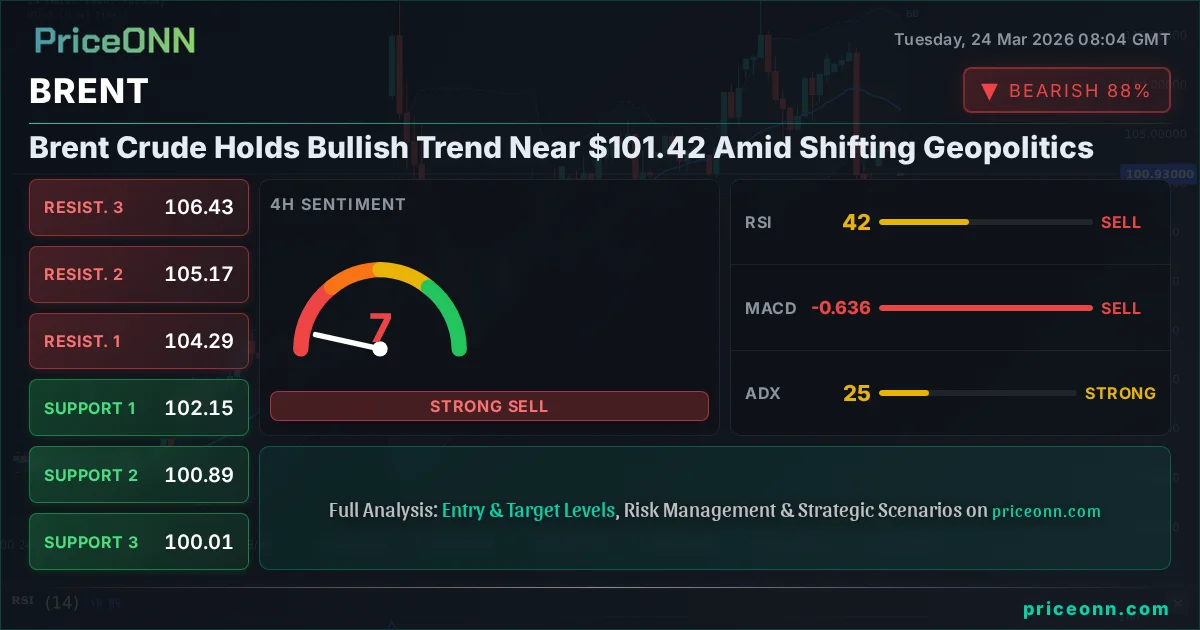
Global oil prices staged a significant comeback this Tuesday, reversing sharp declines from the previous trading session. This upward movement comes despite a temporary de-escalation in direct military action. Benchmark Brent crude futures climbed over 2 percent, reaching $98.25 a barrel. Simultaneously, WTI crude futures saw a more pronounced jump of 3.4 percent, trading at $91.09 per barrel. The market's reaction underscores the delicate balance between supply fears and diplomatic maneuvering in one of the world's most critical energy regions.
The underlying cause for this volatility stems from ongoing friction between the U.S. and Iran. While U.S. President Donald Trump reportedly delayed potential strikes on Iran's energy infrastructure for a five-day period, the situation remains far from stable. Explosions reportedly heard in Tehran and other Iranian cities, coupled with Iran's denial of any ongoing peace talks, amplified market anxieties. Iranian Parliament Speaker Mohammad Bagher Ghalibaf publicly denounced any notion of negotiations, suggesting that recent rhetoric from the U.S. was a ploy to manipulate financial and oil markets, and to deflect from perceived quagmires involving the U.S. and Israel.
Further complicating the narrative, Iran's foreign ministry characterized the U.S. President's statements as a tactic to artificially depress energy prices while advancing military objectives. The conflict has now extended into its 25th day, with no clear resolution in sight. Reports suggest that key regional players, Saudi Arabia and the United Arab Emirates, are increasingly inclined to join the confrontation against Iran, adding another layer of complexity to the geopolitical landscape.
Official U.S. statements from the White House have sought to downplay reports of potential U.S.-Iran discussions, labeling the situation as 'fluid' and diplomatically sensitive. Press Secretary Karoline Leavitt emphasized that the U.S. would not engage in negotiations through the media. Meanwhile, Israeli Prime Minister Benjamin Netanyahu confirmed ongoing strikes against Iran and Lebanon, indicating discussions with President Trump regarding the safeguarding of vital interests. The critical Strait of Hormuz, a vital chokepoint for global oil transport, continues to experience severely restricted traffic, with only a minimal flow of vessels navigating the waterway.
Reading Between the Lines
The recent price action in oil markets is a clear demonstration of how geopolitical risk premiums can rapidly influence asset valuations. Despite the reported delay in U.S. military action, the underlying threat of escalation remains a potent factor driving prices upward. Iran's strong denial of talks and its accusations of market manipulation highlight the deep mistrust and the high stakes involved.
The involvement of regional powers like Saudi Arabia and the UAE, if it materializes, could significantly alter the scope and duration of any potential conflict, with profound implications for global oil supply. The continued, albeit reduced, traffic through the Strait of Hormuz is a critical indicator. Any further disruption here would undoubtedly trigger a more aggressive price surge, potentially impacting inflation forecasts and central bank policy decisions worldwide.
The White House's careful wording suggests a desire to maintain diplomatic channels while projecting strength. However, the conflicting signals and the ongoing military actions create a volatile environment for traders. The market is essentially pricing in the possibility of a wider conflict, even with the temporary pause in direct strikes. This makes the coming days critical for assessing the true trajectory of the situation and its impact on energy prices.
Market Ripple Effects
The current geopolitical tension surrounding oil prices has several downstream effects across financial markets. Firstly, a sustained rise in crude could reignite inflationary pressures, potentially leading central banks to maintain tighter monetary policies for longer. This could negatively impact global equity markets, particularly growth-oriented technology stocks that are sensitive to interest rates.
Secondly, the US Dollar Index (DXY) might see some strength if global uncertainty drives a flight to safety, although this can be counteracted by U.S. specific geopolitical risks. Conversely, currencies of oil-importing nations, especially in emerging markets, could face depreciation pressure as their import bills rise.
Thirdly, related commodity markets, such as natural gas, could also experience volatility, though the specific dynamics depend on Iran's role as a gas producer and exporter. Finally, the defense sector may see increased investor interest as geopolitical risks elevate, while airlines and transportation companies could face higher operating costs due to elevated fuel prices.
Track markets in real-time
Empower your investment decisions with AI-powered analysis, technical indicators and real-time price data.
Join Our Telegram Channel
Get breaking market news, AI analysis and trading signals delivered instantly to your Telegram.
Join Channel