
Pound Awaits Tighter Policy from Bank of England
 PriceONN Editorial Desk
Multi-source verification
PriceONN Editorial Desk
Multi-source verification
Global Tensions Rattling Sterling
A palpable shift in global risk sentiment sent the British pound tumbling to 1.3352 against the US dollar on Wednesday. This sharp decline wasn't an isolated event; it was a symptom of a broader market retreat from riskier assets, triggered by a significant escalation of geopolitical tensions in the Middle East. Investors are increasingly wary, moving capital towards perceived safe havens as conflicts simmer.
The immediate catalyst for this risk-off mood appears to be the heightened friction surrounding the Strait of Hormuz and direct attacks on facilities in Kuwait and Bahrain. These developments have cast a dark shadow over the economic outlook, prompting a swift reassessment of asset allocations by market participants worldwide. The scramble for safety directly impacted currency markets, with the GBP/USD pair feeling the heat.
Just hours before this downturn, the pound had shown surprising resilience. Its earlier strength was buoyed by a concurrent surge in oil prices, which climbed above 72 USD per barrel. This price movement, while supportive of sterling through inflationary channels, also signals underlying commodity market volatility that can spill over into broader financial sentiment.
Bank of England's Tightening Tightrope
Despite the external headwinds, domestic monetary policy expectations continue to play a crucial role in sterling's narrative. Traders are actively pricing in a substantial probability of the Bank of England lifting interest rates before the year concludes. Current market data suggests an approximately 76% chance of a rate hike by year-end.
The urgency for tightening appears to be building, with the probability of an increase as early as November surpassing the 50% mark. This anticipation stems partly from Governor Andrew Bailey's recent commentary. While he affirmed that inflation is indeed trending towards the central bank's 2% target, he cautioned that the journey would be more protracted than initially forecast. Crucially, Bailey signaled no immediate inclination to lower borrowing costs, reinforcing a hawkish stance.
Interestingly, the ongoing political uncertainty within the United Kingdom has, thus far, exerted only a muted influence on the currency's valuation. With a leading candidate for Prime Minister, Andy Burnham, yet to name his potential Treasury chief, the market seems to have largely absorbed the anticipated domestic political risks. This suggests that, for now, geopolitical and monetary policy factors are dominating the sterling's immediate direction.
Reading Between the Lines
The recent pullback in GBP/USD is a clear signal that heightened geopolitical risks are currently trumping domestic policy considerations. While the market has been steadily building a case for a Bank of England rate hike, with a significant probability of a move by November, these expectations are fragile in the face of escalating global instability. The attacks in the Middle East and the tension in the Strait of Hormuz are potent reminders of how quickly sentiment can pivot away from economic fundamentals towards safety.
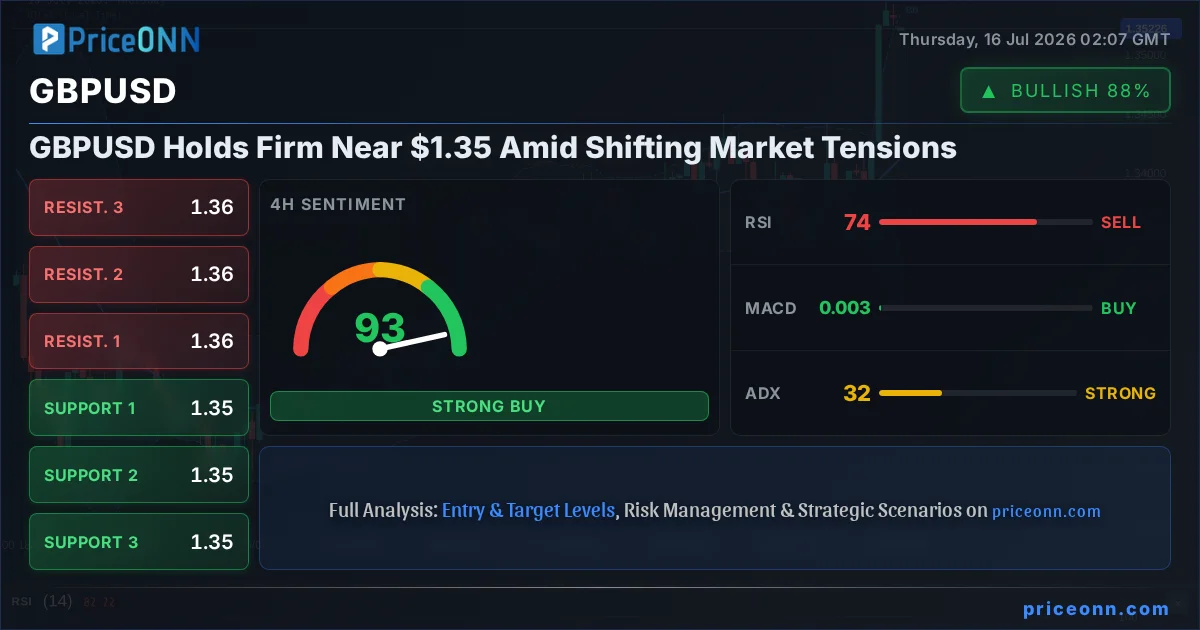
What smart money is watching is the interplay between these two forces. On one hand, the central bank's commitment to tackling inflation provides a structural underpin for the pound, especially if rate hikes materialize. On the other, persistent geopolitical flare-ups can trigger broad-based dollar strength and a flight from riskier currencies like sterling, regardless of local monetary policy. Traders will be scrutinizing the duration and severity of the Middle East tensions. A sustained period of elevated conflict could easily derail the pound's recovery prospects, pushing it towards the 1.3240 level and potentially even the 1.3090 target identified in technical analysis.
The currency pair is currently navigating a consolidation range. A decisive break below the 1.3240 support could accelerate selling pressure, while a strong move back above the 1.3480 resistance level would be needed to signal a significant reversal. The MACD indicator on longer timeframes and the Stochastic oscillator on shorter frames both hint at prevailing downward momentum, suggesting that the path of least resistance may currently be lower, contingent on geopolitical headlines.
Track markets in real-time
Empower your investment decisions with AI-powered analysis, technical indicators and real-time price data.
Join Our Telegram Channel
Get breaking market news, AI analysis and trading signals delivered instantly to your Telegram.
Join Channel PriceONN News
EUR/USD rose to 1.1429 on Thursday, with the US dollar continuing its moderate decline from the previous session. The market is assessing rising inflation risks driven by elevated energy prices against a backdrop of weakening economic data, while seeking further signals on Federal Reserve policy. At next week’s meeting, the regulator is expected to keep […] The post EUR/USD Recovers as Dollar Weakens appeared first on ActionForex.
PriceONN News
The Brent crude rally is a bigger ‘bearish’ factor for EURUSD than the ECB. The Fed may spring a surprise as early as July. The US dollar paid no heed to the ECB’s hawkish rhetoric and continued its advance against major global currencies, including the euro. The European Central Bank left its deposit rate at […] The post Dollar: Oil Leaves the Fed with No Choice appeared first on ActionForex.
PriceONN News
USD/JPY soared to 163.81 on Friday, marking a new 40-year high. Repeated warnings of possible currency intervention have so far failed to halt the yen’s decline amid a broad strengthening of the US dollar. The market paid little attention to the Japanese Finance Minister’s statement that authorities are ready to take decisive action. Reports that […] The post USD/JPY Breaks Records: Nothing Slows the Yen’s Decline appeared first on ActionForex.
PriceONN News
TL;DR: Gold and Silver tumbled as markets returned to the oil-rates relationship that governed Q2, with Brent above $100 and 10-year Treasury yields above 4.7% restoring pressure on the metals - leaving their next move hostage to Trump’s binary decision on Iran. Why This Matters Gold and Silver tumbled as markets returned to trading precious […] The post Gold and Silver Tumble as Oil Link Returns; Trump’s Looming Decision on Iran Adds Binary Risk appeared first on ActionForex.
PriceONN News
Key insights from the week that was. The June Labour Force Survey offered both noise and signal. Employment surprised materially to the upside, rising 76.3k in the month. However, the gain was matched by a sizeable lift in labour supply, the participation rate bouncing 0.3ppts to 67.0%, a 13-month high. The ABS noted in the […] The post Cliff Notes: Markets on Edge appeared first on ActionForex.
PriceONN News
EURUSD is rising on expectations of ‘hawkish’ rhetoric from the ECB. The rally in Brent crude and Treasury yields is not helping the US dollar. The US dollar has retreated, despite rising oil prices and the resulting increase in US Treasury yields. Houthi attacks on tankers in the Red Sea have heightened geopolitical risks and […] The post Euro Focuses on the ECB appeared first on ActionForex.
PriceONN News
TL;DR: Brent oil has surged from to above $97 on Red Sea attacks and Strait of Hormuz escalation, bringing the psychological $100 level into view. While broader markets (stocks, bonds, currencies) have treated the move as a geopolitical risk premium, a decisive break above $100 could signal investors are pricing genuine supply disruption-a narrative shift that […] The post Red Sea Attacks Push Brent Oil Toward $100. Will Markets Finally React? appeared first on ActionForex.
PriceONN News
EUR/CHF may already be telling investors what to expect from today’s European Central Bank meeting. The cross broke decisively above 0.9278 this week, extending its recent rally as surging oil prices revived inflation concerns across Europe. The move suggests markets have begun positioning for a relatively more hawkish ECB even though policymakers are almost universally […] The post EUR/CHF Rally Points to Hawkish ECB Hold as Oil Reignites Inflation Risks appeared first on ActionForex.
PriceONN News
Another month of recovery is in the cards for Canada’s economy next Friday where we expect to see a 0.2% increase in GDP data for May (more details below), but the outlook is once again clouded by the latest bout of U.S. tariff threats that suggest the path ahead could be bumpier. Just how bumpy […] The post Six Takeaways for Canada from Latest U.S. Tariff Threats; GDP Likely Rose Again in May appeared first on ActionForex.
PriceONN News
US business activity accelerated at the start of the third quarter, with S&P Global’s Flash Composite PMI Output Index rising from 51.9 to 53.6 in July, its highest level in eight months. The improvement was driven by the services sector, where the Business Activity Index climbed from 51.2 to 53.6, also an eight-month high. Manufacturing, […] The post US PMI Hits Eight-Month High,Yet Rising Costs and Supply Delays Raise Caution appeared first on ActionForex.
PriceONN News
UK retail sales volumes jumped 1.0% mom in June, far exceeding expectations for a -0.3% mom decline, following an unrevised 1.2% mom increase in May. The stronger-than-expected performance points to resilient consumer demand despite elevated borrowing costs and persistent cost-of-living pressures. Retailers credited sales promotions and warm weather for boosting spending, particularly at online and […] The post UK Retail Sales Surge 1.0% mom as Online Spending Leads Broad-Based June Rebound...
PriceONN News
Germany’s GfK Consumer Climate edged down from -29.3 to -29.6 for August, highlighting that household confidence remains deeply depressed despite modest improvement in some underlying indicators. The slight deterioration was driven by weaker income expectations and a renewed rise in precautionary saving, offsetting gains in willingness to buy and economic expectations. Income expectations fell from […] The post Germany’s GfK Consumer Climate Slips to -29.6 as Income Outlook Weakens and Saving...