RBA Minutes Highlight Excess Demand and Oil Shock as Case for Further Tightening

Inflationary Headwinds Force RBA's Hand
The Reserve Bank of Australia's recently released minutes from their March policy meeting paint a clear picture: policymakers are leaning heavily towards additional tightening measures in the immediate future. The central bank's assessment underscores that inflation remains stubbornly elevated, and the economic landscape has grown more precarious due to the recent sharp ascent in global oil prices. Board members explicitly stated that inflation was still "too high" and observed that the domestic economy continued to experience "excess demand." This imbalance was further evidenced by a labor market that had tightened beyond levels considered sustainable for full employment.
A significant talking point during the discussions revolved around the inflationary implications stemming from geopolitical tensions in the Middle East. The consensus among members was that the surge in crude oil prices would "significantly push up inflation in March." While acknowledging that these higher energy costs would likely dampen economic activity, the RBA stressed that monetary policy's role is not to counteract the initial supply shock itself. Instead, the focus is on preventing such shocks from becoming embedded in the broader price structure. Tighter monetary conditions, they reasoned, could "reduce the extent to which higher costs would be passed on to final prices."
This strategic imperative formed the core argument for further monetary policy adjustments. A majority of members concluded that "further tightening in monetary policy would likely be required in the near term," expressing doubt that current financial conditions were "sufficiently restrictive." The persistent strength of excess demand, coupled with an uptick in short-term inflation expectations, bolstered the case for proactive measures rather than delayed action.
Navigating Uncertainty and Data Dependence
Despite the prevailing hawkish sentiment, the Board did acknowledge considerable uncertainty clouding the economic outlook. The trajectory of the Middle East conflict and its potential ramifications for global growth were significant concerns. A minority of members voiced a preference for maintaining current interest rates, advocating for a pause to allow for the assimilation of more economic data. They pointed to potential headwinds for consumer spending and the possibility of a loosening in labor market conditions as reasons for caution.
However, the prevailing view favored decisive action. The upside risks to the inflation outlook were deemed substantial enough to warrant an interest rate hike. The minutes emphasized that all future policy decisions would be guided by incoming economic data, highlighting a commitment to a flexible and responsive approach. Ultimately, at that specific meeting, the RBA opted to increase its benchmark interest rate by 25 basis points, bringing the official cash rate to 4.10%. This decision was not unanimous, passing by a narrow 5-4 vote margin.
Market Ripple Effects
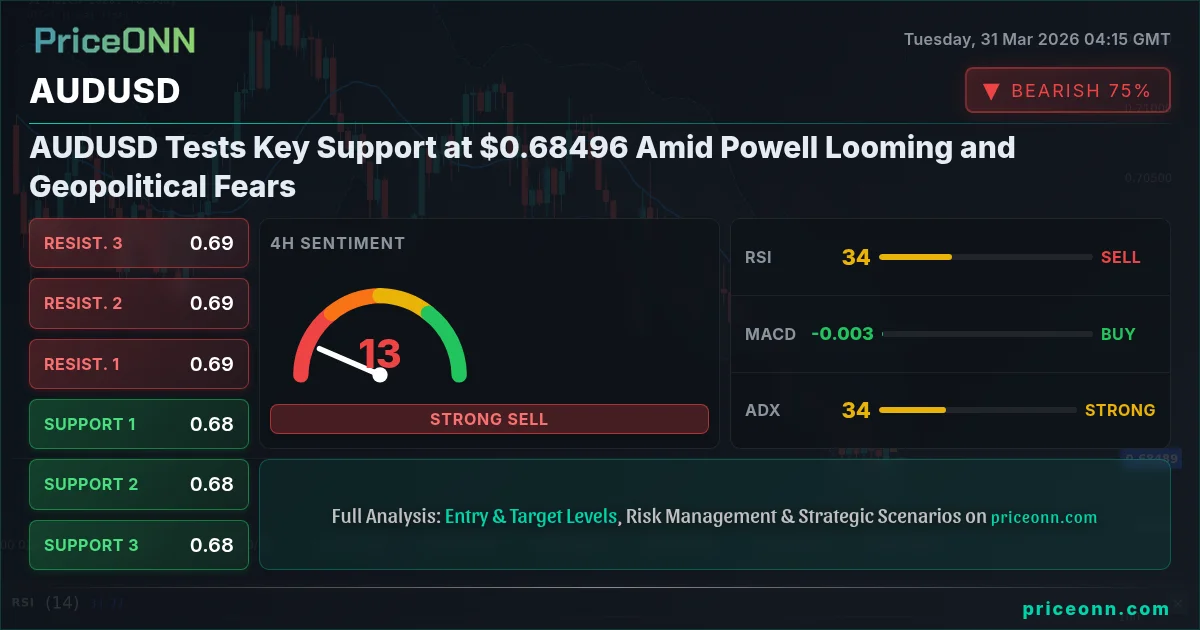
The RBA's minutes signal a hawkish stance, suggesting a higher-for-longer interest rate environment in Australia. This development carries significant implications for several key markets. Firstly, the Australian Dollar (AUD) may find renewed support as the prospect of higher interest rates typically attracts foreign capital seeking better yields. Traders will be closely watching the AUD/USD pair for potential upside momentum.
Secondly, Australian equities, particularly those sensitive to interest rate changes like the real estate sector and highly leveraged companies, could face headwinds. Investors may rotate towards value stocks or sectors less exposed to borrowing costs. Conversely, the financial sector, including banks, might benefit from a wider net interest margin, though loan demand could soften.
Thirdly, global inflation expectations could be influenced. While the RBA stated it cannot offset the initial oil shock, persistent demand-pull inflation in a major developed economy can contribute to broader price pressures. This could lead to increased volatility in global bond markets, with investors reassessing the path of monetary policy in other major central banks. The US Dollar Index (DXY) might also react, as a more aggressive RBA could indirectly support a 'risk-on' sentiment, potentially weakening the safe-haven dollar, although this is contingent on the broader global risk appetite.
The key risk for traders lies in the RBA overshooting its tightening objective, potentially triggering a sharper economic slowdown than anticipated. Conversely, failure to act decisively against entrenched inflation could lead to more severe price instability down the line. Monitoring inflation prints, labor market data, and consumer sentiment will be critical in the coming months.
Track markets in real-time
Empower your investment decisions with AI-powered analysis, technical indicators and real-time price data.
Join Our Telegram Channel
Get breaking market news, AI analysis and trading signals delivered instantly to your Telegram.
Join Channel