
Are Recession Fears Overblown as US Economy Shows Strain?

The possibility of a U.S. economic contraction is gaining traction among financial institutions, with analysts on Wall Street markedly increasing their projections for a potential recession in the coming year. This elevated concern is driven by a combination of escalating geopolitical tensions and emerging weaknesses in the domestic labor market, signaling a period of heightened economic vulnerability.
Market Context
Several prominent financial institutions have revised their recession outlooks upwards. Moody's Analytics now estimates a 48.6% chance of a recession within the next 12 months, a significant jump from typical cycles where the baseline risk hovers around 20%. Goldman Sachs has adjusted its estimate to 30%, while Wilmington Trust places the odds at 45%. EY Parthenon suggests these probabilities could escalate rapidly if the conflict in the Middle East intensifies. This collective shift in sentiment underscores a departure from more optimistic forecasts and highlights the delicate balance policymakers face in managing inflation while supporting employment.
Analysis & Drivers
The specter of an economic downturn has been amplified by the ongoing conflict in the Middle East. Historically, significant oil price shocks have often preceded U.S. recessions, with the exception of the pandemic-induced downturn. Recent data indicates a sharp increase in gasoline prices, which have climbed approximately 35% to $1.02 per gallon over the past month, according to AAA. While the full economic ramifications of these higher energy costs are still under scrutiny, their upward trajectory is clear. Analysts note that the adverse effects of elevated oil prices can manifest swiftly and decisively. If crude oil prices persist at current levels through the end of the second quarter, some economists believe this could be a critical tipping point toward a recession.
Trader Implications
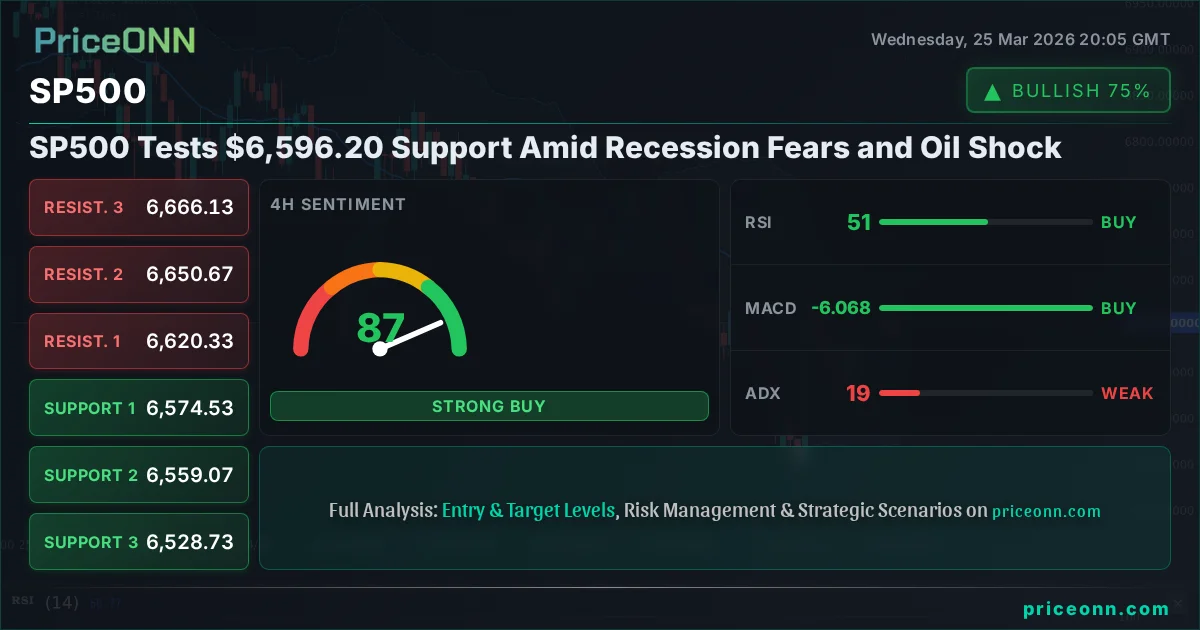
Traders should closely monitor key economic indicators, particularly those related to the labor market and consumer spending. A sustained rise in oil prices above $80-$90 per barrel could increase the likelihood of contractionary pressures, potentially impacting corporate earnings and equity valuations. Investors might consider defensive sector allocations and watch for shifts in central bank commentary regarding inflation and growth risks. Key support levels for major equity indices should be watched for potential breakdowns, while safe-haven assets like gold and U.S. Treasuries could see increased demand if recession fears intensify. Any signs of a significant slowdown in job growth or a sharp drop in consumer confidence would likely exacerbate market anxieties.
Outlook
The coming months will be critical in determining whether the U.S. economy succumbs to recessionary pressures. The trajectory of the Middle East conflict, the sustained impact of higher energy prices on inflation and consumer behavior, and the resilience of the labor market will be paramount. Policymakers will be under pressure to provide clarity on their strategies to mitigate these risks without exacerbating inflationary concerns. Traders should maintain a cautious stance, prepared for potential volatility as market participants digest incoming data and reassess economic probabilities.
Frequently Asked Questions
What is the current estimated probability of a U.S. recession?
Market data shows that several institutions have raised their recession odds. Moody's Analytics estimates a 48.6% chance within 12 months, while Wilmington Trust places it at 45%.
How are oil prices impacting recession forecasts?
Rising oil prices, with gasoline up 35% in a month, are a significant concern. Some economists suggest that if crude prices remain elevated through Q2, it could push the economy into a recession.
What should traders watch for regarding recession indicators?
Traders should monitor labor market data, consumer confidence, and the direction of oil prices. A sustained rise in crude above $85 per barrel and weakening job growth could signal increased recession risk.
Track markets in real-time
Empower your investment decisions with AI-powered analysis, technical indicators and real-time price data.
Join Our Telegram Channel
Get breaking market news, AI analysis and trading signals delivered instantly to your Telegram.
Join Channel


PriceONN