
Red Sea Attack Sinks India-Flagged Cargo Vessel Off Yemen
 PriceONN Editorial Desk
Multi-source verification
PriceONN Editorial Desk
Multi-source verification
Commercial Shipping Under Fire Near Yemen
A cargo vessel sailing under the Indian flag, reportedly laden with Saudi crude, has met its end in the Red Sea. The ship, identified as MSV Faize Noore Oliya, went down off the coast of Yemen on August 4, 2026, following a direct projectile impact. This incident marks a significant escalation in regional maritime threats.
New Delhi has officially denounced the assault on its flagged commercial vessel. Sarbananda Sonowal, India’s Minister of Ports, Shipping & Waterways, confirmed the attack occurred perilously close to Yemeni territorial waters. The vessel, after being struck, capsized and subsequently sank. Fortunately, all crew members, including 13 Indian nationals, were successfully rescued by the Yemeni Coast Guard, averting a greater human tragedy.
Escalating Maritime Dangers in Key Waterways
India’s Ministry of External Affairs issued a stern statement, labeling the continued assaults on commercial shipping in the region as profoundly concerning. The ministry stressed the imperative for such attacks to cease immediately and called for the swift restoration of free and unobstructed navigation and commerce through these vital international waterways, in strict adherence to global maritime law.
The Red Sea, a critical chokepoint connecting to the Arabian Sea via the Bab el-Mandeb Strait, has become a dangerous new frontier for attacks on maritime traffic. This surge in aggression is attributed to Iran-aligned Houthi forces, who have previously signaled intentions to disrupt shipments originating from or destined for Saudi Arabia. While vessels linked to China and Russia appear to be largely spared, irrespective of their cargo, tankers associated with Saudi interests have been notably targeted.
Recent reports suggest that Houthi threats persist despite ongoing diplomatic engagements between the United States and Iran. In response to these dangers, an increasing number of tankers carrying Saudi oil have reportedly transited the Bab el-Mandeb Strait under 'dark mode' – a practice involving disabling tracking systems to avoid detection. This tactic highlights the heightened risk faced by vessels in the region.
Saudi Arabia, facing these persistent threats, has begun rerouting a portion of its oil exports. Some shipments are now directed northward towards Egypt and the Suez Canal, bypassing the volatile Red Sea route. Meanwhile, traffic through the Strait of Hormuz, another crucial maritime passage, has also seen a reduction. This subdued activity, coupled with the widespread use of dark mode transits, has extended the operational challenges for tanker owners, leading some to abandon transit attempts altogether.
Security analysts and vessel-tracking experts have drawn alarming parallels, indicating that the current security situation in the Gulf and Red Sea shipping lanes is the most perilous since the outset of the Iran war. The combination of geopolitical tensions and direct attacks has created an environment of unprecedented risk for global trade flowing through these essential maritime arteries.
Reading Between the Lines
The sinking of the MSV Faize Noore Oliya is more than just a maritime incident; it's a stark indicator of escalating geopolitical tensions impacting global trade routes. The targeting of an India-flagged vessel, even one reportedly carrying Saudi oil, signals a broadening of risks beyond direct regional players. This event directly threatens the stability of oil supply chains and raises insurance premiums for shipping companies operating in the area.
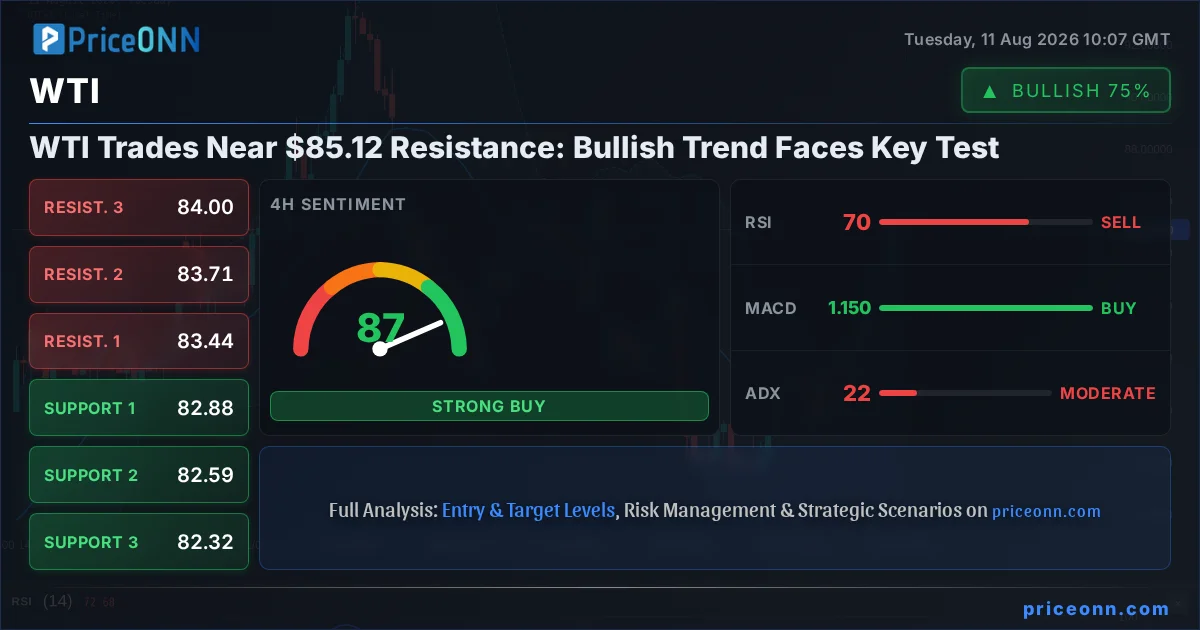
Traders should closely monitor the price action in Brent Crude and WTI Crude, as disruptions, or even the perceived threat of them, in the Red Sea can lead to price volatility. The US Dollar Index (DXY) may also react, as increased geopolitical risk often drives safe-haven flows into the dollar. Furthermore, the situation could indirectly affect key Asian currencies like the Indian Rupee (INR) due to the nationality of the rescued crew and the vessel's flag state, as well as regional currencies such as the Saudi Riyal (SAR) if export routes are significantly altered.
Key risks to watch include further attacks on commercial vessels, potential escalations between regional powers, and the effectiveness of international efforts to ensure freedom of navigation. The longer these disruptions persist, the greater the impact on global energy markets and the broader economic outlook. Smart money is likely watching not just the headlines but also the actual flow of oil tankers and the cost of maritime insurance to gauge the true extent of the risk.
Track markets in real-time
Empower your investment decisions with AI-powered analysis, technical indicators and real-time price data.
Join Our Telegram Channel
Get breaking market news, AI analysis and trading signals delivered instantly to your Telegram.
Join Channel PriceONN News
The IEA has slashed its 2026 global oil supply forecast, with output now expected to plunge 4.3 million barrels per day this year as the failure to reopen the Strait of Hormuz pushes the market deeper into deficit. The latest forecast is considerably worse than the 3.7-million-bpd decline the agency projected just last month and would leave global supply at 102.02 million bpd, its lowest forecast for 2026 yet. Supply is now expected to fall 1.27 million bpd short of demand for the year,...
PriceONN News
Brent Crude oil prices rose above $89 per barrel in early trade in Europe on Wednesday as Iran and the United States offered contrasting claims about who controls the Strait of Hormuz. Brent Crude prices were up by 0.64% at $89.60 in the morning in Europe, and WTI Crude was rising by 0.94% at $83.90, amid persistent supply concerns and risks despite claims from the U.S. that traffic at Hormuz had normalized. Iran, for its part, said on Tuesday that the Strait of Hormuz will remain closed unless...
PriceONN News
Oil flows from the Middle East have normalized, with Sunday traffic alone above pre-conflict averages, U.S. Secretary of Energy Chris Wright said on Tuesday in a claim that appears not to be backed by ship-tracking data. On Tuesday, Secretary Wright posted on X that “Thanks to the coordinated efforts of the U.S. military and our gulf allies, the seven-day average for oil leaving the Strait of Hormuz is currently up to almost 9 million barrels per day.” He went on to add that “When combined with...
PriceONN News
The latest Bloomberg data show that shipping transits through the Strait of Hormuz remained largely disrupted Monday morning, even as Iran and Oman reportedly moved closer to a deal. Brent crude futures traded near $85 a barrel as markets priced in the possibility that a deal to reopen the maritime chokepoint could be imminent. Yet global supply-chain stress remains near its highest level since the pandemic, and any normalization could take months, even if shipping traffic resumes. UBS senior...
PriceONN News
Indian state-controlled oil refiners continue to search the market for spot crude supply as term deliveries are constrained by the ongoing crisis in the Middle East and its key oil chokepoint, the Strait of Hormuz. Mangalore Refinery and Petrochemicals Limited (MRPL) and Hindustan Petroleum Corporation Limited (HPCL) are looking to buy a combined 6 million barrels of crude oil via spot tenders, Reuters reported on Wednesday, citing tender documents it has seen. HPCL is seeking up to 4 million...
PriceONN News
A drone has struck a power station at the Zawiya oil export terminal in Libya, suggesting continued attacks on one of the country’s main oil hubs. The power plant is in close proximity to the largest oil refinery in Libya, the AP noted in a report on the news. The attack follows earlier ones that caused an explosion at an oil storage tank. No one has claimed responsibility for the drone attacks, the AP also reported. The tank, according to the company operating the facility, had 4.5 million...
PriceONN News
Whatever officially occurs next in the on-again/off-again negotiations towards a peace deal between the U.S. and Iran, unofficially Tehran knows that it has established de facto control over both the world’s two key maritime energy transit routes -- the Strait of Hormuz and the Bab el-Mandeb Strait -- for at least as long as the Islamic regime remains in place in Iran. Washington, London, Brussels, Beijing, and Moscow know it too. The Strait of Hormuz remains effectively controlled by vast...
PriceONN News
The Middle East conflict and the heightened threats to shipping in the Red Sea have prompted China to boost the use of the Arctic to move containers from the Chinese east coast to Europe. The fast-melting Arctic ice offers an alternative shipping route in the summer as the Houthi threats to shipping in the Red Sea and the Bab el-Mandeb Strait make cargo operators more cautious in transiting the key chokepoints in the Middle East. Shipping through the Arctic is not something new, but this time...
PriceONN News
(RTTNews) - Crude oil prices have surged on Tuesday, extending the gains from the two previous sessions as the U.S.-Iran stalemate over new demands for compensation for war-related damages continued, diminishing the expectations of an early reopening of the Strait of Hormuz.
PriceONN News
Five months after the U.S. and Israel opened a war with Iran, global fuel markets still haven't settled down, and the latest IEA data prove it. The IEA's monthly end-use price tracker, updated Aug. 7 and covering prices through July, shows the average per-liter cost of automotive diesel across the countries it tracks sitting near $1.94 in U.S. dollar terms. That's roughly 14% above where it stood in February, before the war started, and it's actually higher than June, even as crude oil kept...
PriceONN News
Hormuz tensions are flaring again as Iranian exports collapse, pushing Brent toward $87 and raising the risk of another run toward $100. China’s Crude Drawdown Puts Iranian Barrels Back in Demand - Shrinking crude inventories in China might spur a buying spree over the upcoming weeks, particularly for Russian and Iranian crude, buoyed by a record-high July stock draw in Shandong. - Chinese teapots are expected to boost their purchases of Iranian oil in the upcoming days as stockpiles in the...
PriceONN News
Ukraine’s military claimed another drone attack on an oil refinery in Russia in the early hours on Tuesday as Ukrainian forces continue to target Russia’s energy producing and exporting infrastructure in an escalation of drone attacks at key oil refining hubs. The Ukrainian military on Tuesday said it had struck the Orsknefteorgsintez oil refinery in Orsk, in the Orenburg region. Orsk is about 1,500 kilometers (930 miles) from the frontline. “Fire was recorded. Damages are being ascertained,”...