
Renewed Iran Uncertainty and Rising Fed Hike Speculations
 PriceONN Editorial Desk
Multi-source verification
PriceONN Editorial Desk
Multi-source verification

Two jolts hit global markets at once, and both pointed the same way. Brent crude leapt about 3% to roughly USD 96 a barrel after Israel launched overnight air strikes inside Iran, while a punchy US payrolls report sent Treasury yields climbing and rebuilt the case for more Federal Reserve tightening. Risk appetite had nowhere comfortable to hide.
The Middle East Flare-Up That Reset Oil
The escalation was sudden. Israel struck targets inside Iran overnight after Tehran fired ballistic missiles at northern Israel on Sunday, the first such exchange since the April ceasefire. That Iranian salvo itself followed Israeli strikes on Beirut earlier in the day.
Oil markets reacted fast. With hopes draining for a wider regional accord to reopen the Strait of Hormuz, Brent pushed up to around USD 96.5/bbl in overnight trade. US President Donald Trump said he had urged Israel to hold back militarily and insisted the clash would not sink a potential US-Iran agreement.
The flare-up, in Washington's framing, is a complication rather than a deal-breaker. Crude traders are not so sure.
A Jobs Report With No Soft Spots
Friday's US May labour data ran hot across the board. Nonfarm payrolls rose 172k, far above the roughly 85k consensus, and the unemployment rate printed at 4.3%. The kicker sat in the revisions: prior figures were lifted by a sizeable 93k for March and April combined, and wage sum growth, tightly linked to private consumption, quickened to 4.1% y/y from 3.8%. Strength was broad-based across sectors.
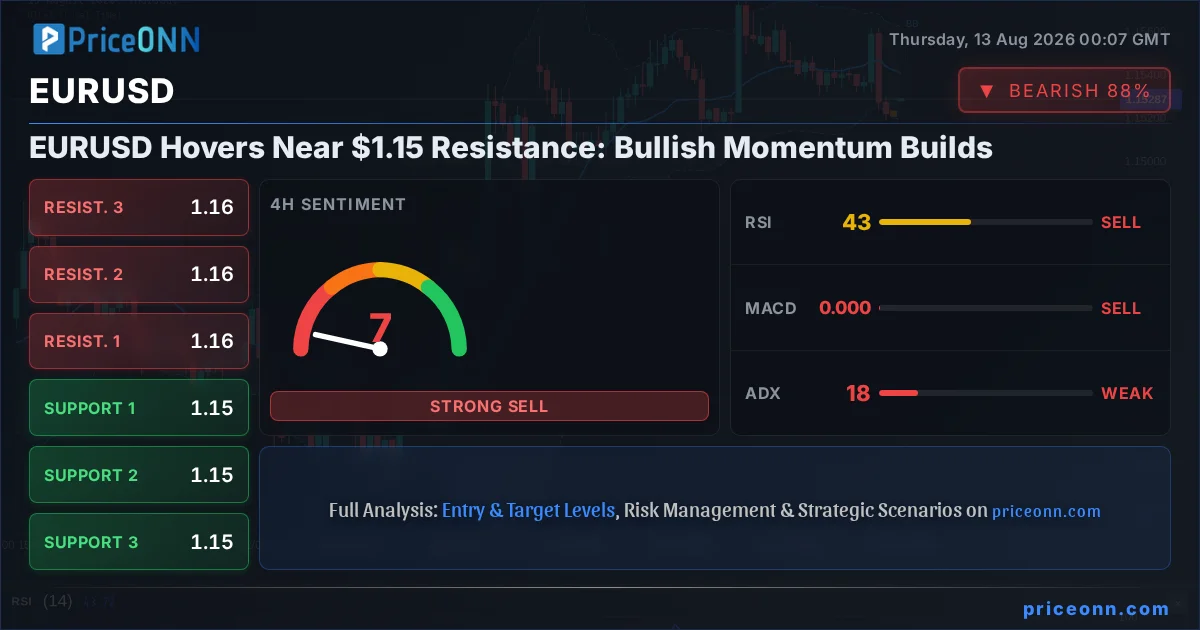
Markets read the absence of weakness as a green light for the Fed. EUR/USD slid toward 1.15, the 2-year Treasury yield climbed to 4.19% (about 15bp higher than before the release), and the 10-year settled near 4.57%. Pricing now points to roughly 40bp of cumulative Fed hikes out toward 2027.
One quieter counterweight: the May Challenger report showed announced layoffs rising to 97k, a third straight monthly increase, with technology cutting 38k and AI cited behind about 40% of the total.
Why Friday's Tech Rout Was Not About Iran
Equities sold off hard into Friday's US close, led by technology. The damage was strikingly narrow: US semiconductors collapsed 8.2%, and semis carry roughly 15% of the S&P 500. The VIX climbed to 21, yet small caps outperformed and more sectors finished higher than lower.
The real story is not Iran, and not even the jobs print. Global tech had ripped roughly 50% higher in about two months. After a run like that, setbacks are simply how markets breathe. Asia followed lower this morning, European futures played catch-up to the late US slide, while US tech futures pointed higher.
The Data Wall Ahead
Elsewhere, Japan's final Q1 GDP was nudged to 0.45% q/q on softer capex, with consumption steady and the BoJ expected to hold course. The euro area's third estimate revealed a surprise 0.2% q/q contraction in Q1 2026, its first decline in over three years, dragged by a 12.1% q/q plunge in Irish output. Sweden's May core inflation jumped to 0.5% y/y, lifting CPIF to 1.5%.
The week's main event lands Thursday with the ECB, where a 25bp hike to 2.25% is fully priced, though Lagarde is unlikely to pre-commit to more. Wednesday's US CPI sits in between as the next real test.
What Smart Money Is Watching
This is a textbook two-front risk setup: a geopolitical supply shock in oil and a hawkish repricing in rates, arriving together. For traders, the cleanest expressions run through the dollar and the front end of the Treasury curve, both of which already responded.
Assets in the crosshairs span several corners. Brent and WTI stay headline-sensitive to any Hormuz escalation. The USD, especially against the euro, leans firmer while Fed hike odds build. Energy-linked currencies and inflation expectations face fresh upward pressure if crude holds its gains, and rate-sensitive tech remains the high-beta release valve.
The opportunity for disciplined desks is separating signal from noise. Friday's semiconductor drawdown was positioning unwinding after a parabolic move, not a verdict on the AI build-out or current earnings power. The risk is convergence: a sticky CPI print on Wednesday stacked on top of rising oil would hand the hawks fresh ammunition and keep the dollar bid. Watch USD 96.5 on Brent, the 2-year yield, and EUR/USD around 1.15 as the levels that frame the next move.
Track markets in real-time
Empower your investment decisions with AI-powered analysis, technical indicators and real-time price data.
Join Our Telegram Channel
Get breaking market news, AI analysis and trading signals delivered instantly to your Telegram.
Join Channel PriceONN News
Whatever the inflation figures may be, the precious metal will come out on top. Japan and the US don’t want to give the yen’s fate to speculators. The US dollar continues to recover from the blow dealt by the labour market statistics. A rally in Treasury bond yields is driving the rise in the USD […] The post Gold as a Sure-Fire Bet appeared first on ActionForex.
PriceONN News
Brent oil price rose to the highest in over one week on Tuesday, in extension of Monday’s nearly 5% advance, following the latest verbal escalation by President Trump that quickly changed the sentiment and countered efforts of Iran and Oman to find solution for reopening of strategic Hormuz strait. The latest demands from President Trump […] The post Brent Oil Price Falls After Recovery Failed to Clear Important $90 Barrier appeared first on ActionForex.
PriceONN News
Overnight, the RBA held its cash rate steady at 4.35%, as widely expected after June’s inflation data came in softer than forecast at 3.8% headline. Yet the accompanying statement struck a notably cautious tone, warning that trimmed mean inflation remains elevated and largely unchanged from the March quarter, with oil and related commodities still trading […] The post EUR/AUD: Two Central Banks on Hold, One Triangle About to Break appeared first on ActionForex.
PriceONN News
Markets Core bonds sold off yesterday with the belly of the curve slightly underperforming in the US while European curves showed more of a bear flattening. Daily changes on the US curve varied between +4.7 bps (2-yr) and +6.4 bps (7-yr). The US 30-yr yield is again within reach of the multi-annual high reached end […] The post Sunrise Market Commentary appeared first on ActionForex.
PriceONN News
The Consumer Price Index (CPI) rose by 0.1% month-on-month (m/m) in July – in line with expectations. On a twelve-month basis, CPI edged down to 3.4% (from 3.5% in June). Energy costs fell by 1.5% m/m, led by a 2.9% m/m decline in prices at the pump. Food prices rose 0.1% m/m – its softest […] The post US: Inflationary Pressures Remain Subdued in July appeared first on ActionForex.
PriceONN News
US inflation eased as expected in July, reinforcing case for Fed to stay on hold while it waits for clearer evidence on both prices and labor market. Headline CPI rose from -0.4% to 0.1% m/m, while annual rate slowed from 3.5% y/y to 3.4%. Core CPI increased from 0.0% to 0.2% m/m, with annual core […] The post US CPI Slows to 3.4% as Core Inflation Eases to 2.5% appeared first on ActionForex.
PriceONN News
Germany’s benchmark index just made history, breaking above 26,500 for the first time ever, extending a rally that has already delivered close to 10% over the past twelve months. The move came on fresh optimism around a potential resolution to the Iran conflict, though that optimism proved short-lived: President Trump’s latest demands, that Tehran compensate […] The post DAX 40: Record Highs, Real Fundamentals, One Channel Left to Test appeared first on ActionForex.
PriceONN News
Hello fellow traders. In this technical article we’re going to take a look at the Elliott Wave charts charts of Copper (HG_F) commodity published in members’ area of the website. As our members know, Copper Futures recently completed a pullback that provided a high-probability trading setup. The decline unfolded as a clear Elliott Wave Zig […] The post Copper (Hg_F) Elliott Wave: Targeting a Buy at the Blue Box appeared first on ActionForex.
PriceONN News
The NFIB’s Small Business Optimism Index rose 2.4 points to 99.8 in July, soundly beating expectations for a roughly flat reading of 97.5. Eight out of the ten index subcomponents improved during the month and two deteriorated. The largest improvement came from the net share of firms planning to increase employment (up 9 points to […] The post US: Small Business Optimism Spiked in July appeared first on ActionForex.
PriceONN News
A deal to reopen the Strait of Hormuz is not inevitable. Oil prices are rising amid growing risks of an escalation of the conflict in the Middle East. The US dollar continued to recover from losses caused by the jobs report, against a backdrop of rising geopolitical tensions in the Middle East with traders squaring […] The post Brent Is Following a Path of Demands Rather Than Commitments appeared first on ActionForex.
PriceONN News
Gold rose to 4,400 USD per ounce on Tuesday, reaching a two-month high. Demand for the precious metal is growing rapidly, even amid heightened inflation risks and expectations of higher interest rates driven by elevated oil prices. Chinese institutional investors continue to build positions in gold as a defensive asset amid heightened volatility in other […] The post Gold Rallies: Long-Awaited Rise and Growing Safe-Haven Demand appeared first on ActionForex.
PriceONN News
RBA on hold as expected, recognising the data has broken against its hawkish narrative. Base case clearly an extended period on hold, but RBA will hike if upside risks to inflation materialise. As widely expected, the RBA Monetary Policy Board (MPB) kept the cash rate on hold at 4.35% at its August meeting. The accompanying […] The post RBA Holds at 4.35%, Narrows Risk of Hikes appeared first on ActionForex.